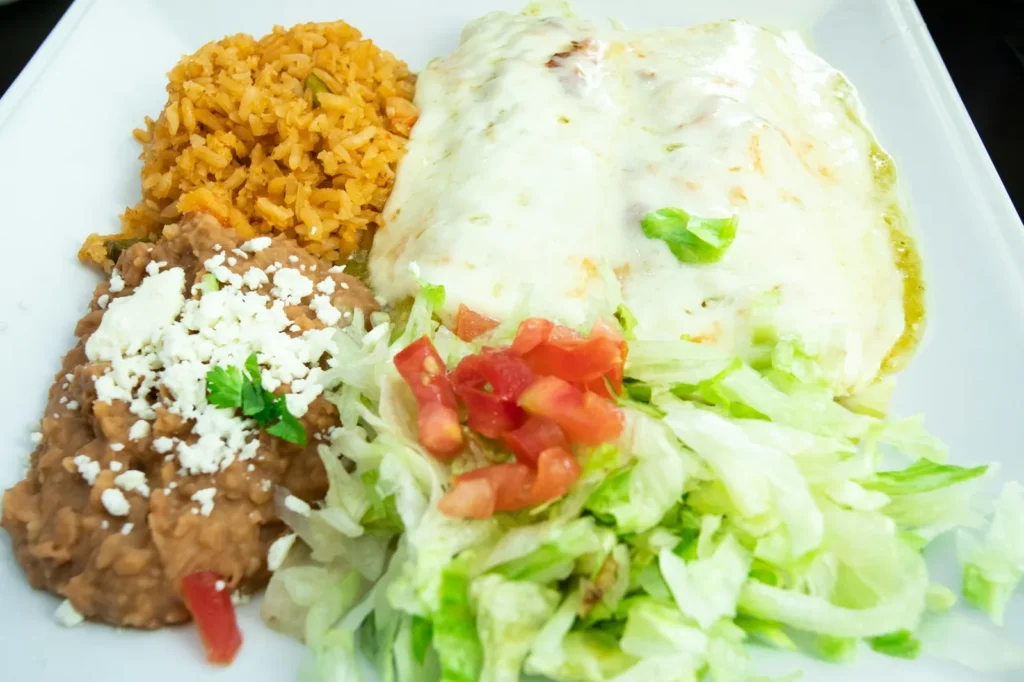
Enchiladas are corn tortillas rolled around a filling and covered in a chilli sauce. The name comes from enchilar — to season with chilli — and that is the organising idea: the sauce is the dish, and the filling is a detail.
This is why a menu lists enchiladas rojas, verdes and suizas rather than chicken, beef and cheese. You are choosing a sauce first.
Named by sauce, not by filling
| Name | The sauce | Tastes |
|---|---|---|
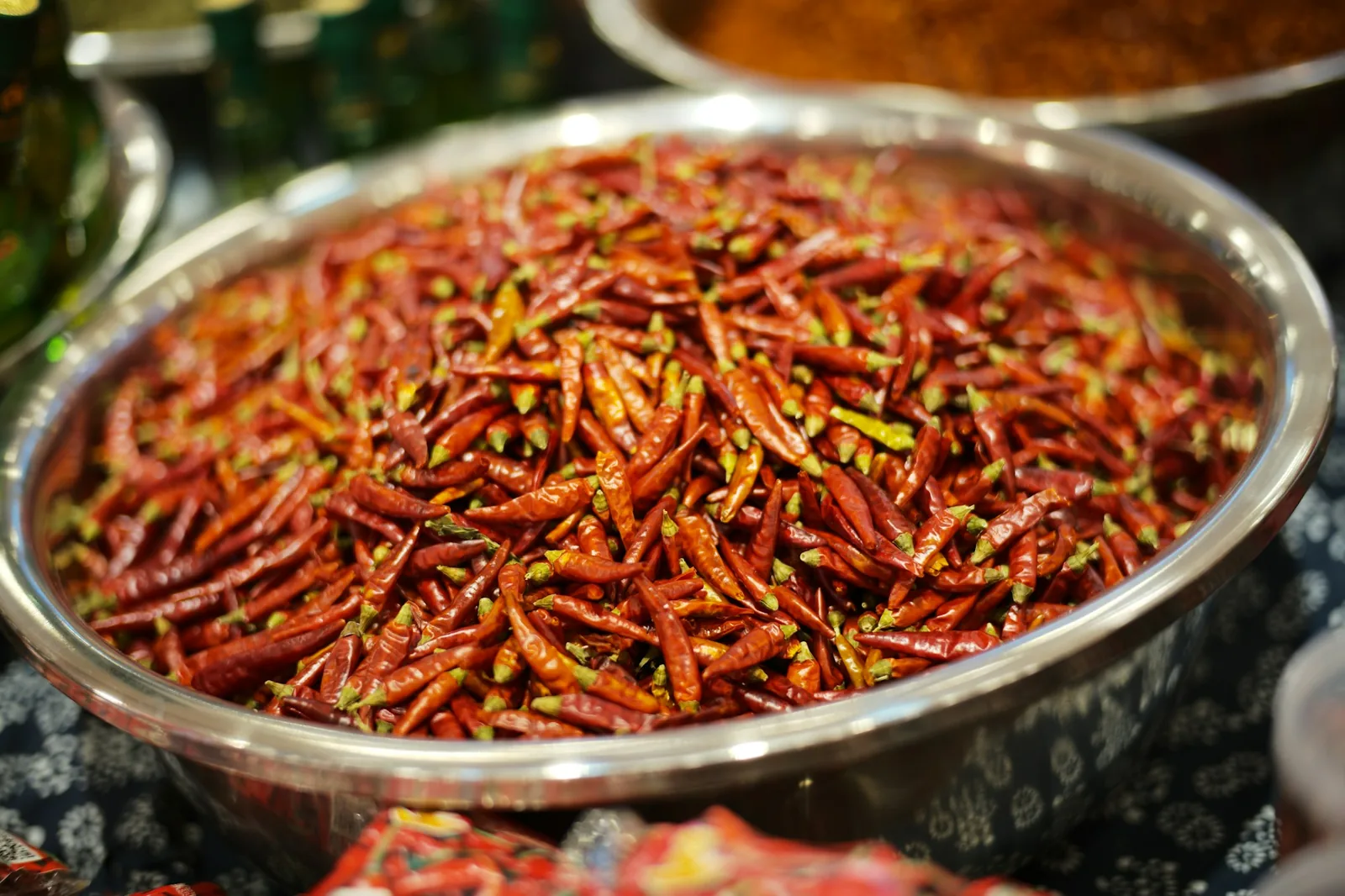
| Rojas | Dried red chillies — guajillo, ancho, cascabel | Deep, earthy, mildly smoky |
| Verdes | Tomatillos and green chillies | Bright, tart, sharper |
| Suizas | Green sauce enriched with cream, then baked with cheese | Mild and rich — ‘Swiss’, for the dairy |
| Enmoladas | Mole | Complex, sweet-savoury, deep |
| Enfrijoladas | Thinned refried beans rather than chilli | Soft, mild, comforting |
| Entomatadas | A simple cooked tomato sauce | Gentle, barely spicy |
The last three drop the word enchilada entirely, because they are not chilli-sauced. Enfrijoladas uses beans and enmoladas uses mole. The grammar is consistent once you see it: en- plus the sauce plus -adas.
How they are actually made
- Corn tortillas are passed briefly through hot oil. This is not to fry them crisp — it makes them pliable and waterproofs them slightly so they do not dissolve under the sauce.
- They are dipped in warm sauce, or the sauce is spooned over later, depending on the region.
- A filling goes in — shredded chicken, cheese and onion, beef, or nothing at all — and the tortilla is rolled.
- They are arranged in a dish, covered with more sauce, and often topped with cheese and baked.
- They are finished with cream, crumbled cheese and raw onion.
Step one is the one home cooks skip and then wonder why the result is mush. A raw tortilla has no defence against a wet sauce; the oil bath is what buys it the time to reach the table intact. It is the same structural logic we cover in why tacos fall apart.
Enchiladas, chilaquiles, burritos
Three dishes built from tortillas and sauce that behave completely differently.
- Enchiladas — whole tortillas, rolled around a filling, sauced, eaten with cutlery.
- Chilaquiles — tortillas cut up and fried crisp, then simmered in sauce until they soften. No rolling, no filling.
- Burrito — a large flour tortilla, wrapped and sealed, eaten in the hand and generally not sauced. A different tradition; see corn versus flour tortillas.
Encyclopædia Britannica’s entry on the enchilada keeps the definition to the essentials — rolled corn tortillas, typically filled with meat, covered in chilli sauce and baked — which is a useful anchor given how far restaurant versions drift from it.
Ordering them
- Choose the sauce first. That is the decision that determines the plate. The filling is usually chicken or cheese and matters far less.
- Three or four is a portion. Enchiladas are counted, and a plate is normally three with rice and beans.
- Ask which sauce is hotter. Verdes is often sharper and hotter than rojas, which surprises people who assume red means spicy.
- Eat them promptly. They are at their best in the first few minutes; a sauced tortilla softens steadily on the plate.
If you want the same ingredients without the cutlery, street tacos are the hand-held answer, and our per-person guide covers mixing formats for a group.
The Tex-Mex version
American enchiladas usually differ in three ways: yellow cheese rather than a white crumbling one, a heavier hand with it, and sometimes a chilli gravy rather than a pure chilli sauce. Tex-Mex cheese enchiladas in chilli gravy are their own established dish with their own history.
Neither version is a failed attempt at the other. Our Tex-Mex versus Mexican comparison sets out why the substitutions happen, and the cheese guide explains which cheeses melt and which do not — the single clearest tell between the two styles.
A note on Doc’s
Enchiladas were not on Doc’s board. The shop stayed with hand-held food — street tacos, the suegrita, quesadillas, the torta — and a plated, baked, sauced dish is a different kind of kitchen operation. This article exists because our menu guide lists enchiladas as one of the six things a Mexican menu is organised around and never explained them.
Doc’s Taco Shop did not serve this. The shop was a small weekend taqueria — street tacos, quesadillas and a short board of house items — and it closed permanently on 19 July 2025. This article covers the wider cuisine rather than the shop. You can read the full menu as Doc’s published it or read how the shop came about.
Frequently asked questions
What is the difference between enchiladas rojas and verdes?
The sauce. Rojas uses dried red chillies and is deeper and earthier; verdes uses tomatillos and green chillies and is brighter and more tart. The filling is often identical.
What are enchiladas suizas?
Green-sauce enchiladas enriched with cream and baked under cheese. ‘Suizas’ means Swiss, a reference to the dairy rather than to anything Swiss about the dish.
Are enchiladas made with corn or flour tortillas?
Corn, traditionally. Corn holds up to the sauce and brings its own flavour. Flour versions exist in Tex-Mex cooking but are not the standard.
Why do my enchiladas fall apart?
The tortillas were probably not passed through hot oil first. That step makes them pliable and gives them some resistance to the sauce; without it they tear when rolled and dissolve when baked.
What is the difference between enchiladas and chilaquiles?
Enchiladas are whole tortillas rolled around a filling and sauced. Chilaquiles are tortillas cut up, fried crisp and simmered in sauce until soft — no rolling and no filling.
The short version
Corn tortillas, softened in oil, rolled around a filling, covered in sauce. Choose by sauce rather than by filling, because that is how the menu is organised and what actually determines how the plate tastes.