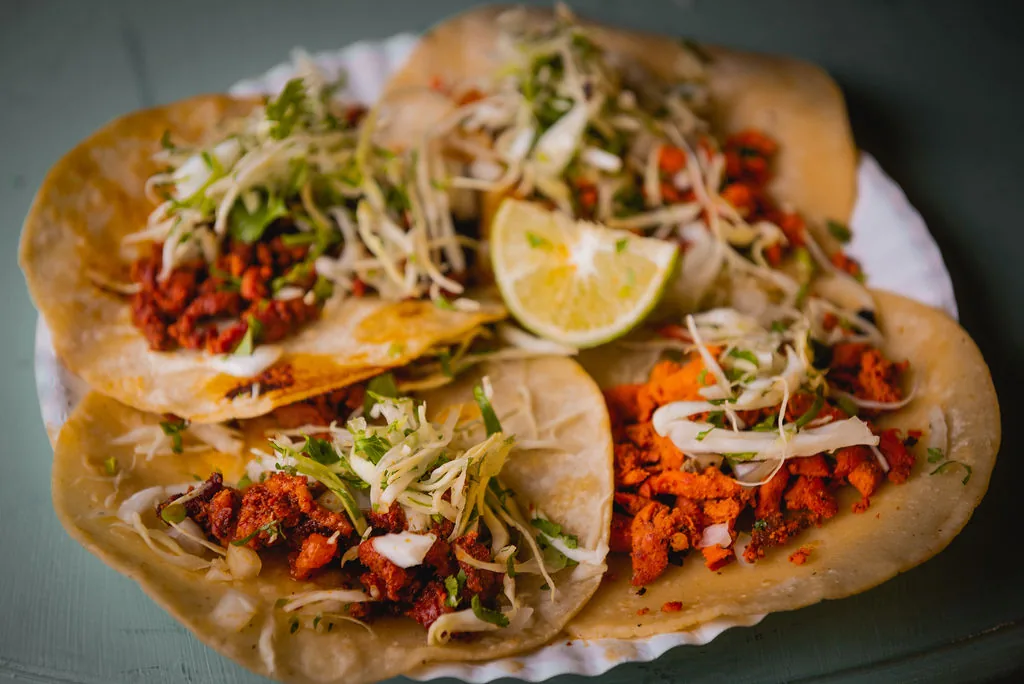
A street taco is a small taco built on a corn tortilla, filled with one meat, and finished with just a few fresh toppings — usually chopped onion, cilantro and a squeeze of lime. It is designed to be eaten in three or four bites, standing up, without a plate and without cutlery.
That description covers almost every street taco you will ever be handed, but it leaves out the interesting part: why it is built that way. Nearly every feature of a street taco — the small tortilla, the single filling, the restraint with toppings — traces back to the fact that it was food sold from a cart to somebody who had somewhere else to be.
What goes into a street taco
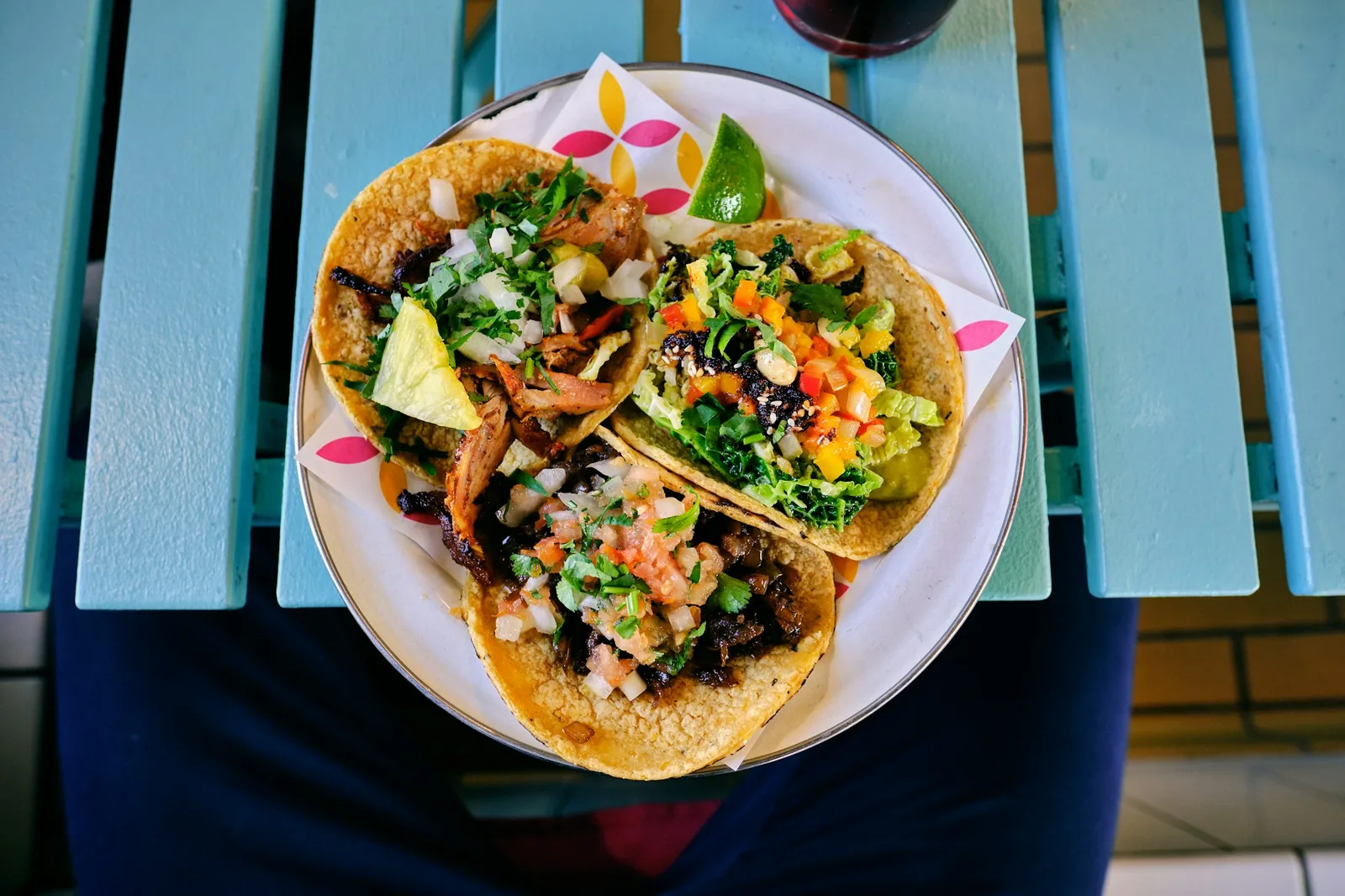
There are only three components, and each one is doing a specific job.
The tortilla
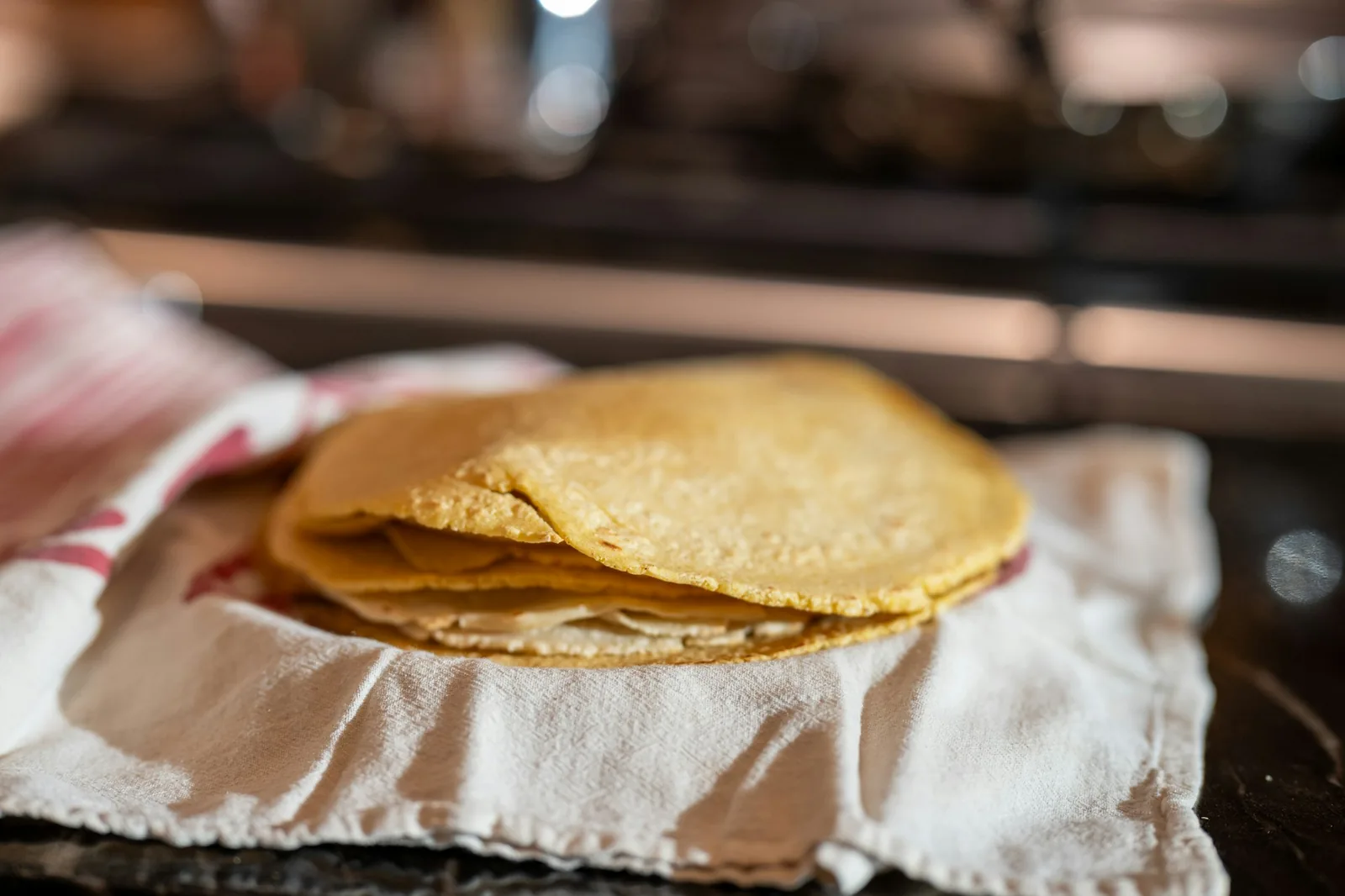
Corn, and small — typically four to five inches across. Corn tortillas are made from nixtamalised maize, which gives them a distinct toasted-corn flavour that stands up to a strongly seasoned filling rather than disappearing underneath it. They also resist sogginess better than wheat flour does, which matters when the filling has been sitting in its own juices on a hot griddle. If you want the full comparison, we cover how corn and flour tortillas differ separately.
The meat
One meat per taco. Not a mixture. Al pastor, carnitas, bistek, chicken, chorizo, lengua — whichever it is, it goes in alone so the seasoning of that particular meat is what you taste. Ordering three tacos usually means ordering three separate small things, not one dish in triplicate.
The toppings
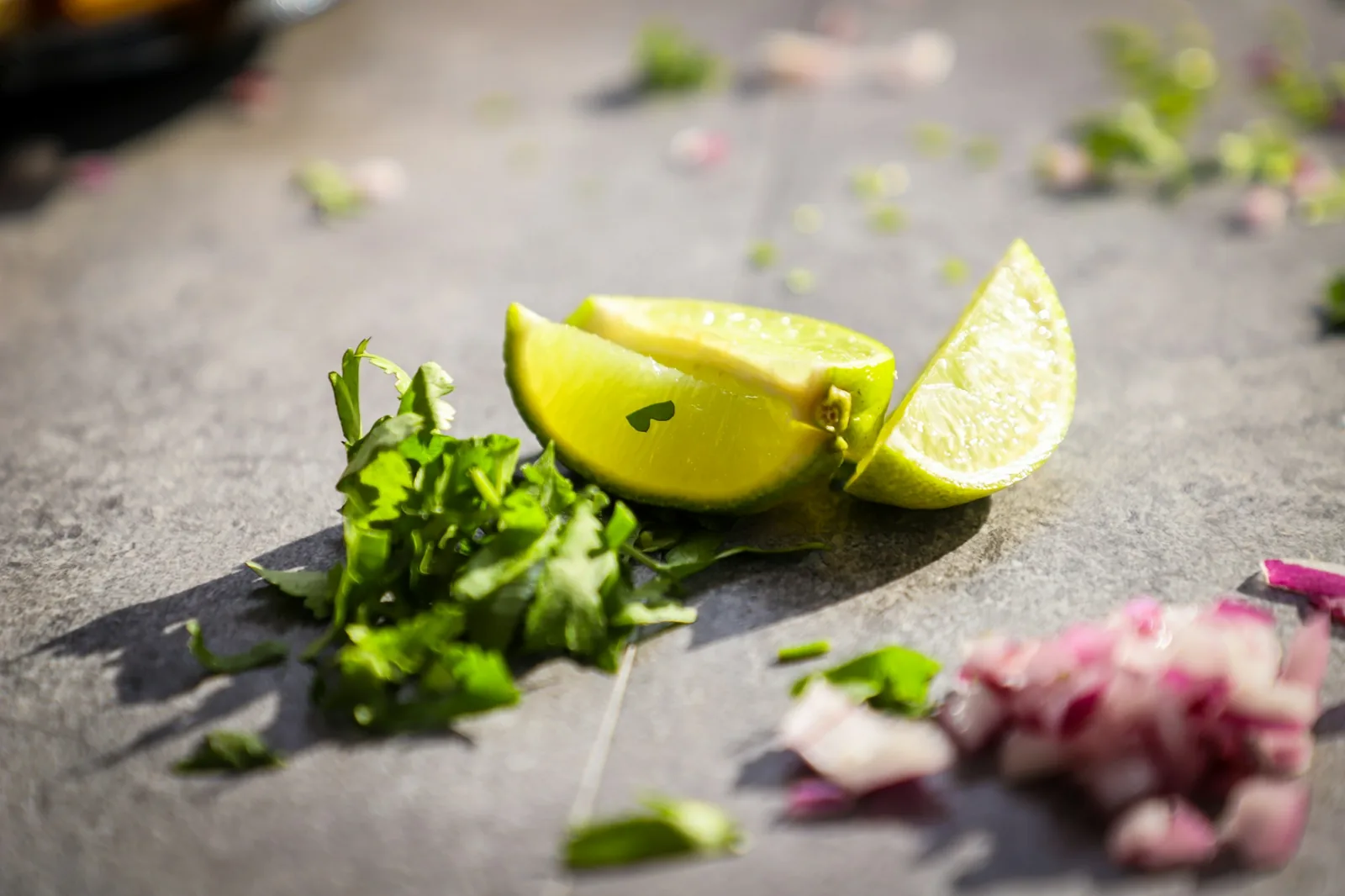
Finely diced white onion, chopped cilantro, and lime. Sometimes radish or a spoon of salsa. What you will not usually find is shredded lettuce, sour cream, grated yellow cheese or diced tomato — those belong to a different, largely American, taco tradition. Each garnish here earns its place, which is why we wrote about what onion, cilantro and lime actually contribute.
Why the tortillas are small — and often doubled
Two tortillas under one taco is standard practice at most taquerias, and it is not an upsell. A four-inch corn tortilla that has been warmed on a griddle and then loaded with hot, wet filling will tear. The second tortilla is structural insurance. It also lets you rescue the taco if the top one splits: you peel it off and keep eating.
The size itself is about heat and speed. A small tortilla comes off the comal hot and gets eaten hot. A large one goes cold before you finish it. Street food is built around the assumption that the customer is eating immediately, and everything about the format follows from that.
What the meats usually are
Menus vary, but a handful of fillings turn up almost everywhere. Knowing four or five of them is enough to order confidently anywhere.
| Filling | Meat | What to expect | Good first choice? |
|---|---|---|---|
| Al pastor | Pork | Marinated, mildly spiced, faintly sweet | Yes |
| Pollo | Chicken | The mildest option on most boards | Yes |
| Bistek | Beef | Plain, savoury, griddled; not spicy | Yes |
| Carnitas | Pork | Rich and shreddy with crisp edges | Yes |
| Chorizo | Pork sausage | Strongly seasoned and oily | If you like bold flavours |
| Lengua | Beef tongue | Very tender, mild, soft texture | Adventurous diners |
How street tacos are eaten
- Pick it up with the fingers of one hand, folded lengthways.
- Squeeze the lime over the whole taco, not just one end.
- Add salsa a little at a time — taqueria salsas vary enormously in heat, and you cannot take it back out.
- Eat it in three or four bites, leaning forward slightly.
There is no cutlery involved, and no shame in leaning over the plate. A well-made street taco is deliberately close to its structural limit — which is also why they come apart if the tortilla is cold or the filling is overloaded. We go through why tacos fall apart and how to stop it separately.
Where street tacos come from
Tacos as street food grew out of Mexico’s working-day eating culture — food sold quickly, cheaply and hot to people on a break. The broader tradition they belong to is recognised by UNESCO, which inscribed traditional Mexican cuisine on its Representative List of the Intangible Cultural Heritage of Humanity in 2010, citing corn, the comal and the everyday tortilla as central to it. That listing is formally named after one state; we explain why in our guide to Michoacán.
It is worth saying plainly that there is no single authentic street taco. Mexican cooking is intensely regional. Sonoran tacos are not Yucatecan tacos, and a taqueria in Guadalajara will not garnish the same way as one in Mexico City. Anyone who tells you there is exactly one correct way is describing their own preference.
How Doc’s Taco Shop built its street tacos
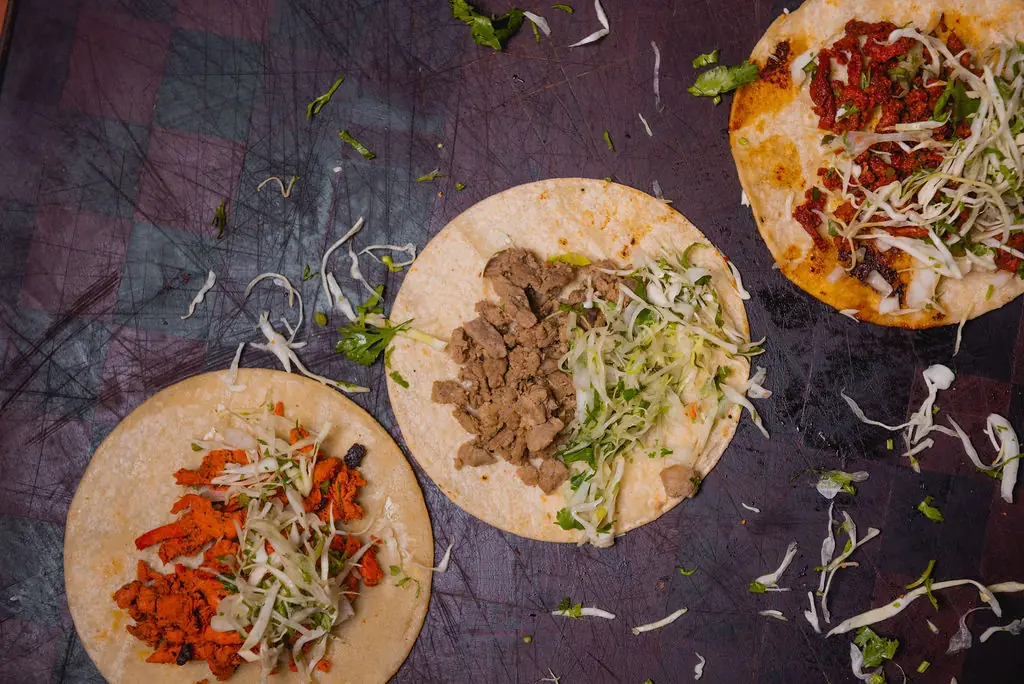
Doc’s Taco Shop in Liberty City, Texas served street tacos in the standard format: a corn tortilla, one choice of meat — pollo, al pastor or bistek — with diced onion, cilantro and cabbage. The cabbage is the local wrinkle. It is not the Mexico City default, but shredded cabbage on tacos is common across a good deal of northern Mexico and the Texas border region, and it adds a crunch that raw onion alone does not.
Doc’s Taco Shop closed permanently on 19 July 2025 after five years in business. The menu details above are transcribed from the restaurant’s own published menu board and are recorded here as history. You can still read the full menu as Doc’s published it or read how the shop came about.
If you are ordering street tacos for the first time
- Order three to start. They are small. Most adults land somewhere between three and five.
- Pick different meats. Three tacos is the cheapest way to taste three things.
- Try the salsa on the side first. Dab a little on a corner before committing the whole taco.
- Eat them in order of mildness. Chicken first, then beef, then anything marinated or spiced.
If you are ordering for more than yourself, our guide to how many street tacos to allow per person has the arithmetic for groups.
Frequently asked questions
Are street tacos always made with corn tortillas?
Almost always, yes. The small corn tortilla is the defining feature of the format. Some places will substitute flour on request, but at that point most people would simply call it a taco rather than a street taco.
Why do street tacos come with two tortillas?
Structural support. A single warm corn tortilla tends to tear under hot, juicy filling, so a second one underneath keeps the taco intact. It is standard practice, not an extra.
How many street tacos is a normal meal?
Three to five for most adults, depending on appetite and whether you are ordering sides. Two is a light snack; six or more is a large meal.
Are street tacos spicy?
The taco itself usually is not. Heat comes from the salsa, which is added by the person eating it. If you are unsure, ask which salsa is mildest and add it gradually.
What is the difference between a street taco and a regular taco?
Size, tortilla and restraint. Street tacos are small, built on corn, and topped with onion, cilantro and lime. American-style tacos are larger, often use flour or a hard shell, and carry lettuce, cheese, tomato and sour cream.
The short version
A street taco is a small corn tortilla, one meat, and a few sharp fresh things on top. Everything about it — the size, the doubling, the short topping list — comes from food that was meant to be handed over hot and eaten straight away.
If you want to see what that looked like in one East Texas taco shop, the Doc’s Taco Shop photo gallery has the pictures, and our street-taco-versus-regular-taco comparison goes deeper on how the two styles diverged.