
Corn tortillas crack because of starch retrogradation — the starch inside them recrystallising as they cool — not because they have dried out. That distinction matters, because it means heat and moisture fix the problem and simply wrapping them tighter does not.
Everything else that makes a taco fall apart is mechanical: too much filling, too much liquid, or one tortilla doing a job that needs two.
What is actually happening to the tortilla
When masa is cooked, its starch granules swell and release two molecules, amylose and amylopectin. While the tortilla is hot, those are loose and mobile, and the tortilla is soft and foldable. As it cools they start to recombine into an ordered structure.
Rebecca J. Weber’s Kansas State University thesis on shelf life extension of corn tortillas sets it out directly: tortillas stale through starch retrogradation, in which the amylose and amylopectin released during cooking complex together to form a matrix that stiffens the tortilla. It is a structural change, not simply water loss.
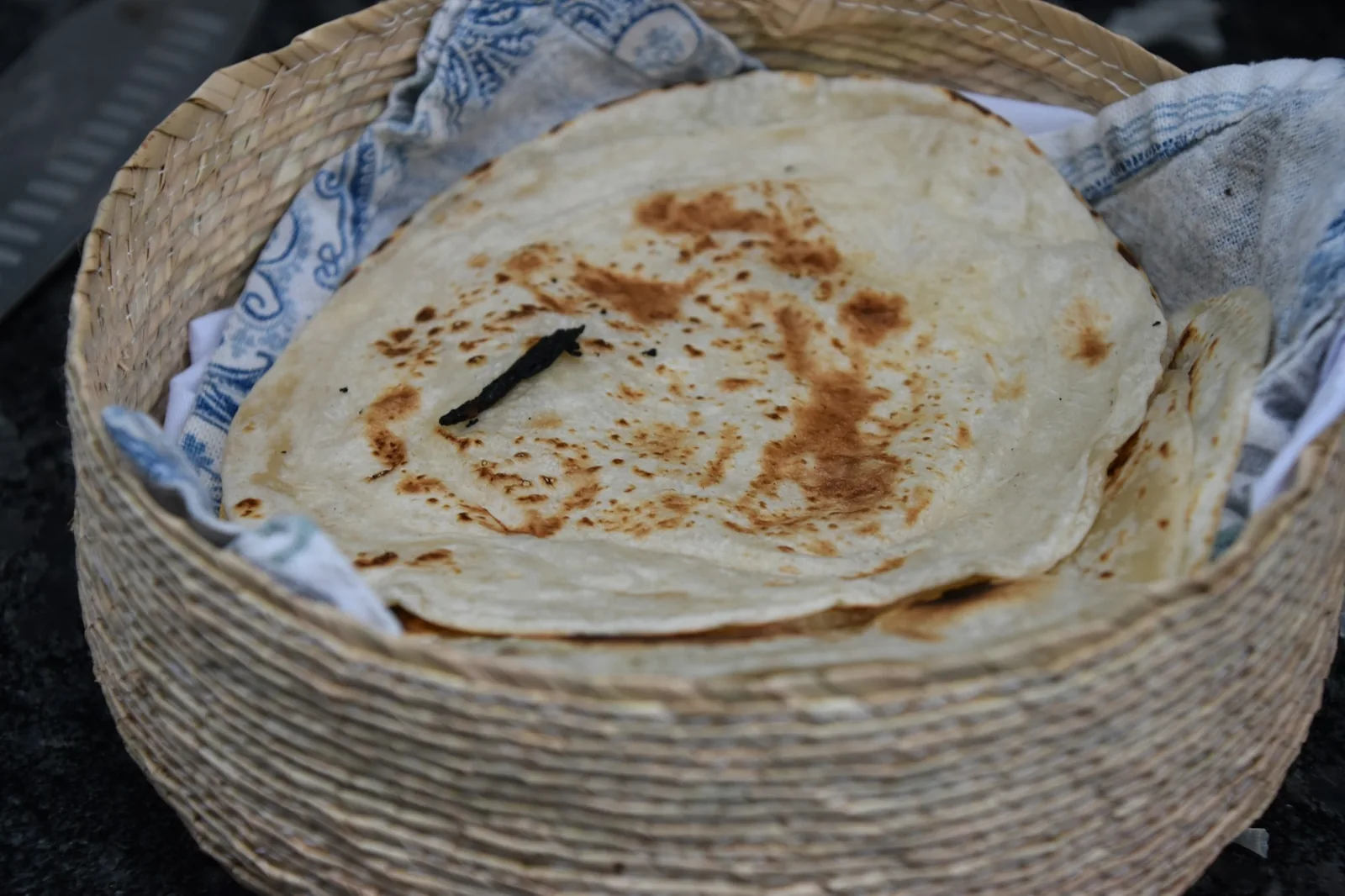
The practical consequence is the useful bit. A stiff tortilla is not necessarily a dry one, and the process is substantially reversible: reheating breaks the matrix back down and the tortilla goes soft again. This is why a tortilla straight off the comal folds and the same tortilla ten minutes later splits.
The five failure modes
| What went wrong | What you see | Fix |
|---|---|---|
| Cold tortilla | Cracks along the fold as you close it | Heat it properly — the single biggest factor |
| Overfilling | Splits along the middle, filling escapes both ends | Two-thirds full, no more |
| Wet filling | Softens and tears in the centre after a minute | Drain the filling; keep salsa on top, added late |
| Single tortilla | Tears under a heavy or juicy filling | Double them — standard taqueria practice |
| Reheated in a microwave, uncovered | Goes leathery, then brittle as it cools | Cover with a damp cloth, or use a dry pan |
How to heat them properly
There is a right way and it takes about thirty seconds.
- Use a dry pan or griddle over medium-high heat. No oil — you are rehydrating and softening, not frying.
- Fifteen to thirty seconds a side. The tortilla should become pliable and smell faintly toasted; it should not colour much.
- Stack them as they come off, inside a folded cloth or a tortilla warmer. The steam they give off keeps the rest of the stack soft.
- Serve within a few minutes. The clock restarts the moment they cool.
The stacking step is the one most often skipped and it does most of the work. A cloth-wrapped stack holds humidity around the tortillas, which is exactly what slows them stiffening again.
Why taquerias double the tortilla
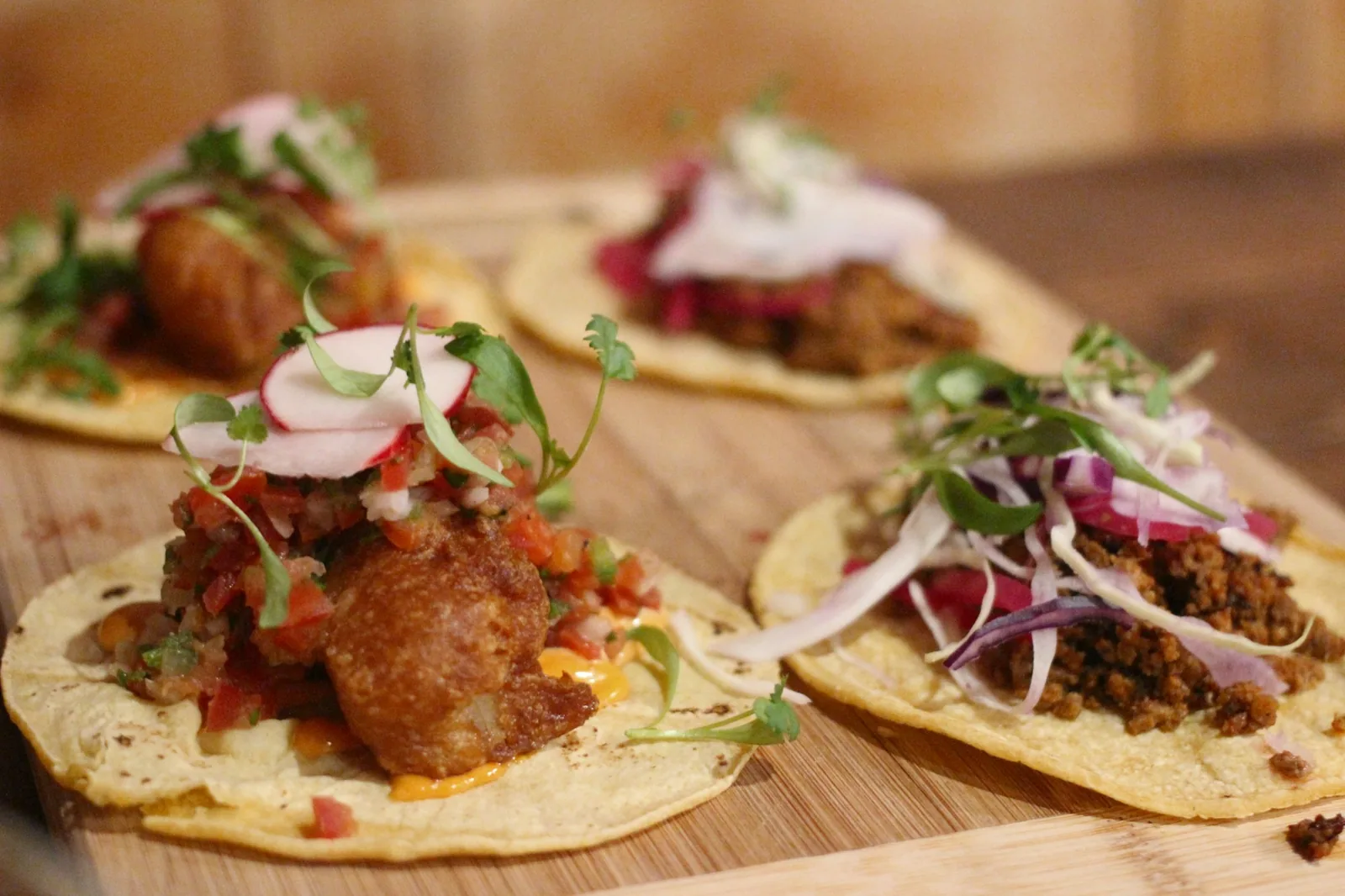
Two tortillas under one taco is standard, and it is not an upsell. A four-inch corn tortilla carrying hot, wet filling is close to its structural limit by design; the second tortilla is insurance. If the top one splits, you peel it away and keep eating on the one underneath.
It also buys time. Two tortillas hold heat and moisture longer than one, so the taco stays foldable for the couple of minutes it takes to eat. We cover the format more fully in our street taco guide, and the corn-versus-wheat question in corn versus flour tortillas.
Holding and eating one
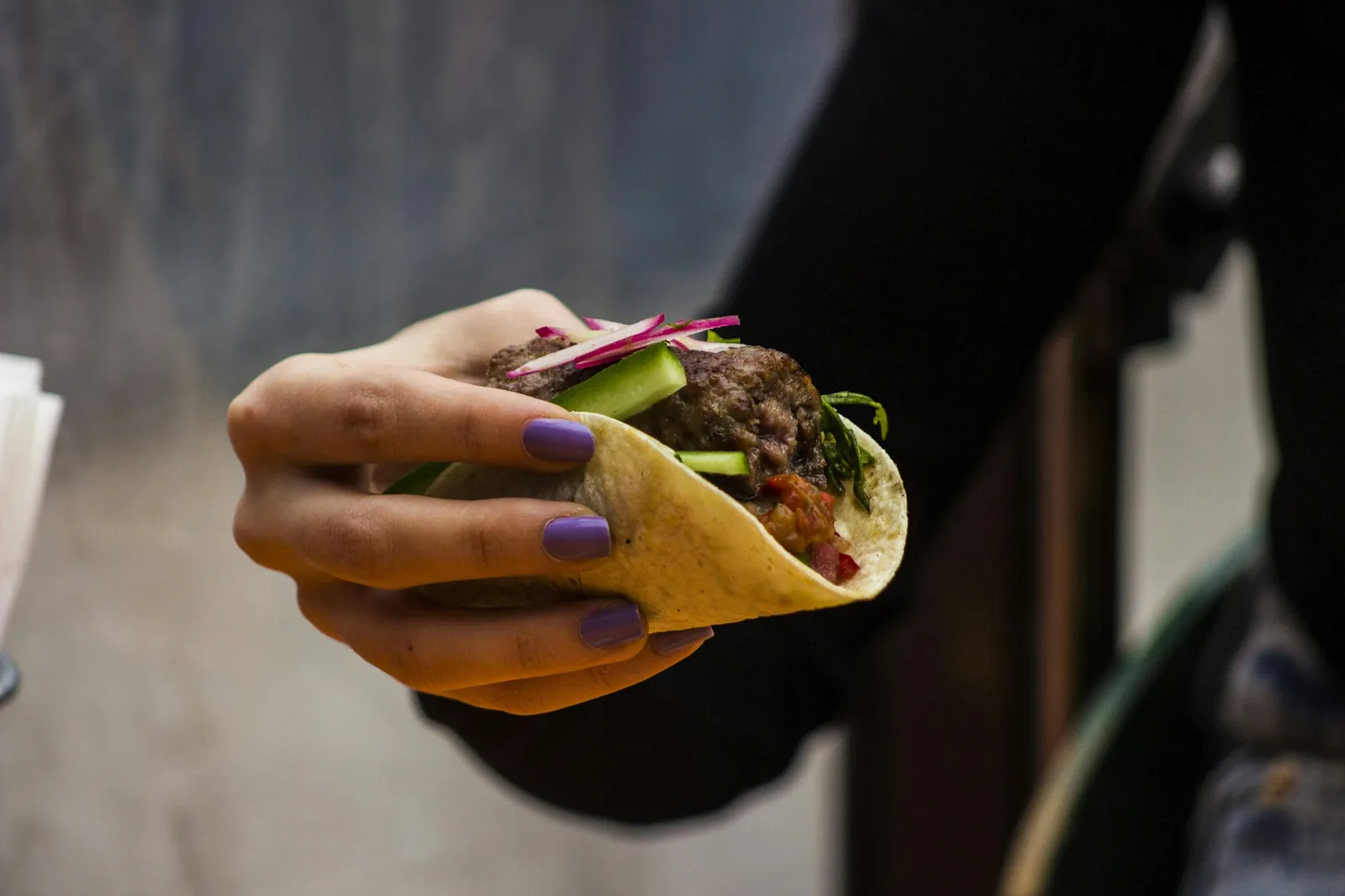
- Fold, do not roll. A fold puts the stress along one line the tortilla can take; a roll stresses the whole sheet.
- Hold it from above, fingers on both sides near the top, rather than pinching the bottom.
- Keep it level. Tilting is what sends filling out of the low end.
- Lean forward. This is not bad manners; it is the design working as intended.
- Add salsa late and sparingly — liquid is what softens the centre.
If a taco does come apart, the recovery is to eat the collapsed end first rather than trying to reassemble it. Nobody at a taqueria will think anything of it.
How Doc’s built against this
Doc’s street tacos were the standard small-corn format — one meat, onion, cilantro and cabbage — which is a build that resists failure well. The cabbage is quietly useful here: shredded cabbage sits between the tortilla and the wetter filling and holds its structure, where lettuce would wilt into it.
The board’s other formats solved the problem differently again. The suegrita griddled two corn tortillas crisp and sealed them with melted cheese, and the torta sidestepped tortillas entirely for a bolillo roll.
Doc’s Taco Shop closed permanently on 19 July 2025 after five years in business. The menu details above are transcribed from the restaurant’s own published menu board and are recorded here as history. You can still read the full menu as Doc’s published it or look through the photo gallery.
Frequently asked questions
Why do my corn tortillas crack when I fold them?
They are too cold. Starch retrogradation stiffens a tortilla as it cools, and the fix is heat rather than moisture alone — fifteen to thirty seconds a side in a dry pan.
Why do restaurants use two tortillas per taco?
Structural support. A single warm corn tortilla tends to tear under hot, juicy filling, and the second one underneath keeps the taco intact and holds heat longer.
What is the best way to warm corn tortillas?
A dry pan or griddle over medium-high heat, fifteen to thirty seconds a side, then stacked inside a folded cloth so the steam keeps them soft.
Can I microwave corn tortillas?
Yes, but cover them with a damp paper towel or cloth. Microwaved uncovered, they go leathery and then brittle within a minute of coming out.
Does putting cheese in a taco stop it falling apart?
It can. Melted cheese against the tortilla acts as a seal and a moisture barrier, which is exactly what griddled formats like the mulita and the quesadilla rely on.
The short version
Heat the tortilla, do not overfill it, drain the wet things, and use two. The cracking is starch recrystallising as the tortilla cools, which is reversible with heat — so a stiff tortilla is a fixable tortilla, not a ruined one.