
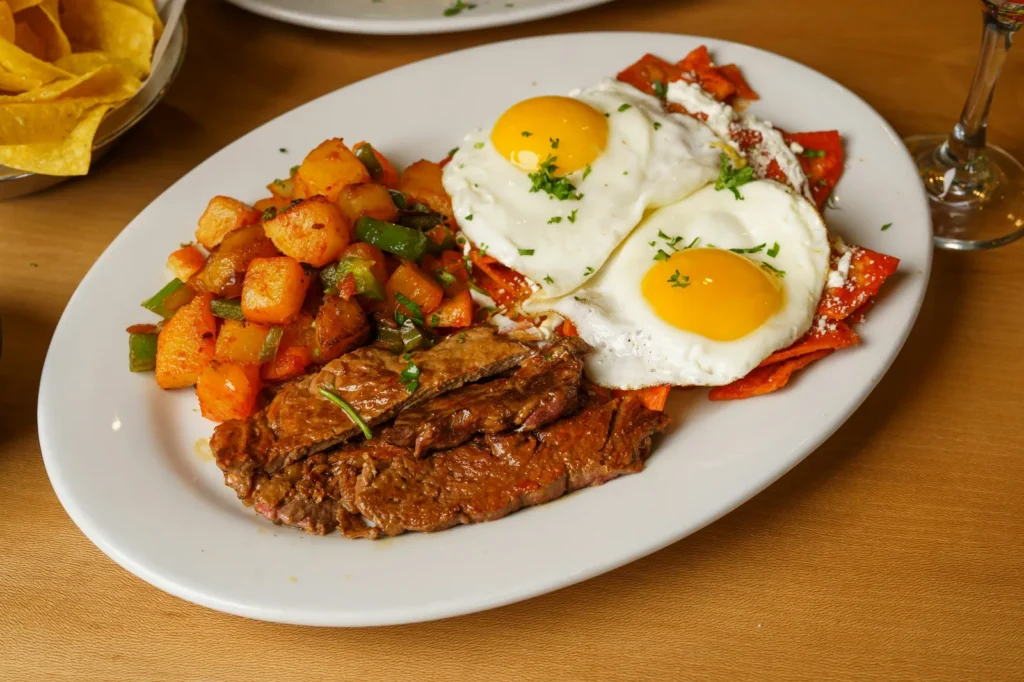
Chilaquiles are fried tortilla pieces simmered in salsa until they soften, then topped — usually with cream, crumbled cheese, raw onion and often a fried egg. They are a breakfast dish, and they were invented to use up yesterday’s tortillas.
The most common confusion is with nachos, and the difference is the whole point of the dish. Nachos are engineered to stay crisp. Chilaquiles are meant to go soft.
Where the name comes from
It is Nahuatl. The usual gloss breaks chīlāquilitl into roughly “chilli” and “greens or edible plants”, though this is genuinely contested. A discussion on H-Net, the humanities and social sciences network sets out the competing analyses: the chīlli + ātl + quilitl reading has been rejected by some scholars as improbable, with an alternative deriving the word from the stem of chīlli plus a form built on aqui, to enter or be inserted.
Alonso de Molina’s 1571 Nahuatl vocabulary records chīlaquīlli as something covered in chilli, which is at least a description anyone eating the dish would recognise. We are flagging the disagreement rather than picking a side.
How they are made
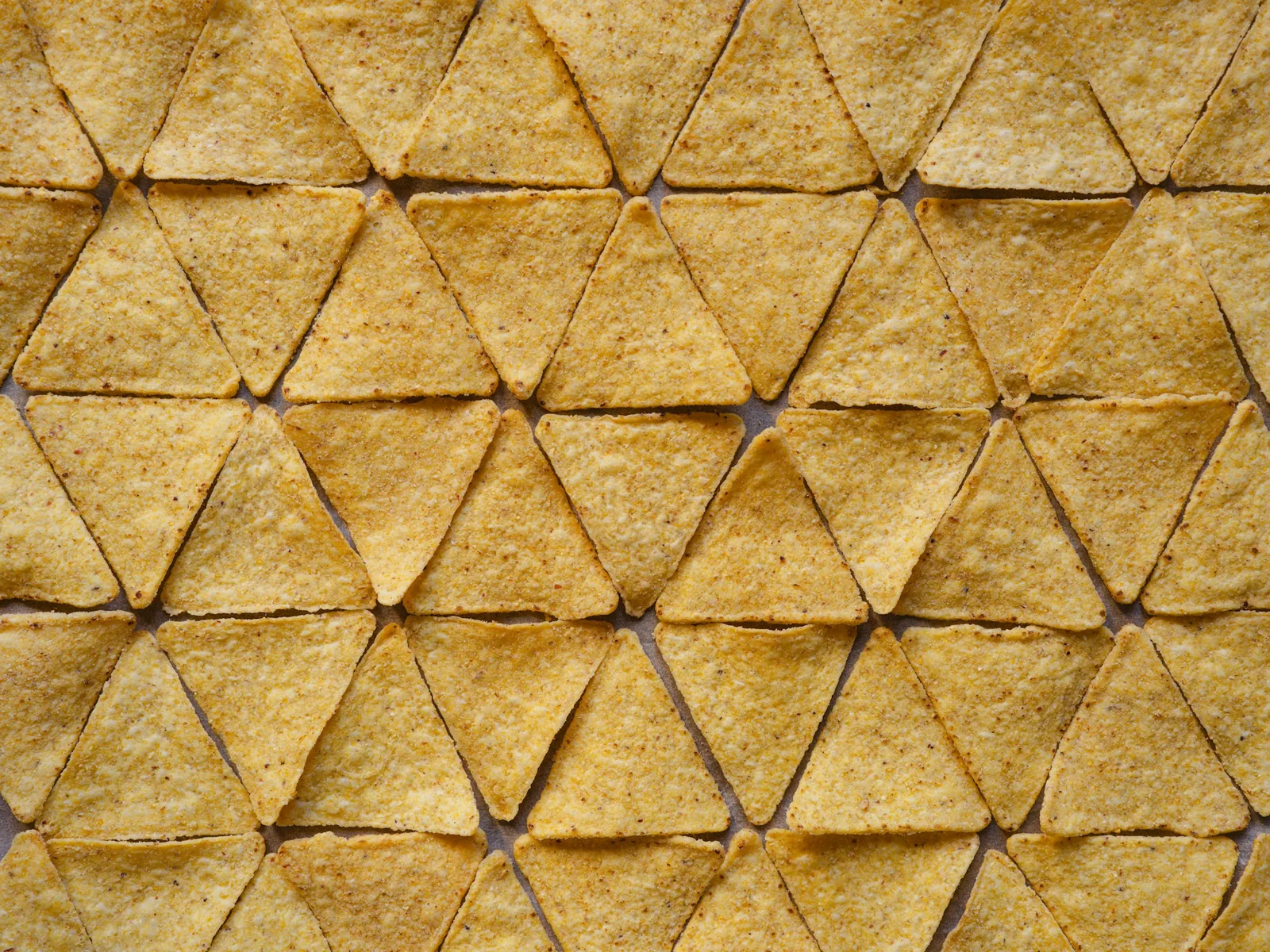
- Corn tortillas — ideally a day or two old — are cut into triangles and fried or baked until crisp.
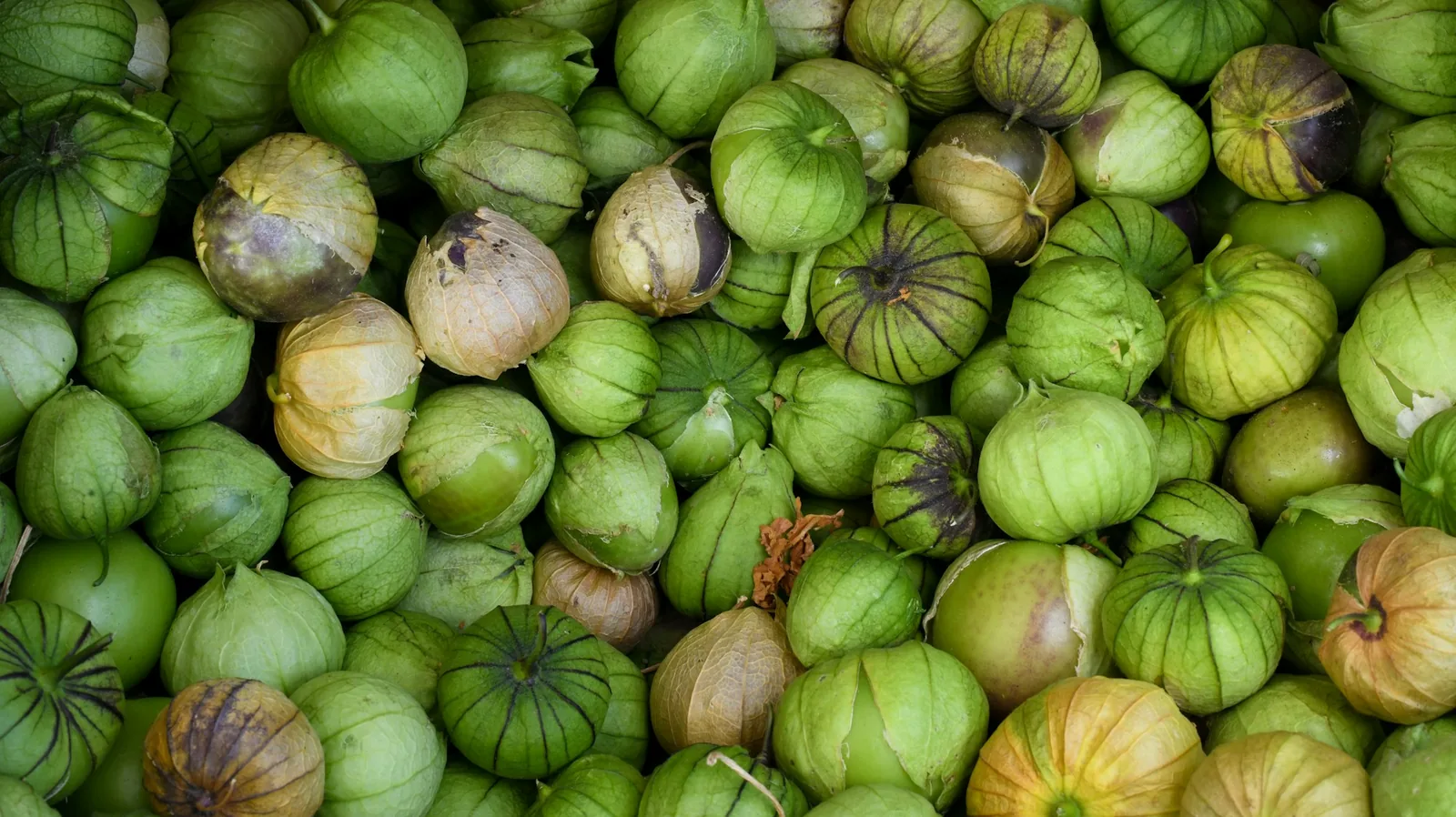
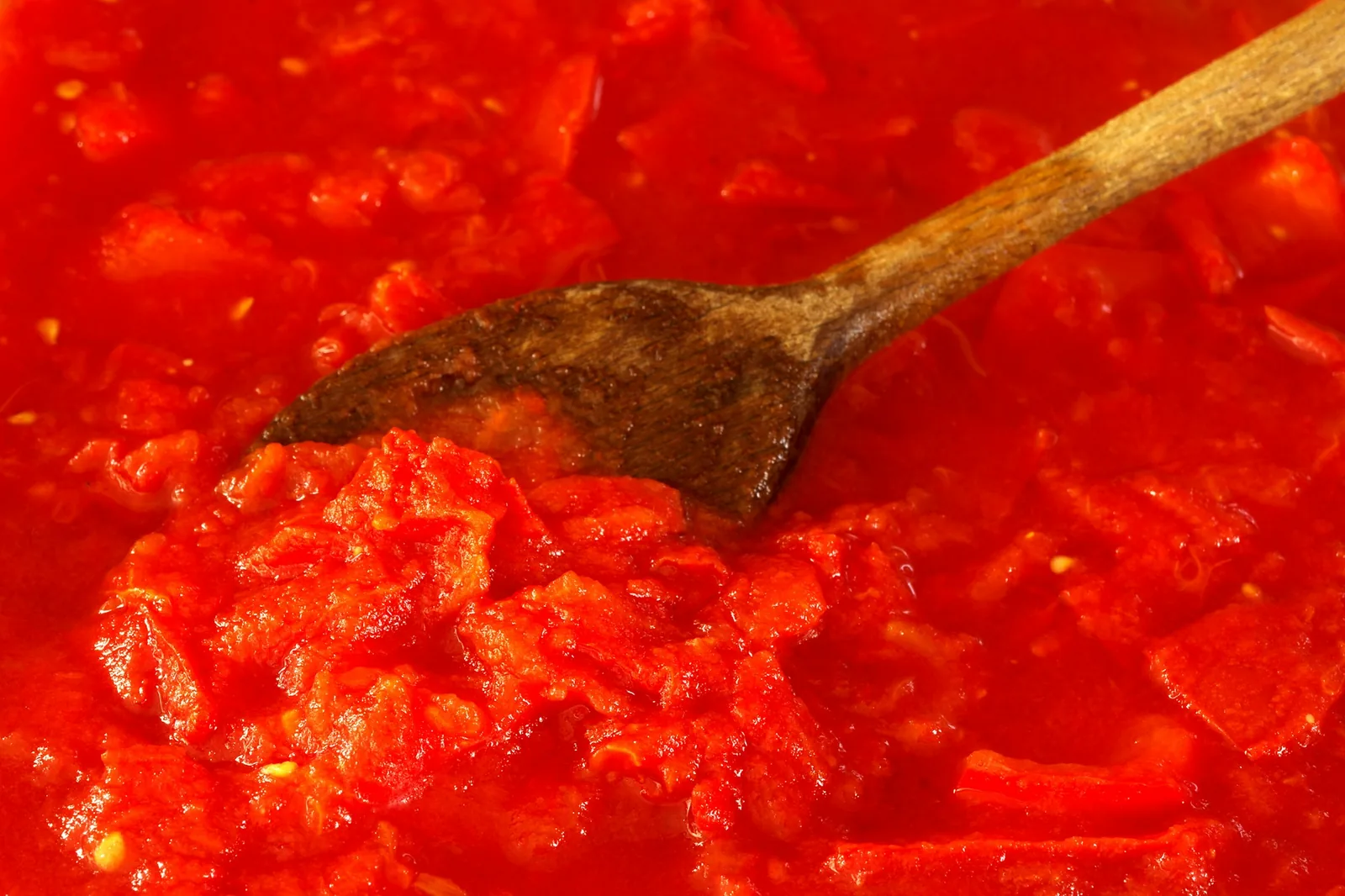
- A salsa is made and brought to a simmer in a wide pan. Green from tomatillos, or red from dried or ripe chillies and tomato.
- The crisp pieces go into the simmering salsa and are turned through it.
- They cook only briefly — long enough to absorb sauce and soften, not so long that they dissolve.
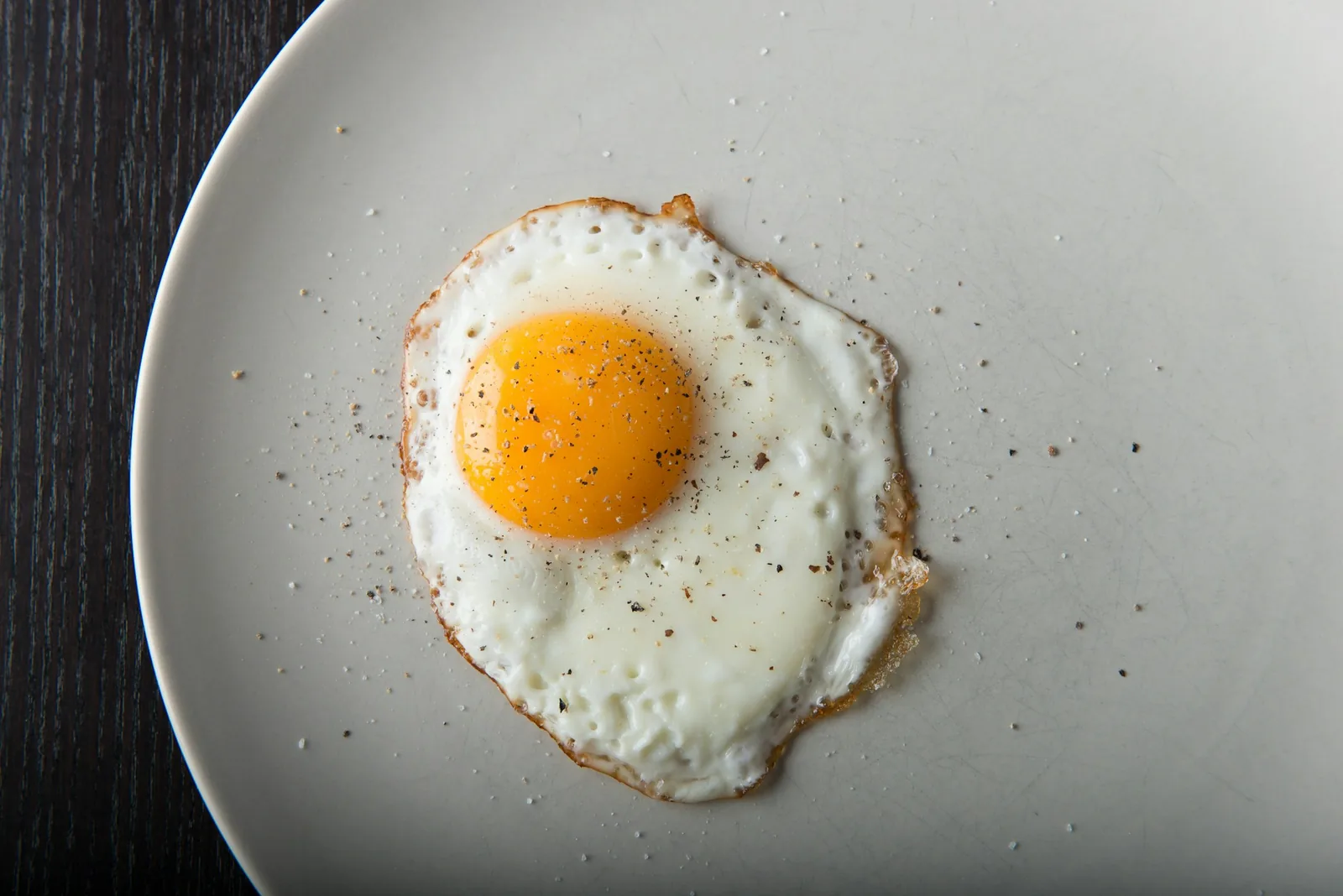
- They are plated and topped: crema, crumbled cheese, sliced raw onion, cilantro, and very often a fried or scrambled egg.
Step four is where it is won or lost. There is a window between “still has some structure” and “wet mush”, and different people want different points in it. Ordering them bien empapados asks for softer; asking for the salsa on the side keeps them crisper.
Rojos or verdes
| Chilaquiles verdes | Chilaquiles rojos | |
|---|---|---|
| Salsa base | Tomatillos, green chillies, cilantro | Tomato and dried red chillies |
| Flavour | Tart, bright, herbal | Deeper, rounder, slightly sweet |
| Heat | Often the hotter of the two | Usually milder |
| Goes well with | Chicken, egg, plenty of cream | Beef, chorizo, cheese |
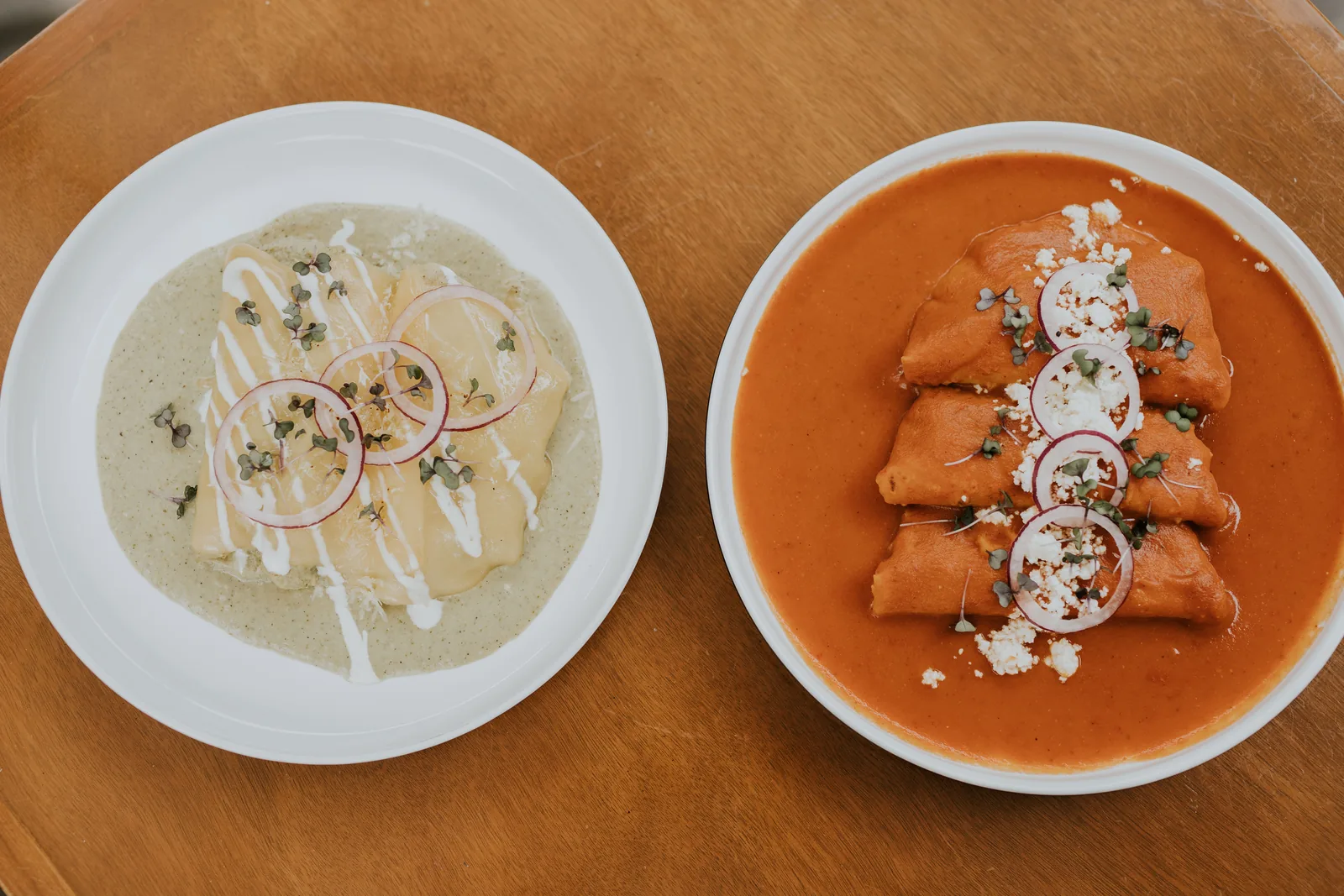
If you cannot choose, some places will serve divorciados — divorced — with the two sauces on opposite halves of the plate and not touching.
Chilaquiles are not nachos
Both are fried tortilla plus toppings, and there the resemblance stops.
- Texture is the opposite. Nachos are built to stay crisp under their toppings. Chilaquiles are simmered specifically so they soften.
- The sauce is applied differently. Nacho toppings sit on top; chilaquiles are cooked in the salsa.
- The meal is different. Chilaquiles are breakfast. Nachos are a shared snack, and a Tex-Mex invention rather than a Mexican one.
- The cheese is different. Nachos use melting yellow cheese; chilaquiles use a crumbling white one that holds its shape. See our guide to Mexican cheeses.
The related dish worth knowing is migas, where the tortilla pieces are scrambled into egg rather than simmered in salsa.
The variations worth knowing
- Divorciados — red and green on opposite halves of the plate, not touching.
- Migas — tortilla pieces scrambled into egg rather than simmered in salsa. A different dish, often on the same menu.
- Huevos rancheros — the other standard breakfast built on tortillas and salsa, but with whole soft tortillas and the egg on top rather than torn and simmered.
- Chilaquiles con mole — mole in place of the salsa. Richer, sweeter, and considerably heavier.
- Con pollo / con huevo / con carne — the standard additions. Shredded chicken and a fried egg are the two most common.
Chilaquiles also have a well-established second job as recovery food, eaten late the following morning. Salt, fat, acid, carbohydrate and chilli in one bowl is a defensible response to a difficult night, and the dish is served with that purpose openly acknowledged across Mexico.
Why they exist
Because tortillas go stale fast, and throwing food away was not an option. A day-old tortilla is stiff and unpleasant folded around a filling — the mechanism is starch retrogradation, which we go into in why tacos fall apart — but fried and simmered in sauce, that same stiffness becomes an advantage. A stale tortilla holds up to the salsa better than a fresh one does.
This is a dish built out of a constraint, which is true of most of the food on this site.
A note on Doc’s
Chilaquiles were not on Doc’s board — unsurprisingly, since the shop traded at weekends and in the evenings rather than at breakfast. They appear here because our menu guide lists them among the plated dishes you eat with cutlery, and our cheese guide names them as a place crema turns up, without either explaining the dish.
Doc’s Taco Shop did not serve this. The shop ran three meats across its whole board — pollo, al pastor and bistek — and closed permanently on 19 July 2025. This article is here because our own guides kept mentioning the dish without ever explaining it. You can read the full menu as Doc’s published it or read how the shop came about.
Frequently asked questions
What are chilaquiles?
Fried corn tortilla pieces simmered in salsa until they soften, then topped with cream, crumbled cheese, onion and often an egg. They are a traditional Mexican breakfast.
Are chilaquiles supposed to be soggy?
Somewhat, yes — that is the dish. They should have absorbed the salsa and softened while keeping some structure. How soft is a matter of preference and you can ask.
What is the difference between chilaquiles and nachos?
Chilaquiles are simmered in salsa so they soften; nachos are built to stay crisp. Chilaquiles are a breakfast dish from Mexico, nachos a Tex-Mex shared snack.
Rojos or verdes — which is spicier?
Verdes are often hotter, being built on green chillies and tomatillos. Rojos tend to be deeper and milder, though it varies entirely by kitchen.
Do chilaquiles have meat in them?
Not necessarily. The base dish is tortillas, salsa and toppings. Shredded chicken, beef or an egg are common additions rather than requirements.
The short version
Yesterday’s tortillas, fried, simmered in salsa until they soften, and topped with cream, cheese, onion and an egg. Green is usually sharper, red usually deeper, and the softness is the point rather than a mistake.