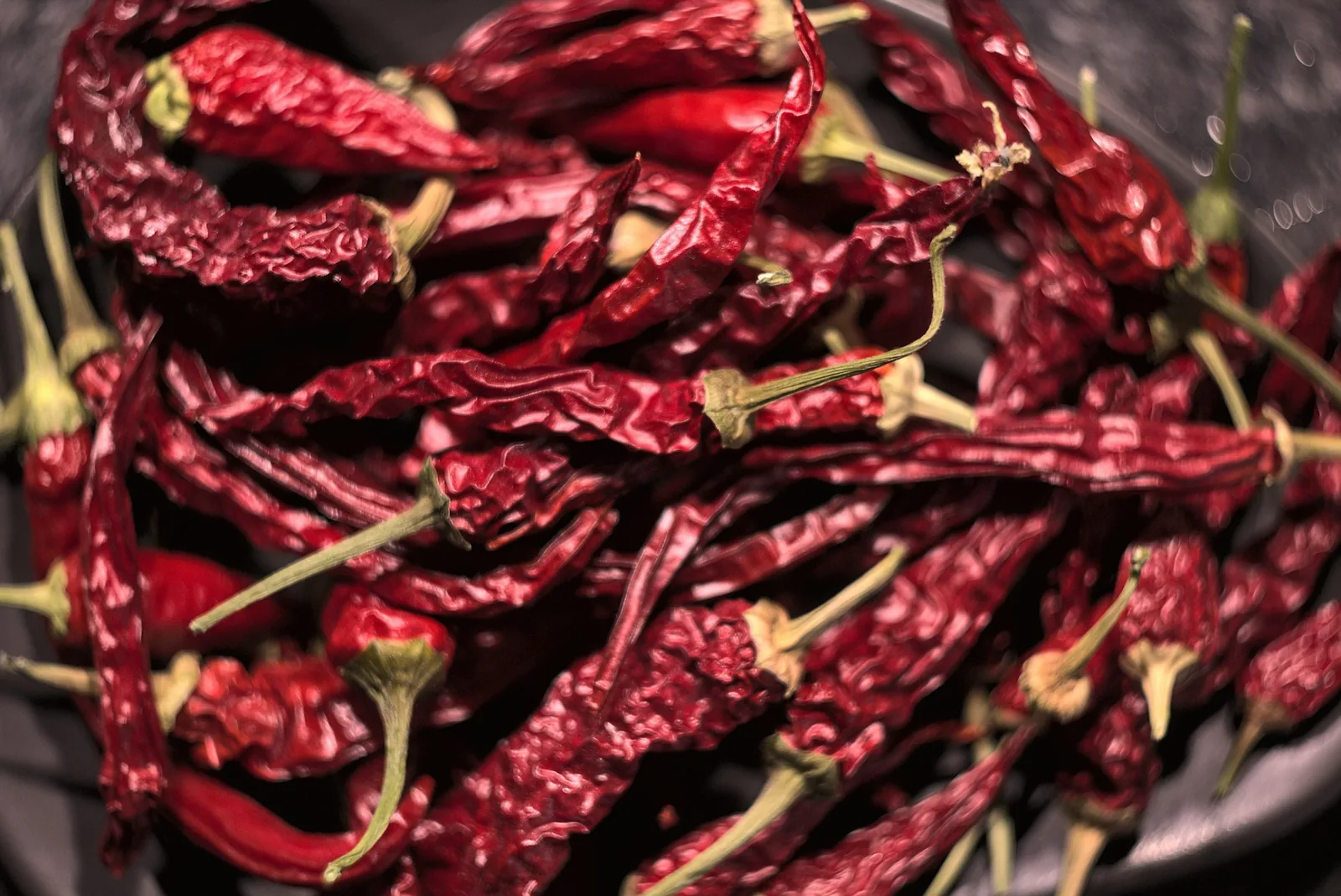
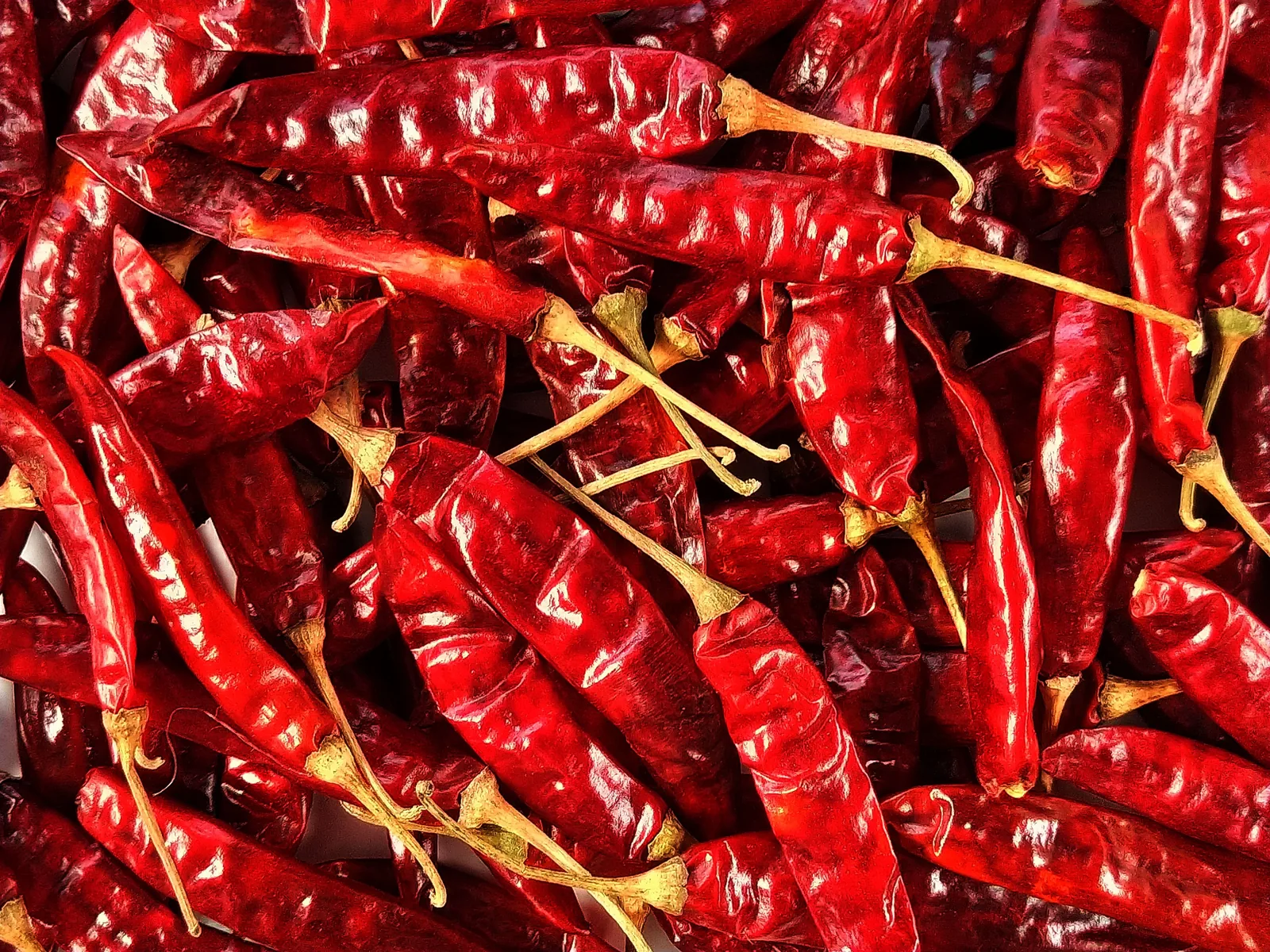
Three dried chillies do most of the work in Mexican cooking: guajillo, ancho and pasilla. They are often called the holy trinity, and between them they build the base of most red sauces, adobos, moles and stews.
The clarifying fact almost nobody leads with: most dried chillies are simply dried versions of fresh ones, renamed. An ancho is a dried poblano. A chipotle is a smoked, dried jalapeño. A pasilla is a dried chilaca. Learning the pairs halves the vocabulary.
The same plant, two names
| Dried name | Is the dried form of | Which means |
|---|---|---|
| Ancho | Poblano | Mild, because poblanos are mild |
| Chipotle | Jalapeño, smoked | Medium, plus smoke |
| Pasilla (chile negro) | Chilaca | Medium, dark, prune-like |
| Guajillo | Mirasol | Mild-medium, bright and tangy |
| Mulato | A poblano variety, dried darker | Mild, sweeter and more chocolatey than ancho |
| Chile de árbol | Its own small chilli | Hot, clean, thin-walled |
That table resolves a lot of confusion. If you know from our fresh chilli guide that a poblano is mild, you already know an ancho is mild. And poblano is the pepper stuffed in a chile relleno, which means the same pepper appears fresh in that dish and dried in mole poblano.
The three that matter most
| Guajillo | Ancho | Pasilla | |
|---|---|---|---|
| Looks like | Smooth, glossy, deep maroon, long and narrow | Wide, flat, wrinkled, reddish-brown | Long, narrow, very wrinkled, nearly black |
| Tastes of | Bright, tangy, faintly berry or cranberry | Raisin, dried fruit, a little like chocolate | Prune, raisin, earthier and a touch hotter |
| Heat | Mild to medium | Mild | Mild to medium |
| Job in a sauce | Colour and acidity | Body and sweetness | Depth and darkness |
They are used together because each does something the others do not. A sauce of guajillo alone is bright and thin; ancho alone is sweet and flat; the combination is what reads as complete. This is the same layering principle we describe in mole, where several chillies are standard rather than optional.
A note on the heat numbers
You will see Scoville figures quoted for each of these. Treat them as bands. New Mexico State University Extension, whose chile breeding programme has run heat analysis on more than five thousand samples, notes that heat comes from capsaicinoids — more than twenty-two are known, with capsaicin and dihydrocapsaicin dominant — and that the reliable measurement is chromatography rather than the original taste-panel method.
The practical consequence is that the same cultivar grown in different conditions produces different heat, so a figure is a range. Our guide to judging salsa heat goes into why that matters at a counter, where nobody has run a chromatograph on the red one.
How they are actually used
- Toast them. A dry pan, a few seconds a side, until they smell nutty and flexible. This is not optional — untoasted chillies taste flat. Burnt ones taste bitter and cannot be rescued.
- Soak them. Hot water, twenty minutes or so, until pliable.
- Blend them with some of the soaking water, garlic and whatever else the dish wants.
- Strain, if you want smoothness. Skins do not fully break down, and a sieve is the difference between a rustic sauce and a silky one.
- Fry the purée briefly in a little fat before adding liquid. This deepens it considerably.
Stems and seeds are usually removed before soaking. Seeds carry some heat but mostly bitterness, so leaving them in is a choice rather than a shortcut.
Where you will meet each one
- Guajillo — birria, adobos, red enchilada sauce, pozole rojo.
- Ancho — mole poblano, al pastor marinade, chili con carne.
- Pasilla — moles, and darker table salsas.
- Chipotle — smoky salsas, adobos, and chalupa toppings.
- Chile de árbol — thin fiery table salsas, and the sauce on a torta ahogada.
A note on Doc’s
Doc’s board named no chillies individually, which is normal for a taco counter — the chillies live in the salsas and the marinades rather than on the menu. The one exception was the pickled jalapeños in its torta, and the grilled jalapeño sold as a side.
Its birria was described as beef slow-stewed in dried chile spices, which is the only place the board acknowledged dried chillies at all — and it did not say which.
Doc’s Taco Shop closed permanently on 19 July 2025. Its 2023 menu board is preserved here as a historical record, and anything said about it above is read from that board. You can read the full menu as Doc’s published it or read how the shop came about.
Frequently asked questions
What are the three main Mexican dried chillies?
Guajillo, ancho and pasilla — often called the holy trinity. Guajillo brings brightness and colour, ancho sweetness and body, pasilla depth.
Is an ancho the same as a poblano?
Yes — an ancho is a dried poblano. Several dried chillies are just dried versions of fresh ones under a different name, which is the single most useful thing to know about them.
What is a chipotle?
A jalapeño that has been smoked and dried. That is where the smoke flavour comes from; it is not a separate variety.
Are dried Mexican chillies hot?
Mostly not very. Guajillo, ancho, pasilla and mulato are mild to medium and are used for flavour, colour and body. Chile de árbol is the common hot one.
Why do you toast dried chillies?
It develops flavour — untoasted chillies taste flat. A few seconds a side in a dry pan is enough; burning them makes the sauce bitter and cannot be undone.
The short version
Guajillo for brightness, ancho for sweetness, pasilla for depth, and most of them are dried versions of fresh peppers you already know. Toast, soak, blend, strain, fry. Mild rather than hot, almost all of them.