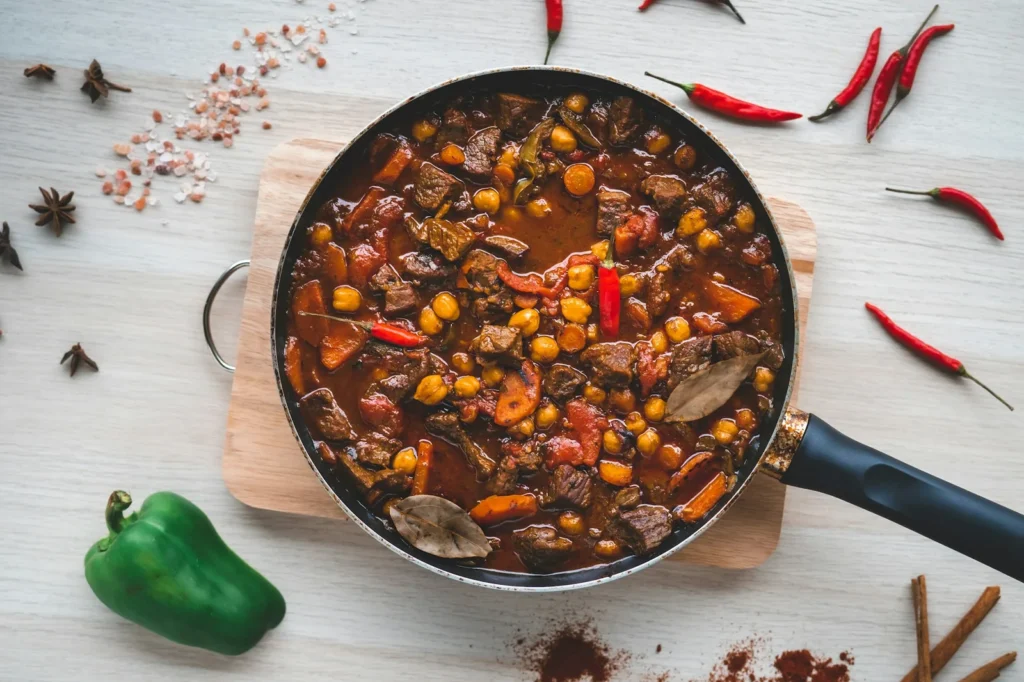
Chili con carne is a stew of beef and dried chillies. It is Texan, not Mexican — it was built and sold in San Antonio’s public plazas from the 1860s onwards — and it has been the official state dish of Texas since 1977.
The famous rule about beans is real, and it comes from how the dish was originally sold rather than from anybody’s purity instinct.
The Chili Queens
The dish was made and sold by Mexican and Tejana women who set up tables in San Antonio’s Military Plaza in the evenings — the Chili Queens. UTSA’s Institute of Texan Cultures places their heyday at roughly sixty years, from around 1870 into the 1930s, with a presence in the plazas from as early as the 1860s and operations continuing until the late 1940s.
They cooked over mesquite fires and portable stoves, lit the tables with lanterns, and sold to locals and tourists alike with musicians working the crowd. This was not a folk tradition that happened to produce a dish; it was a functioning street-food economy run by women for six decades, and chili con carne is what it sold.

The bean question, answered properly
The Queens served chili con carne without beans. Beans were available — often alongside, often with tamales, which were the more common order — but they were a separate thing on the plate rather than an ingredient in the pot.
That is the whole origin of the Texas rule. It is not an arbitrary shibboleth: it describes how the dish was actually sold for sixty years. Chili with beans in it is a real and widely eaten dish; it is just a later, largely non-Texan development.
- Texas chili — beef and chillies. Beans served beside it if at all.
- Chili with beans — common across the rest of the United States. Cheaper to make and stretches further.
- Chili con carne on a menu in Mexico — essentially absent. It is not a Mexican dish.
What is actually in it
| Component | Traditionally | Doing |
|---|---|---|
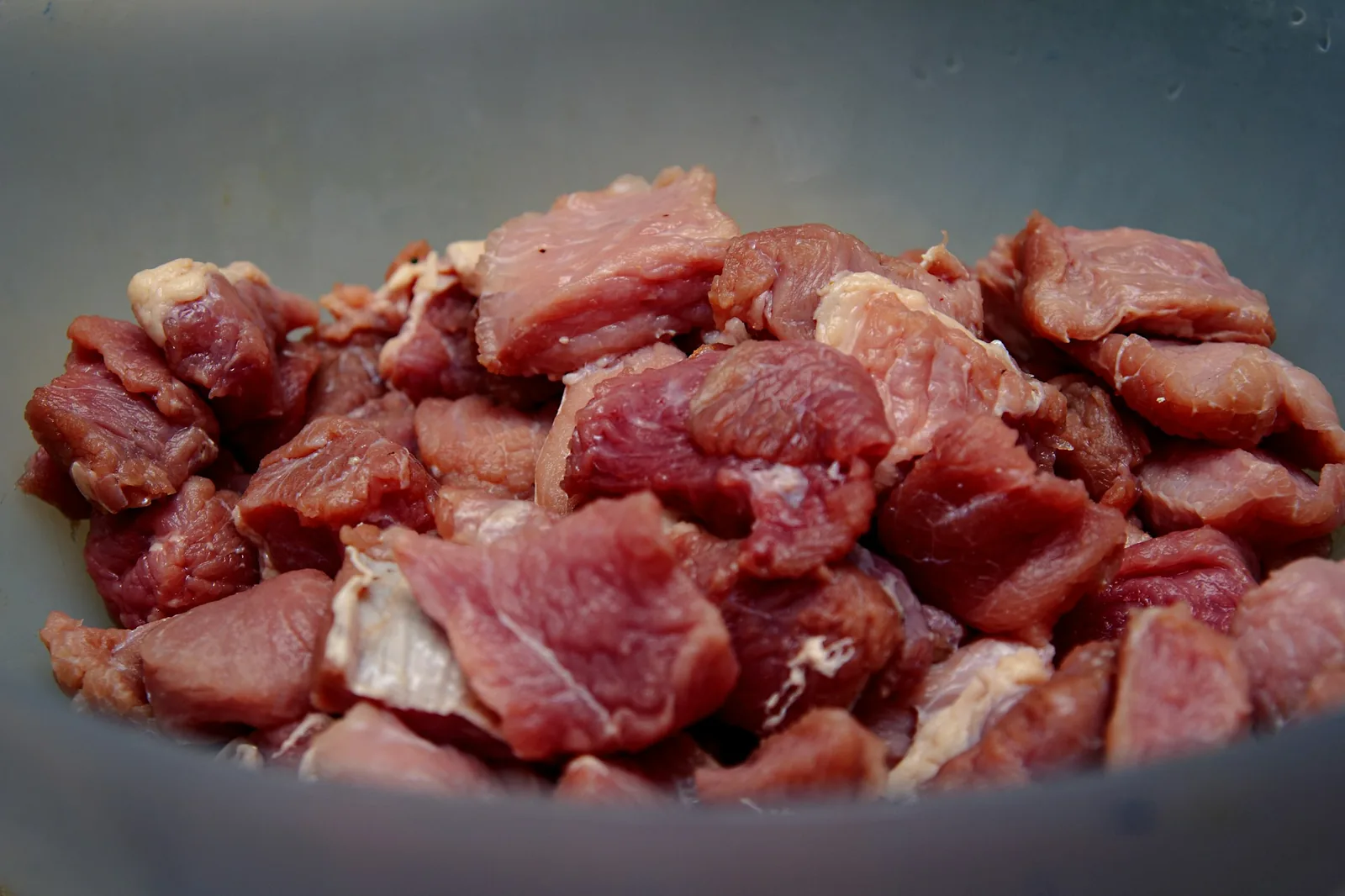
| Beef | Coarsely cut chuck, not mince | Texture — you should be able to see the meat |
| Chillies | Dried, rehydrated and ground to a paste | The flavour base, and the name |
| Cumin | Generously | The characteristic Tex-Mex note |
| Oregano and garlic | Yes | Depth |
| Masa or cornmeal | A little, late | Thickening |
| Tomato | Sometimes, sparingly | Sweetness and body |
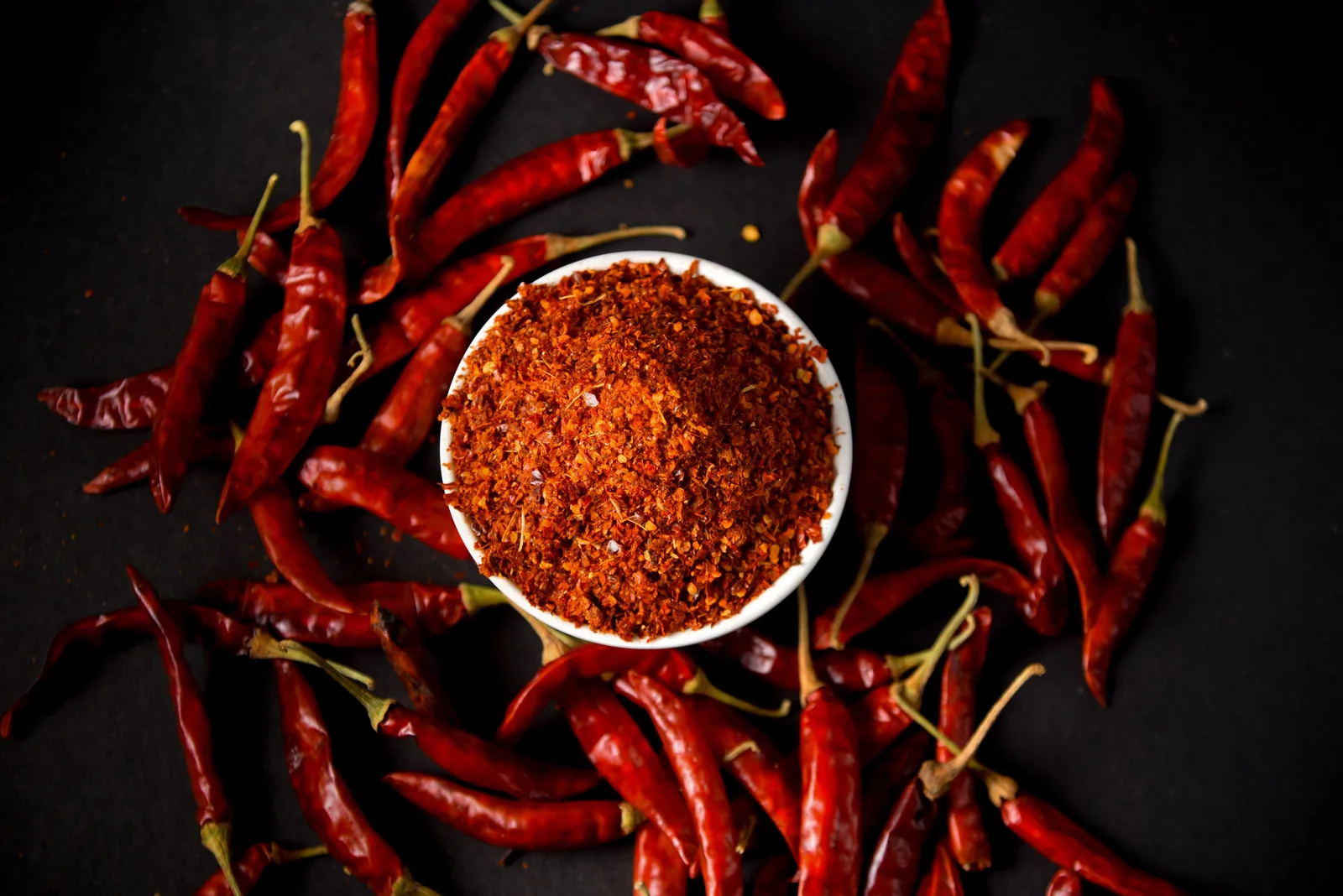
Two things there separate a good chili from a mediocre one. The chillies should be whole dried ones, toasted and rehydrated, rather than a commercial chilli powder — the difference is the same one we describe in mole. And the beef should be cut, not minced, which is why the best versions look nothing like the tinned product the name now suggests.
Chili con carne is not chile con carne
The spelling varies and it is worth knowing why. In Spanish the pepper is chile. The English spelling chili came via the commercial chilli-powder trade and now generally refers to the American stew, while chile refers to the pepper itself.
So chile con carne would literally mean the pepper with meat, and chili con carne has come to mean the dish. It is a small thing, but it maps the divergence precisely: the moment the dish acquired an anglicised spelling is roughly the moment it stopped being a Mexican dish and became a Texan one.
Where it sits in Tex-Mex
Chili con carne is arguably the founding Tex-Mex dish. It predates the term, it was commercialised early — chilli powder was manufactured in Texas from the 1890s — and it established the cumin-and-chilli-powder flavour profile that runs through the whole cuisine.
It also produced the chilli gravy that covers Tex-Mex cheese enchiladas, which is one of the clearest points of divergence from Mexican cooking. Our Tex-Mex versus Mexican comparison covers the wider pattern.
A note on Doc’s
Chili con carne was not on Doc’s board, and no stewed beef dish was except seasonal birria — which is a Mexican dish built on dried chillies and therefore a genuine cousin of this one, arrived at from the other side of the border.
Doc’s Taco Shop did not serve this. The shop was a small weekend taqueria in Liberty City, Texas, and it closed permanently on 19 July 2025. This article is here because our own Tex-Mex guide names the dish as evidence and never explained it. You can read the full menu as Doc’s published it or read how the shop came about.
Frequently asked questions
Is chili con carne Mexican?
No. It is a Texan dish, developed and sold in San Antonio from the 1860s onwards by the Chili Queens, and it does not appear on Mexican menus.
Should Texas chili have beans in it?
Traditionally no. The Chili Queens served beef and chillies, with beans as a separate item if at all, and that is where the rule comes from. Chili with beans is a legitimate later variation.
Who were the Chili Queens?
Mexican and Tejana women who sold chili con carne from tables in San Antonio’s plazas, principally between about 1870 and 1930, with a presence from the 1860s until the late 1940s.
What does ‘con carne’ mean?
With meat. The full name is chilli with meat, which tells you the chillies are the base and the beef is what is in them — not the other way round.
What cut of beef should chili use?
Coarsely cut chuck rather than mince. You should be able to see and feel individual pieces of beef, which is how the dish was made before industrial mincing was common.
The short version
Beef and dried chillies, from San Antonio, sold by the Chili Queens for sixty years. No beans in the pot, by history rather than by decree. Texas made it, Texas made it official, and it is the dish most of Tex-Mex is built on top of.