
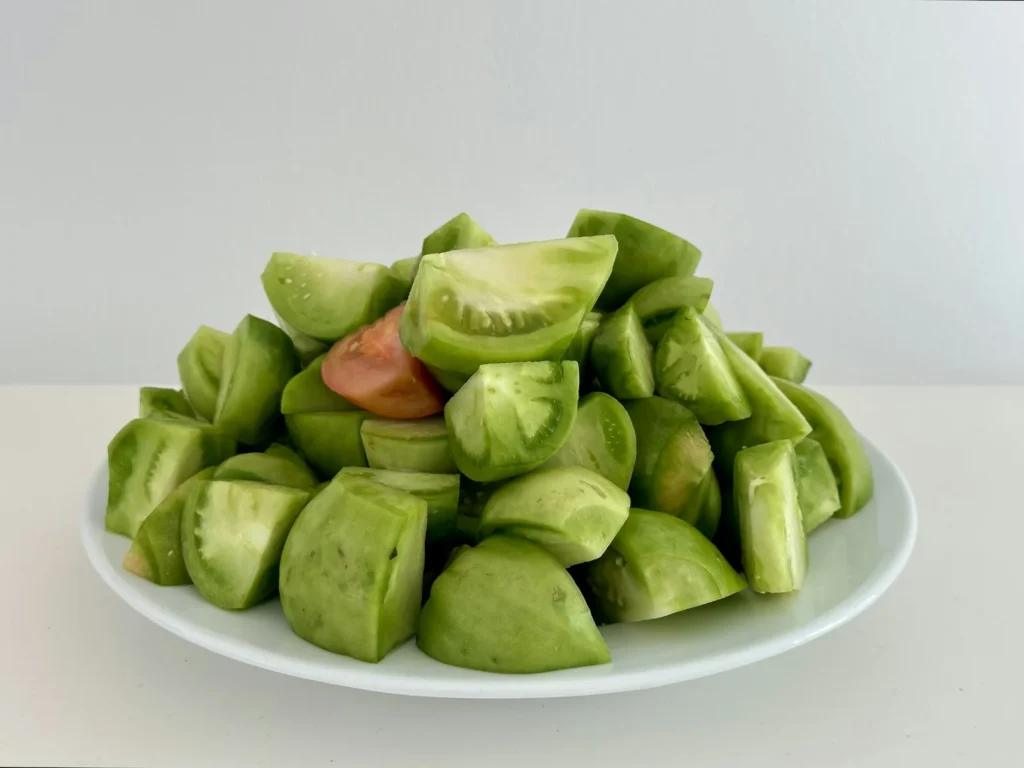
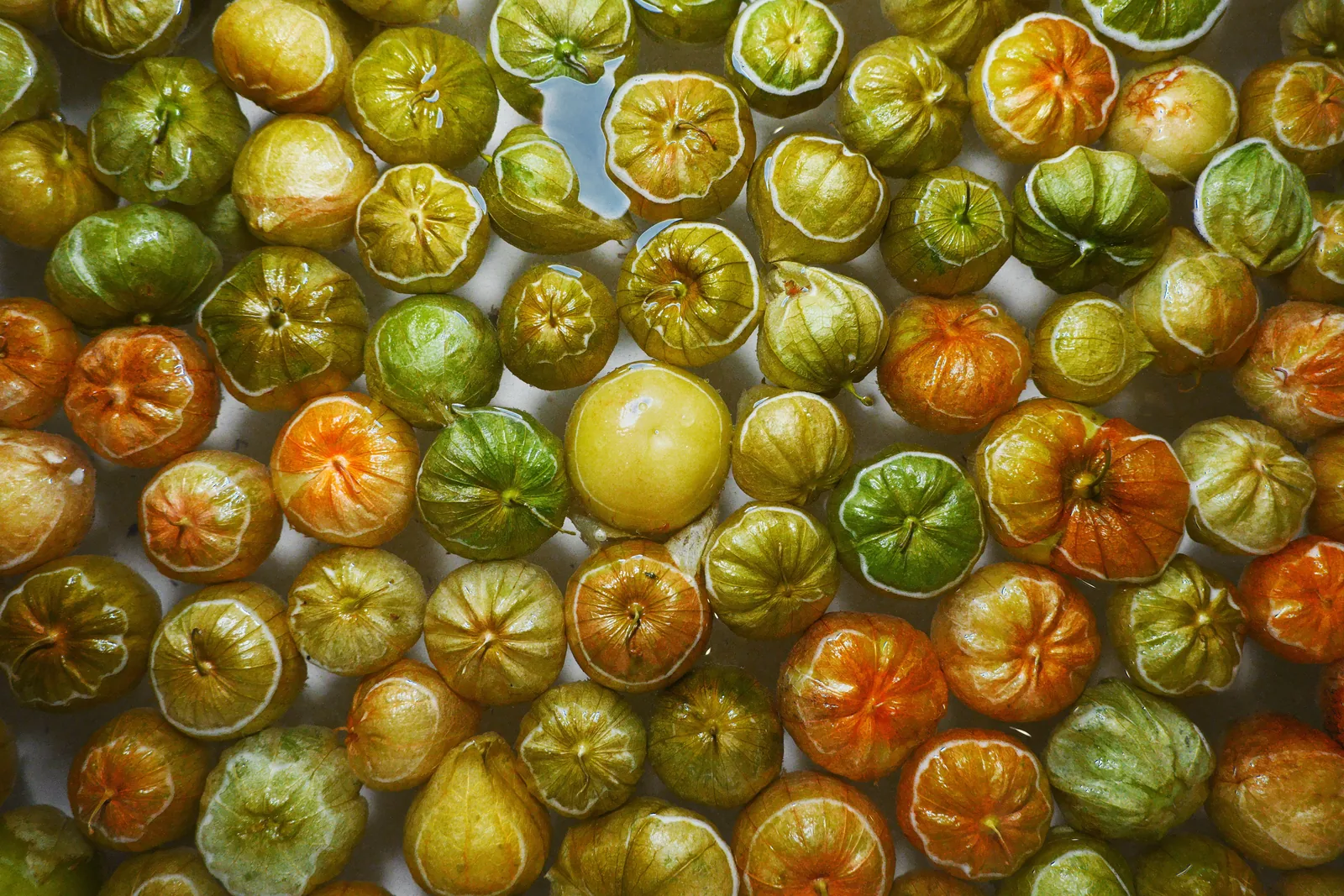
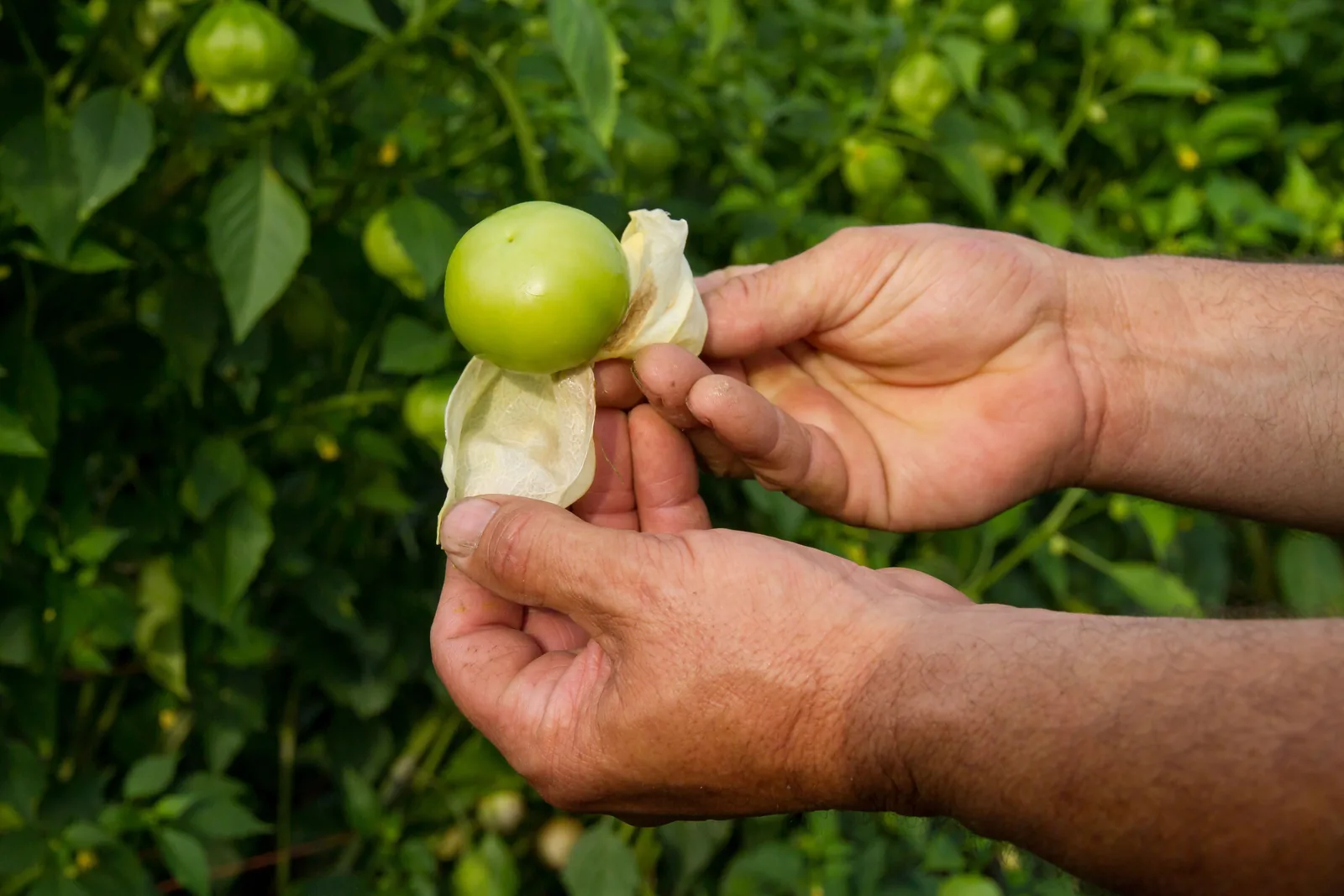
A tomatillo is not a green tomato. It is a different plant — a relative of the tomato that grows inside a papery husk — and it is tart rather than sweet even when fully ripe. That tartness is why every salsa verde tastes the way it does.
The husk is the giveaway. No tomato has one.
Tomatillo or green tomato
| Tomatillo | Unripe green tomato | |
|---|---|---|
| Husk | Yes — papery, dry when ripe | None |
| Flavour | Tart, citrusy, faintly herbal even when ripe | Sour because unripe; sweet if allowed to ripen |
| Texture | Dense, firm, few seeds | Softer, more watery |
| Ripe when | The fruit fills the husk and is still green and firm | When it turns red |
| Used for | Salsa verde, mole verde, stews | Frying, pickling |
South Dakota State University Extension’s guide to growing tomatillos puts the ripeness point precisely: pick them when the fruit fills the husk but is still green and firm, because left longer they soften and go bland. The husk itself is the flower’s calyx, which grows with the fruit and dries as it matures.
That is worth knowing as a shopper: a tomatillo whose husk is split and whose flesh has yellowed is past its best, not riper in a useful way.
Why salsa verde is tart
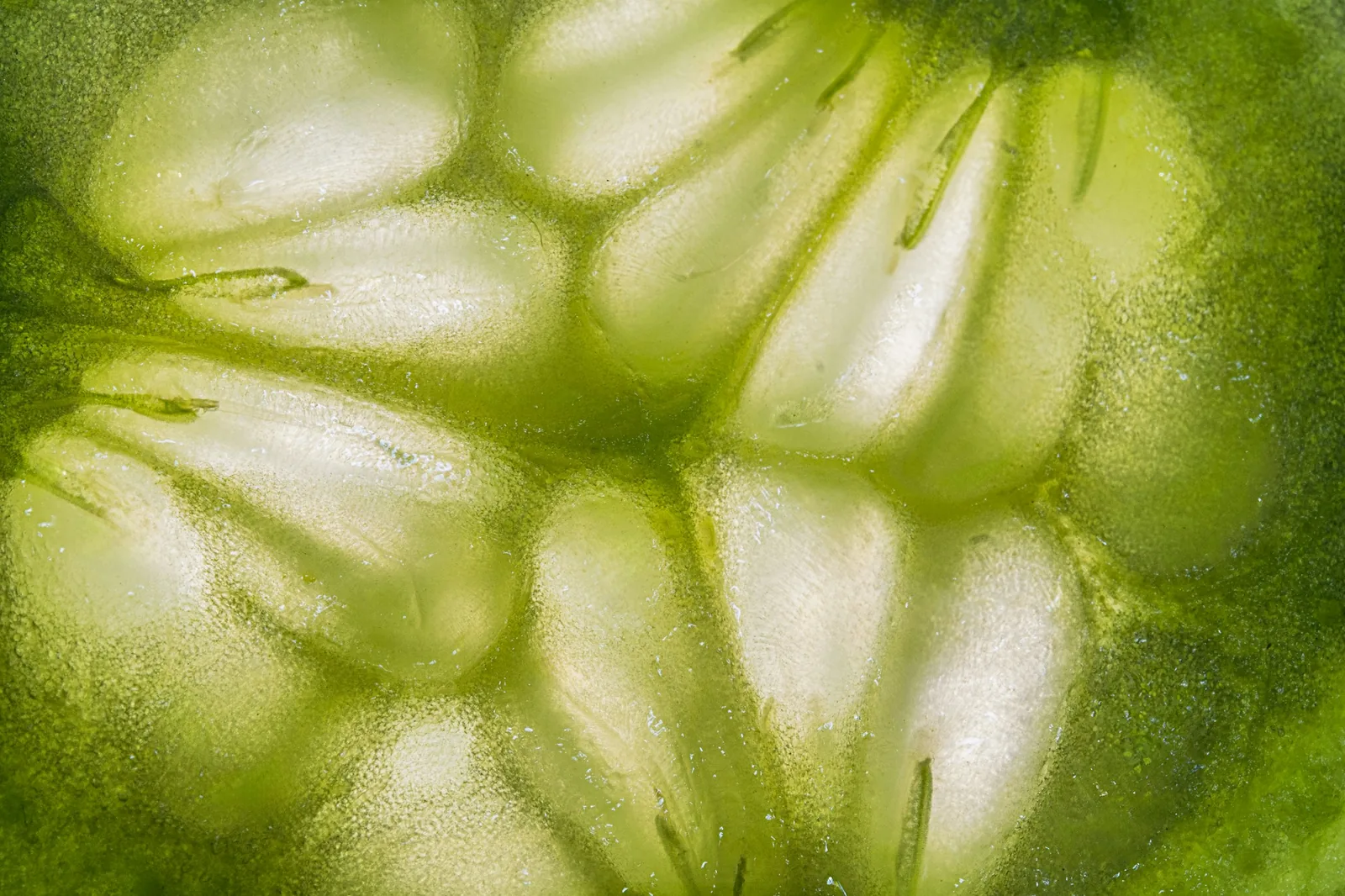
Because tomatillos are. They carry noticeably more acid than tomatoes, and that acidity is doing structural work in Mexican cooking — it cuts through fat in a way a sweet tomato sauce cannot.
This is why green salsa is the standard partner for rich, fatty things: carnitas, fried flautas, chilaquiles. And it is why our salsa guide warns that green does not mean mild — the tartness reads as sharpness and can mask genuine chilli heat until it arrives.
Buying and storing them
- Look for firm fruit that fills its husk. A loose, shrivelled husk means it has been sitting.
- Green, not yellowing. Yellow means overripe and bland.
- They keep well — two or three weeks in the fridge in their husks, considerably longer than a tomato.
- Peel and rinse before use. There is a sticky film under the husk; it washes off.
- Tinned tomatillos work for a cooked salsa, though not for a raw one.
They also freeze acceptably once cooked, which is worth knowing if you find them cheaply and only need a few.
Raw, boiled or roasted
The same fruit gives three quite different salsas, and this is the most useful practical thing to know about it.
- Raw — sharpest and most vegetal. Blended with chilli, onion and cilantro. Bright and aggressive.
- Boiled — softer, rounder, less acidic. The common taqueria version and the mildest of the three.
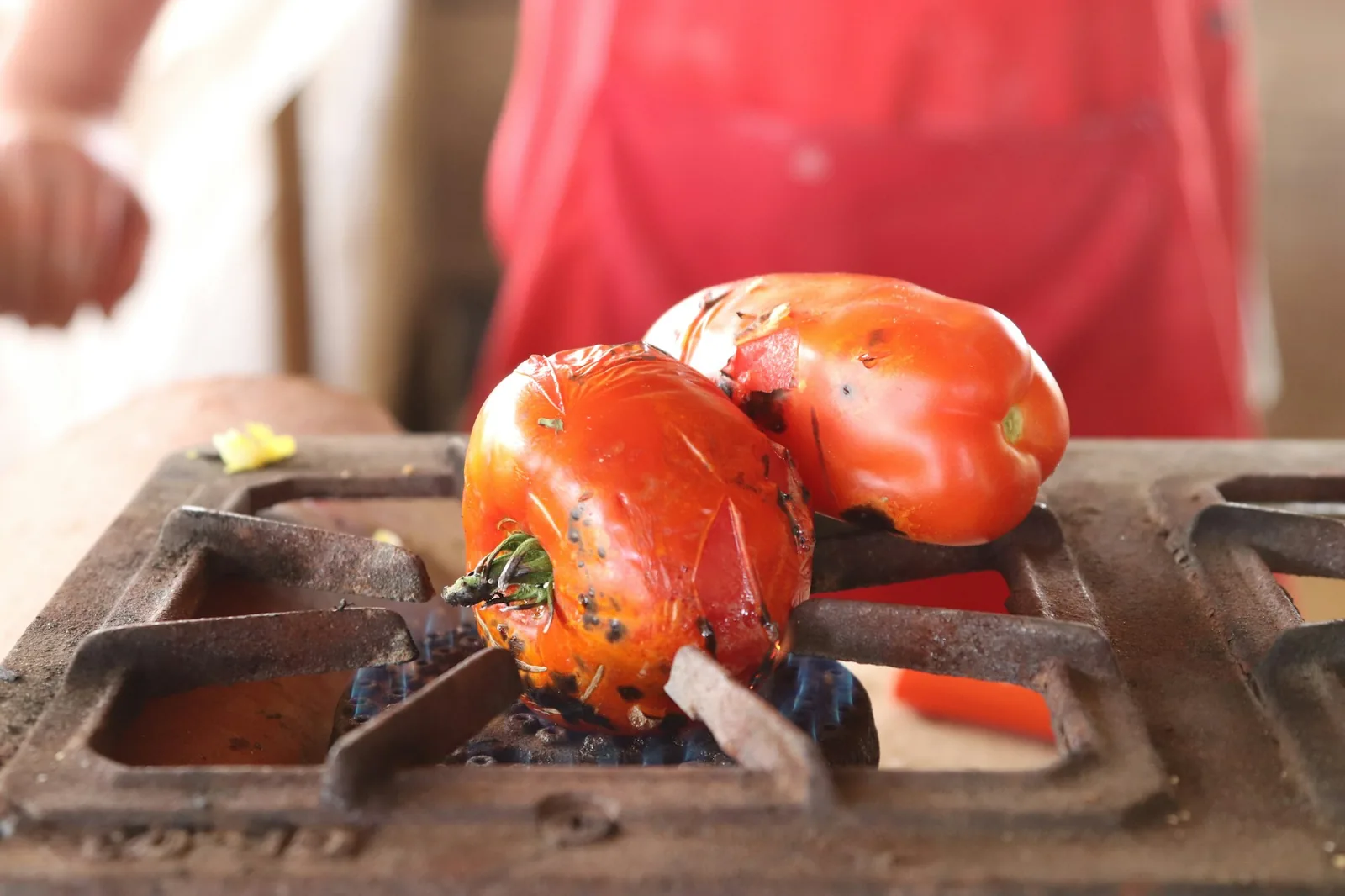
- Roasted or charred — sweeter, smoky, with the acidity dialled back. The most complex, and the best with grilled meat.
If a green salsa surprises you by being sweet, it was probably roasted. If it surprises you by being fierce, it was probably raw.
Where tomatillos turn up
- Salsa verde — the main event.
- Enchiladas verdes and suizas — the same sauce, thinned.
- Mole verde and pipián — with pumpkin seeds and herbs.
- Pozole verde — the Guerrero version.
- Aguachile — in some versions, for body.
A note on Doc’s
Doc’s board did not name tomatillos, and did not name any salsa. Table salsas are rarely itemised on a menu, so their absence tells us nothing about whether the shop made a green one. The only sauce it named was bottled Valentina, on the elote.
Doc’s Taco Shop closed permanently on 19 July 2025. Its 2023 menu board is preserved here as a historical record, and anything said about it above is read from that board. You can read the full menu as Doc’s published it or read how the shop came about.
Frequently asked questions
Is a tomatillo a green tomato?
No. It is a different species with a papery husk, and it is tart rather than sweet even when fully ripe. Green tomatoes are simply unripe tomatoes.
What does a tomatillo taste like?
Tart and citrusy, with a faintly herbal edge. Denser and less watery than a tomato.
Do you remove the husk?
Yes. Peel off the papery husk and rinse away the sticky film underneath before using them.
When is a tomatillo ripe?
When the fruit fills the husk while still green and firm. Left longer it softens and the flavour goes bland.
Why is my salsa verde bitter?
Usually under-ripe or over-blended tomatillos, or scorched rather than charred skins. Boiling rather than roasting gives a rounder, gentler result.
The short version
Husked, tart, dense, and not a tomato. Its acidity is the point, which is why green salsa cuts fat so well. Raw for sharp, boiled for mild, roasted for sweet and smoky.