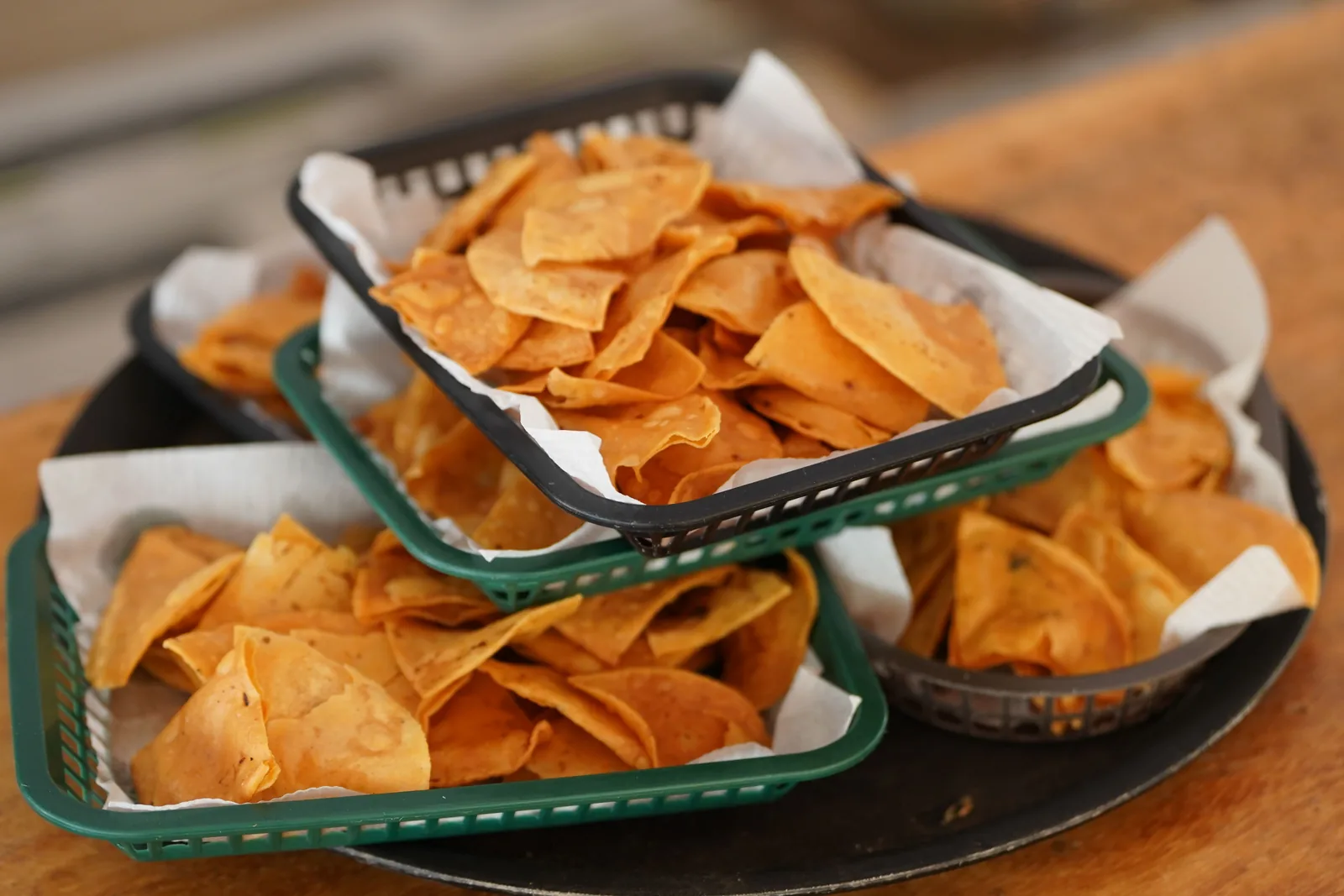
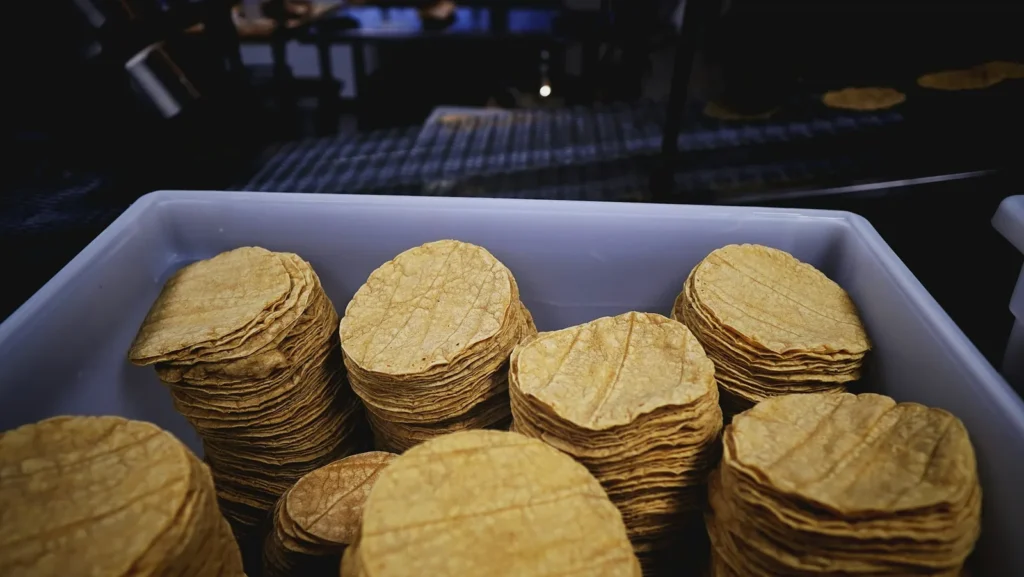
For street tacos, corn wins — it holds up to juicy fillings and brings its own toasted flavour. For burritos, quesadillas and anything you need to fold and carry, flour wins, because it is larger, softer and far more forgiving. Most of the argument disappears once you match the tortilla to the job.
The core difference in one paragraph
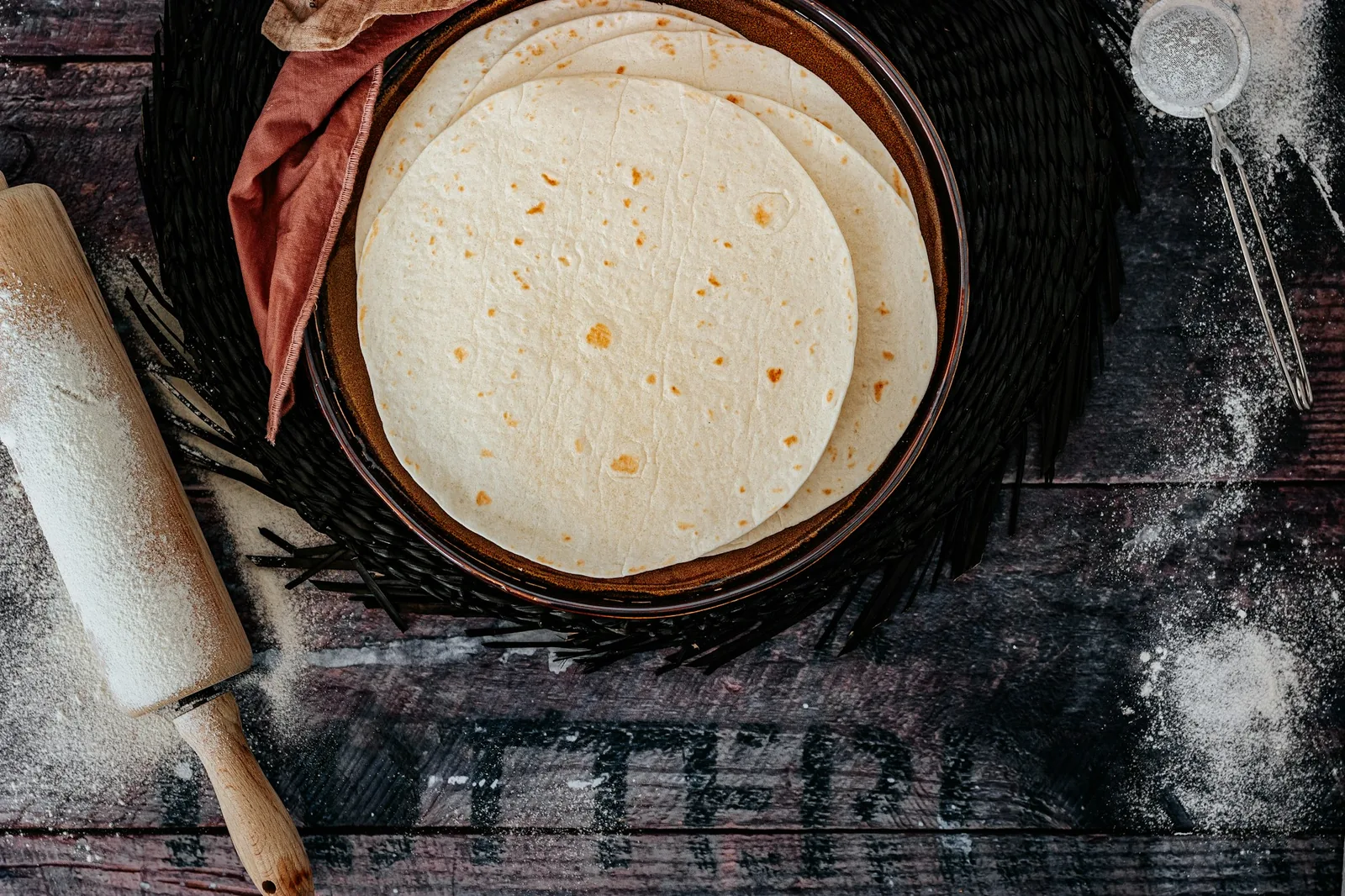
Corn tortillas are made from nixtamalised maize — corn cooked and steeped in an alkaline solution, then ground into masa. Flour tortillas are made from wheat flour, fat and water. The corn version is firmer, more fragrant and tears more easily; the wheat version is softer, stretchier and stronger. Everything else follows from that.
Side by side
| Feature | Corn tortilla | Flour tortilla |
|---|---|---|
| Made from | Nixtamalised maize (masa) | Wheat flour, fat, water |
| Typical texture | Firmer, slightly grainy, more rustic | Soft, smooth and flexible |
| Common size | Often 4–6 inches | Often 8–12 inches |
| Flavour | Distinct toasted-corn flavour | Mild and neutral; carries fat well |
| Reaction to wet fillings | Resists sogginess; may tear | Absorbs moisture; rarely tears |
| Strength when folded | Cracks if not warmed first | Folds and rolls without cracking |
| Classic uses | Street tacos, enchiladas, tostadas, chilaquiles | Burritos, quesadillas, fajitas, breakfast tacos |
| Gluten | Naturally gluten-free if made purely from masa | Contains wheat gluten |
Why corn is the street-taco default
Two reasons, and neither is about tradition for its own sake.
The first is moisture. A griddled filling sits in its own rendered fat and juices. Wheat flour absorbs that liquid and goes limp from the inside out. Corn absorbs far less, so the tortilla is still structurally distinct from the filling by the time you reach the last bite.
The second is flavour. Nixtamalisation does not just soften the corn — it changes its aroma and makes the finished tortilla taste of something on its own. When the whole taco is one meat and three garnishes, the tortilla is a real part of the flavour rather than a wrapper. A neutral flour tortilla would leave the taco tasting thinner.
The doubling question
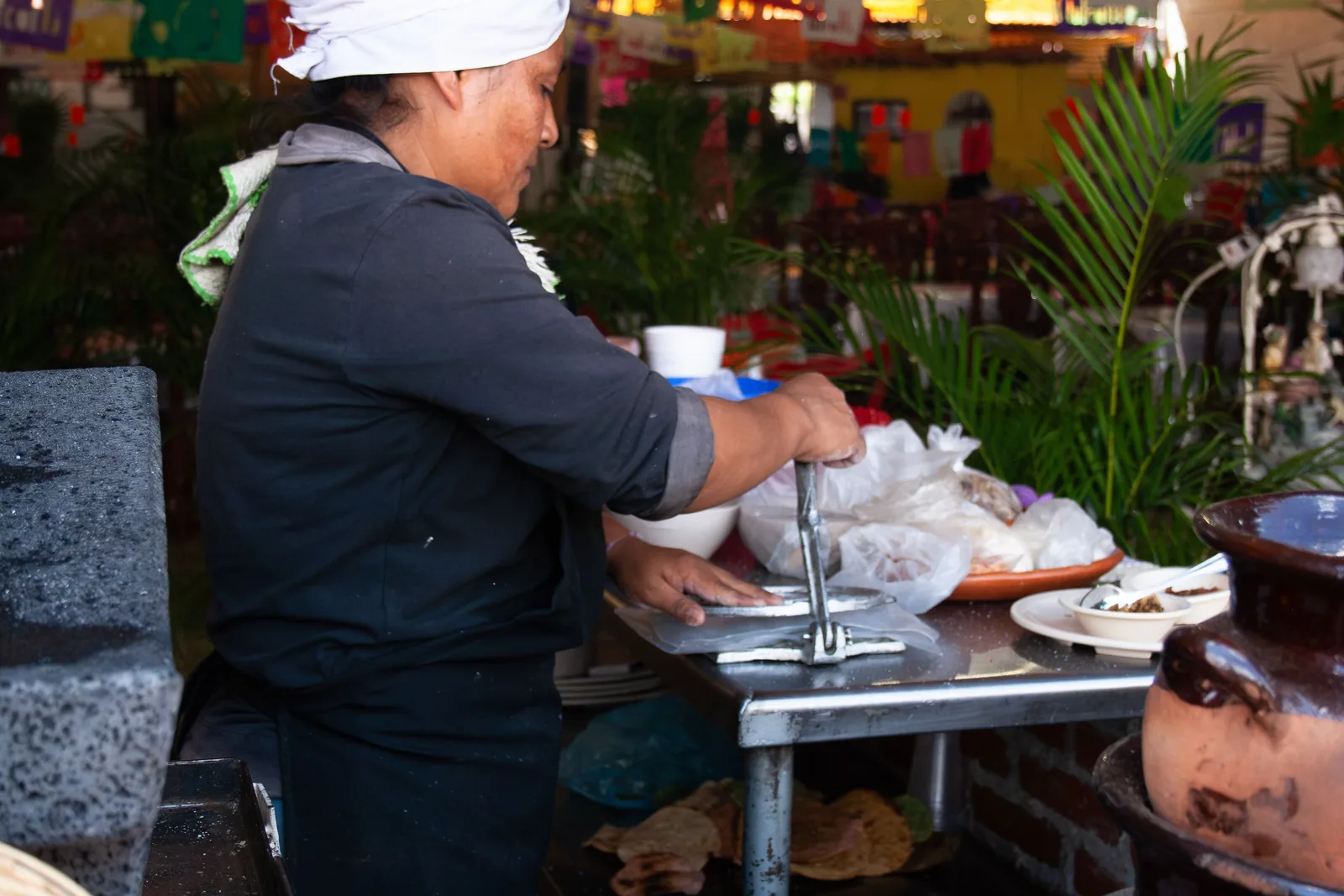
Because corn tears, taquerias serve street tacos on two tortillas. This is not a way of selling you more tortilla; it is the accepted fix for a genuine structural weakness. Flour tortillas are almost never doubled, because they do not need it. Our guide to how a street taco is put together covers this and the rest of the format in more detail.
Where flour earns its place
Flour tortillas are not a compromise. They are simply better at a different set of tasks. Anything that has to be rolled shut and held in one hand — a burrito, a wrap, a rolled breakfast taco — needs a tortilla that can be folded tight without splitting. Only wheat does that reliably.
They also brown and blister well on a dry pan, which is why quesadillas are almost always flour: you want the outside crisp and the cheese inside melted, and a corn tortilla will crack before it crisps.
Size is the other factor. Flour tortillas are routinely made at eight, ten or twelve inches, which corn cannot match without becoming fragile. Any dish that needs surface area — a burrito, a large quesadilla, a fajita wrap — needs wheat by default. The filling choice matters less here than you might think; marinated pork and griddled beef both work in either format.
What nixtamalisation actually does
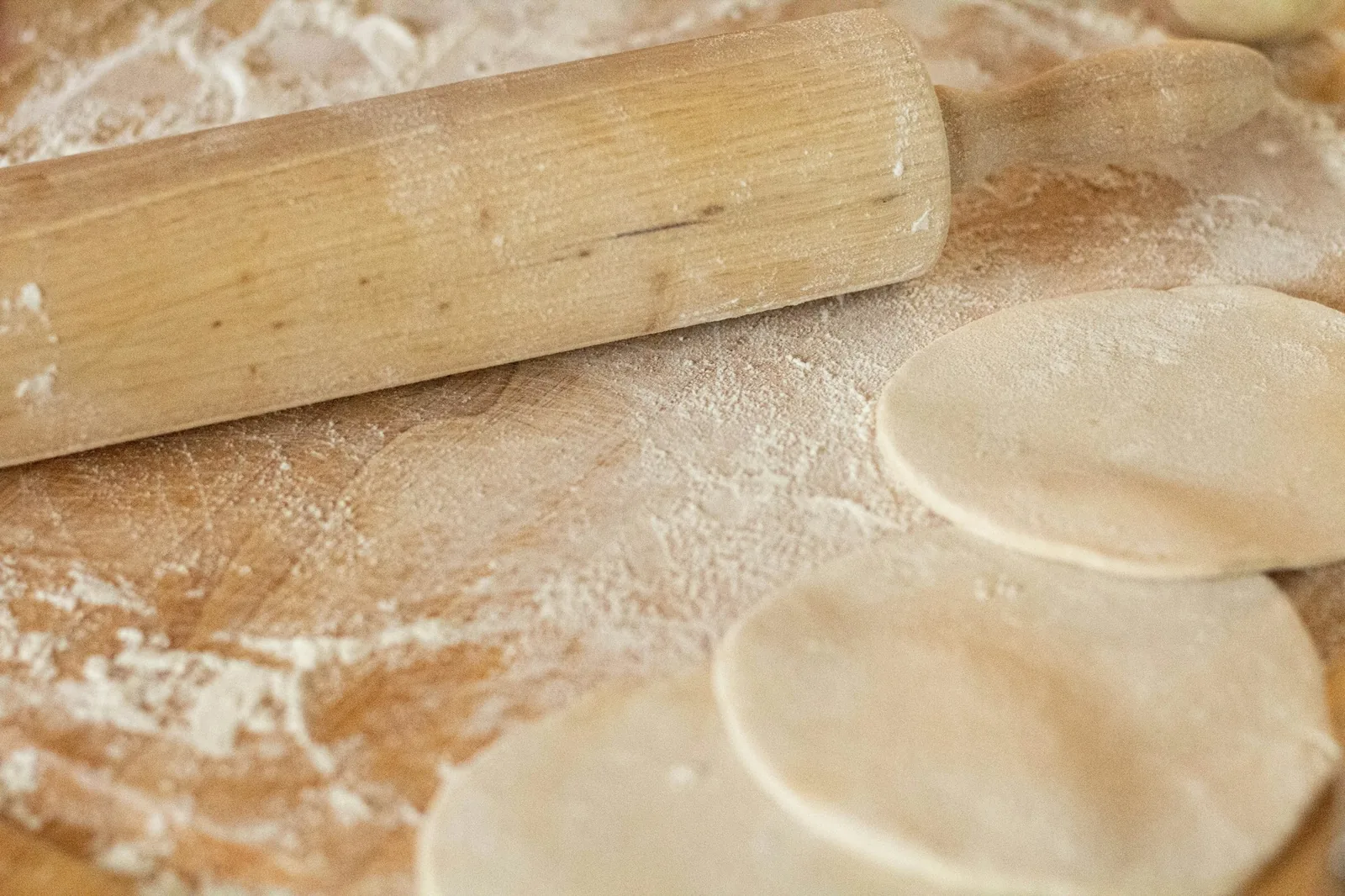
It is worth understanding, because it is the reason corn tortillas exist in the form they do. Dried maize is cooked and then steeped in an alkaline solution — traditionally slaked lime, cal. This loosens the tough outer hull, softens the kernel enough to grind into a workable dough, and changes the aroma considerably.
It also has a nutritional consequence: the process makes the niacin in maize available to the human body, which untreated corn does not. That is a genuinely significant piece of food technology, worked out in Mesoamerica thousands of years before anyone understood the chemistry. Masa made without it would be gritty, bland and nutritionally poorer.
Warming matters more than people expect
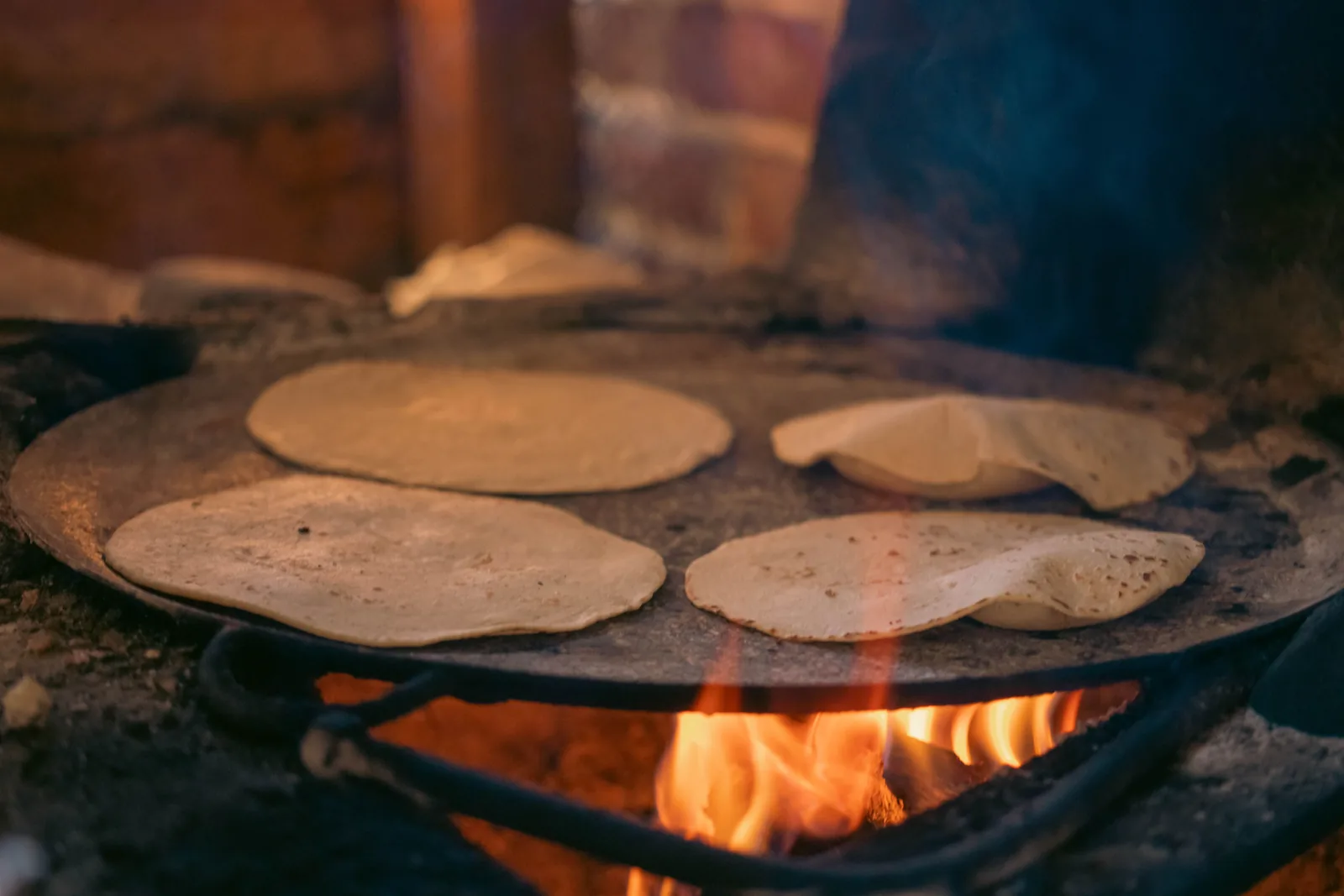
Most bad experiences with corn tortillas are really experiences with cold corn tortillas. Straight from the packet they are stiff and they crack along the fold. Thirty seconds a side on a dry hot pan makes them pliable, aromatic and much harder to tear.
- Heat a dry pan or comal until a drop of water skitters across it.
- Lay the tortilla down for about 30 seconds, until it softens and smells toasted.
- Turn it and give it another 20–30 seconds.
- Stack the warmed tortillas in a clean cloth so they steam each other and stay soft.
Flour tortillas benefit from the same treatment, though they are more forgiving if you skip it.
Which should you choose?
Choose by dish, not by loyalty.
- Corn suits street tacos, enchiladas, tostadas and anyone who wants a more pronounced tortilla flavour or is avoiding wheat.
- Flour suits burritos, quesadillas, fajitas, heavily sauced fillings, and anyone who prefers a soft, mild, flexible wrap.
How one taco shop split the difference
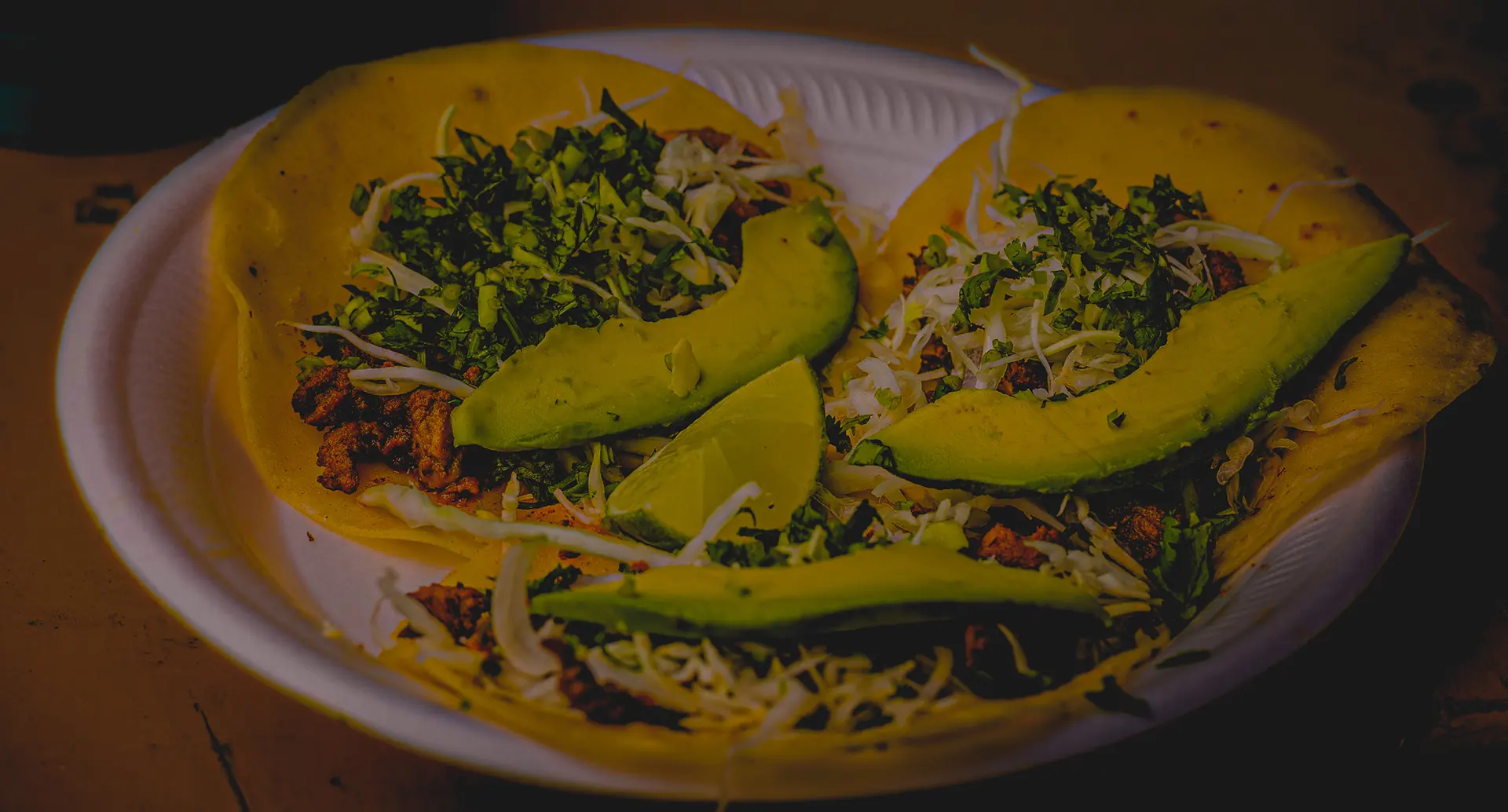
Doc’s Taco Shop in Liberty City, Texas divided its board more or less exactly along these lines. Street tacos went on corn. The Gringo, the quesadillas and the burrito all went on flour, in sizes from eight to ten inches. The Suegrita used two corn tortillas grilled crisp, which is corn being used for a third thing again — crunch. The torta was the one item on the board built on neither: a crusty wheat bolillo roll, which is a different tradition again.
That split is a good practical summary of the whole debate: corn for small and direct, flour for large and wrapped. You can see how each dish was described on the published menu.
Doc’s Taco Shop closed permanently on 19 July 2025. The menu references above are historical.
A note on gluten and nutrition
Corn tortillas made purely from masa, water and lime contain no wheat. That does not automatically make any given corn tortilla safe for someone with coeliac disease — commercial products vary, blended corn-and-wheat tortillas exist, and shared fryers and griddles introduce cross-contact. If it matters medically, read the label and ask the kitchen directly — we go through exactly what to check and what to ask in are corn tortillas gluten free?, and we cover the other common restrictions in our vegetarian, dairy-free and allergen guides.
On nutrition, the two are closer than the internet suggests. Corn tortillas are typically smaller, so a single one carries fewer calories, and they tend to be higher in fibre; flour tortillas usually carry more fat. Exact figures depend entirely on the product, and you can look up specific values in the USDA FoodData Central database.
Frequently asked questions
Which tortilla is more authentic for tacos?
Corn, in most of Mexico. But flour tortillas are genuinely traditional in northern Mexico, so calling them inauthentic is simply wrong — they belong to a different region.
Why do my corn tortillas keep cracking?
They are almost certainly not warm enough. Cold corn tortillas crack along the fold. Thirty seconds a side on a dry hot pan usually solves it completely.
Are corn tortillas gluten-free?
Pure masa corn tortillas contain no wheat, but blended products exist and shared cooking surfaces can cause cross-contact. Check the packaging and ask the kitchen if you have coeliac disease.
Which tortilla is better for burritos?
Flour, without much argument. A burrito has to be rolled shut and hold together in the hand, and only wheat gluten gives you that flexibility at that size.
Can I use flour tortillas for street tacos?
You can, and some places offer it. You will lose the corn flavour and the filling will make the tortilla softer faster, but nothing terrible happens.
The takeaway
Corn and flour are not competitors. Corn is a small, flavourful, moisture-resistant tortilla that suits direct fillings; flour is a large, strong, neutral one that suits wrapped and sauced dishes. Pick the one that matches what you are making.
Next, what the onion, cilantro and lime are actually for — the other half of how a street taco is built.