
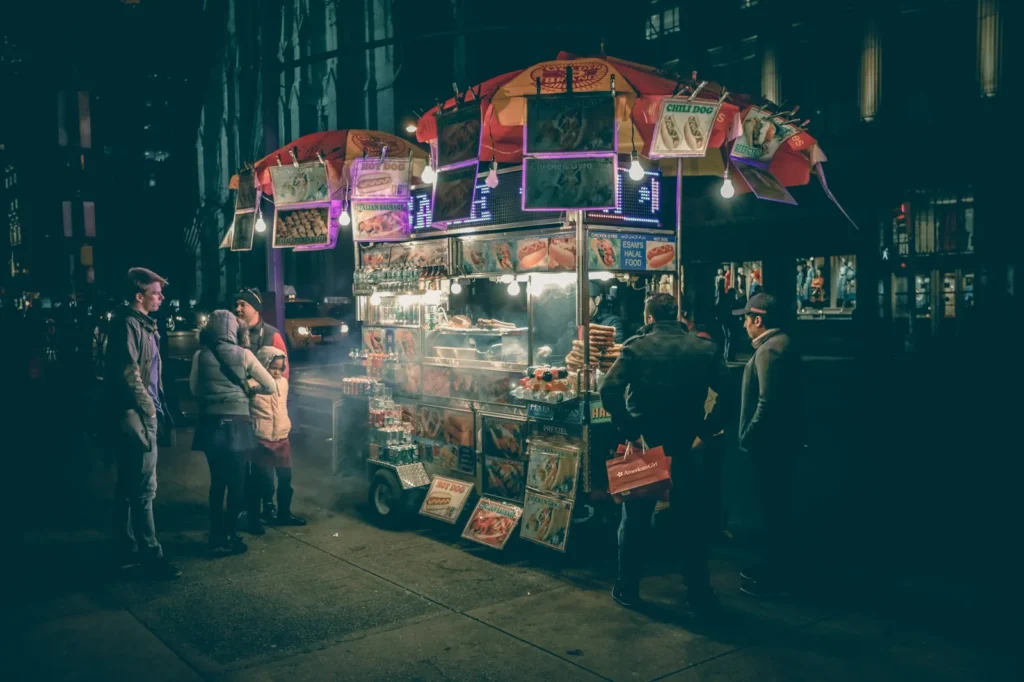
Mexico City’s street food runs on a clock. Specific foods appear and vanish at specific hours, and a visitor who does not know the schedule will walk past most of it. Guajolotas at dawn, tacos de canasta at midday, quesadillas all afternoon, al pastor after dark.
That is the single most useful thing to know, and almost no guide leads with it. The city has an enormous street-food economy organised around when people are moving.
The daily schedule
| Roughly | What appears | Where |
|---|---|---|
| 6am-10am | Guajolotas, tamales, atole | Metro entrances, bus stops |
| 11am-3pm | Tacos de canasta, tortas, comida corrida | Office districts, markets |
| All afternoon | Quesadillas, huaraches, sopes, fruit carts | Market halls, street corners |
| 6pm-late | Al pastor, suadero, carnitas, tacos de guisado | Corner taquerias, trompo stands |
| Very late | Tacos, tortas, esquites | Wherever people are leaving bars |
Most guides to the city cover the map. The clock is the other half of it, and it is the half that decides whether you eat well.
The morning: the guajolota
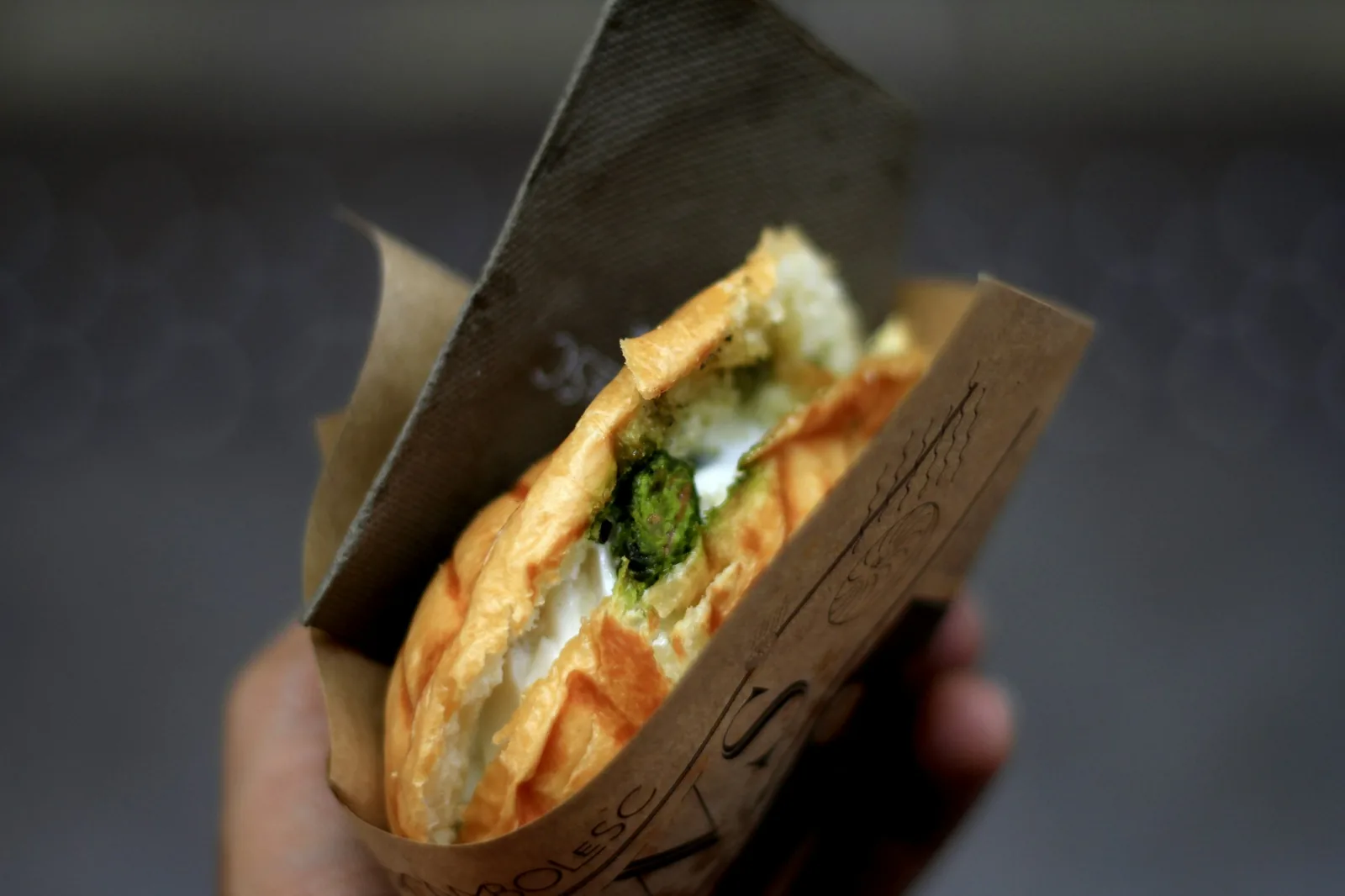
A tamal inside a bolillo roll. Carbohydrate inside carbohydrate, sold from carts at metro entrances to people on their way to work, usually with a cup of atole — a warm, thick masa drink.
It sounds like a joke and it is entirely serious: cheap, filling, portable and eaten standing up by a very large number of people every morning. TasteAtlas records it under its other name, torta de tamal, as a Mexico City sandwich sold from metro stations and morning stalls, with the tamal inside it varying from red mole and chicken to rajas con queso or a sweet one. The name guajolota means turkey hen, for reasons nobody has satisfactorily explained.
Midday: tacos de canasta
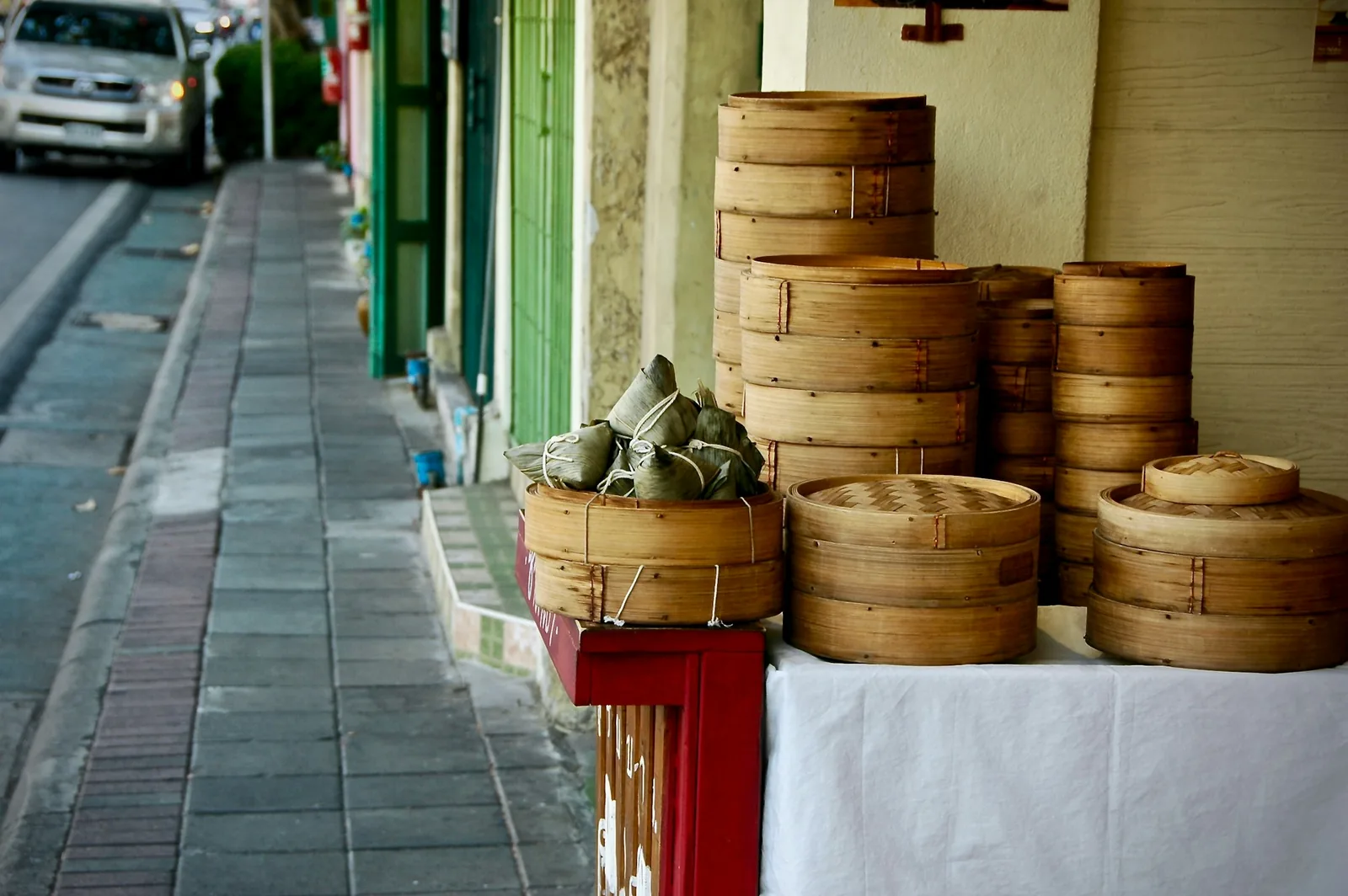
Basket tacos. Made in the early morning, dressed in oil, packed tightly into a cloth-lined basket and left to steam gently in their own heat until sold. They arrive soft, warm, slightly oily and pressed flat — the opposite of a griddled taco in every respect.
Fillings are simple and cheap: potato, beans, chicharrón, adobo. They are sold from bicycles as often as from stands, they cost very little, and they are one of the few taco formats deliberately designed to be made hours in advance. Anyone who has read why tacos fall apart will recognise the trick: oil and steam keep the tortilla pliable where dry heat would stale it.
Afternoon: the comal
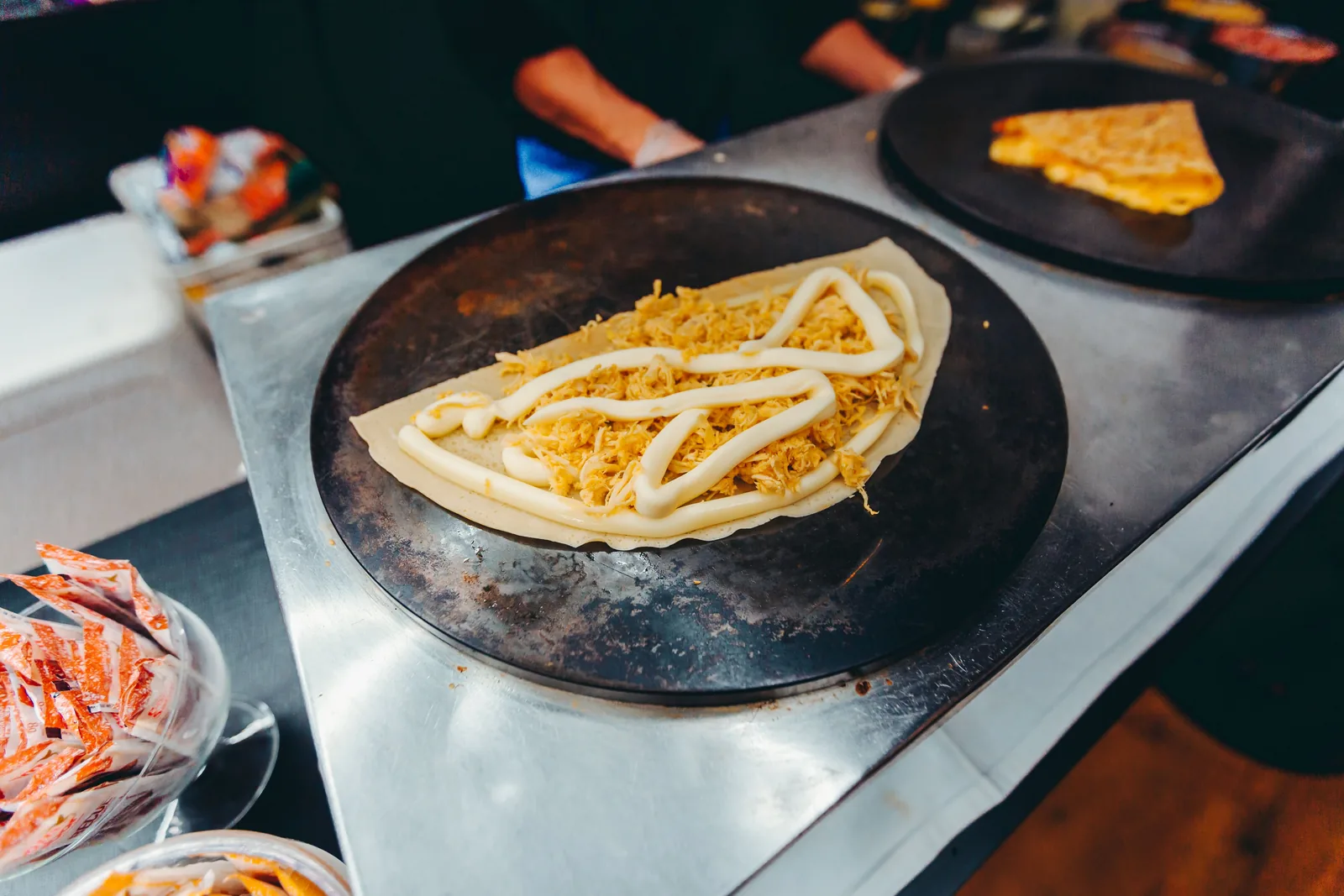
This is when the masa formats appear — quesadillas, huaraches, sopes and tlacoyos — made to order on a flat griddle by a cook working one station.
A local point of order: in Mexico City, a quesadilla does not necessarily contain cheese. You will be asked ¿con queso?, and the question is real. This causes national argument and is simply how it works there.
Fruit carts also belong to the afternoon: cut mango, jicama, cucumber and watermelon in a cup with chilli powder and lime. It is the same salt-acid-heat logic as elote.
Comida corrida, the midday institution
Not street food exactly, but it governs the middle of the day. Comida corrida is a fixed-price set lunch served in small family-run fondas: soup, a rice or pasta course, a main with tortillas, a drink, sometimes a dessert.
It is cheap, it changes daily, and it is how an enormous number of people eat lunch. The menu is often chalked up or simply recited at you. If you want to eat the food people actually eat rather than the food that photographs well, this is where it is.
After dark: al pastor
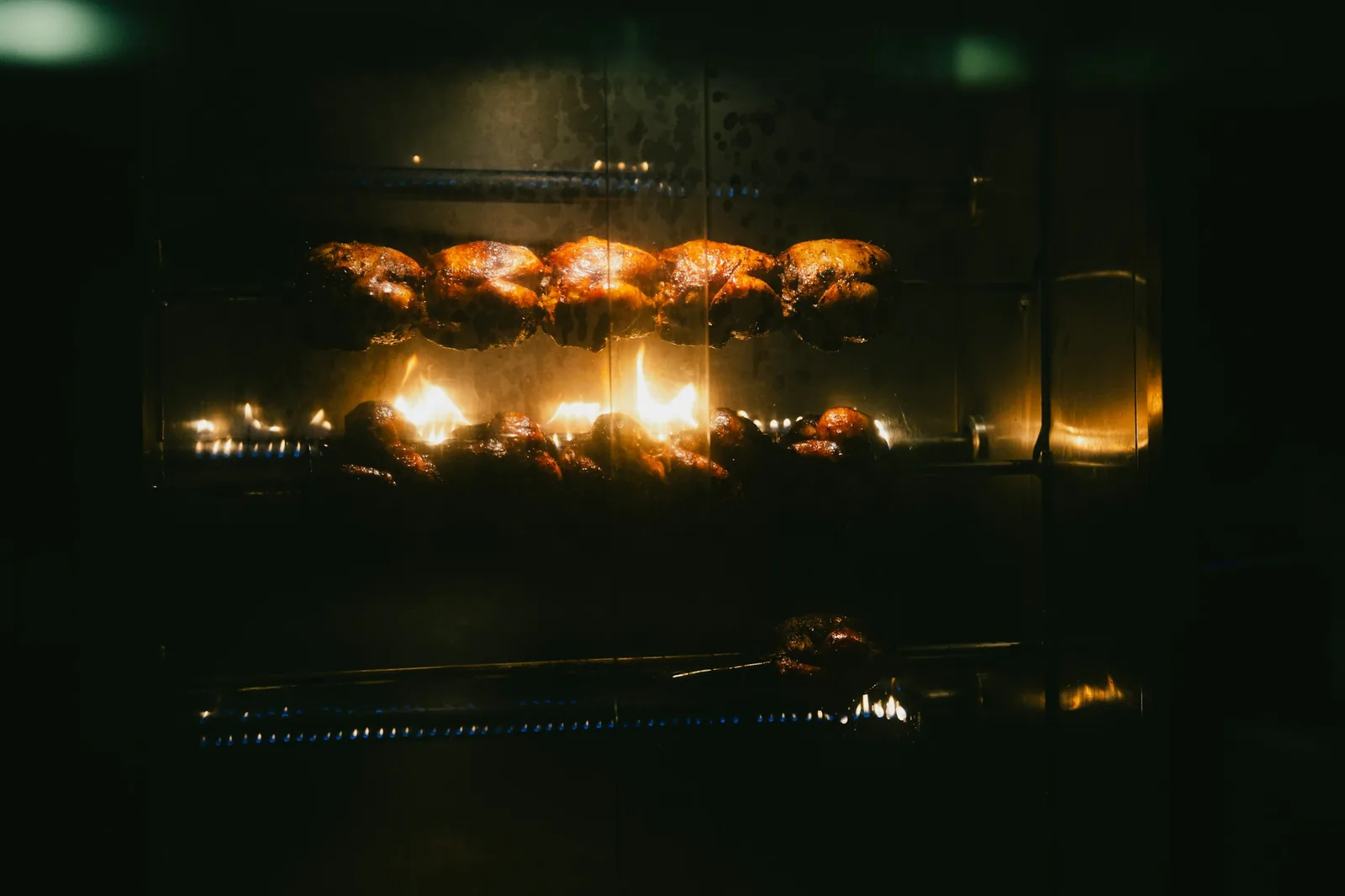
The trompo — the vertical spit — is an evening machine. It takes time to build and to come up to temperature, and it looks best and works best lit up on a corner at night.
Al pastor is itself a Mexico City dish, adapted from the shawarma brought by Lebanese immigrants and applied to marinated pork. Alongside it you will find suadero, the offal cuts and tacos de guisado — stews ladled from clay pots into tortillas, which is the most underrated format in the city.
A note on Doc’s
Doc’s board had one Mexico City dish on it without labelling it as such: al pastor, one of its three meats. Everything else was either street-taco standard or a house item. A weekend evening taqueria in East Texas and a metro-entrance tamal cart have nothing else in common, and it would be silly to pretend otherwise.
Doc’s Taco Shop had no connection to this region. It was a small weekend taqueria in Liberty City, Texas, running three meats across a short board, and it closed permanently on 19 July 2025. This article exists because our own guides name the region repeatedly without ever explaining it. You can read the full menu as Doc’s published it or look through the photo gallery.
Frequently asked questions
What is a guajolota?
A tamal served inside a bread roll, sold from carts at metro entrances in the morning, usually with atole. It is a standard Mexico City breakfast.
What are tacos de canasta?
Basket tacos: made early, dressed in oil and packed into a cloth-lined basket to steam in their own heat. Soft, warm, flattened and very cheap.
Do quesadillas in Mexico City have cheese?
Not automatically. You will be asked whether you want cheese, which surprises visitors and the rest of Mexico alike. It is simply local usage.
What time should I eat street food in Mexico City?
It depends what you want. Tamales and guajolotas are a morning food, basket tacos are midday, masa dishes run all afternoon, and al pastor is an evening thing.
Is al pastor from Mexico City?
Yes. It was adapted in the city from the spit-roasting brought by Lebanese immigrants, applied to chilli-marinated pork.
The short version
Learn the clock. Guajolotas and tamales in the morning, basket tacos at midday, masa off the comal all afternoon, and the trompo after dark. Turning up at the wrong hour is the main way visitors miss the best of it.