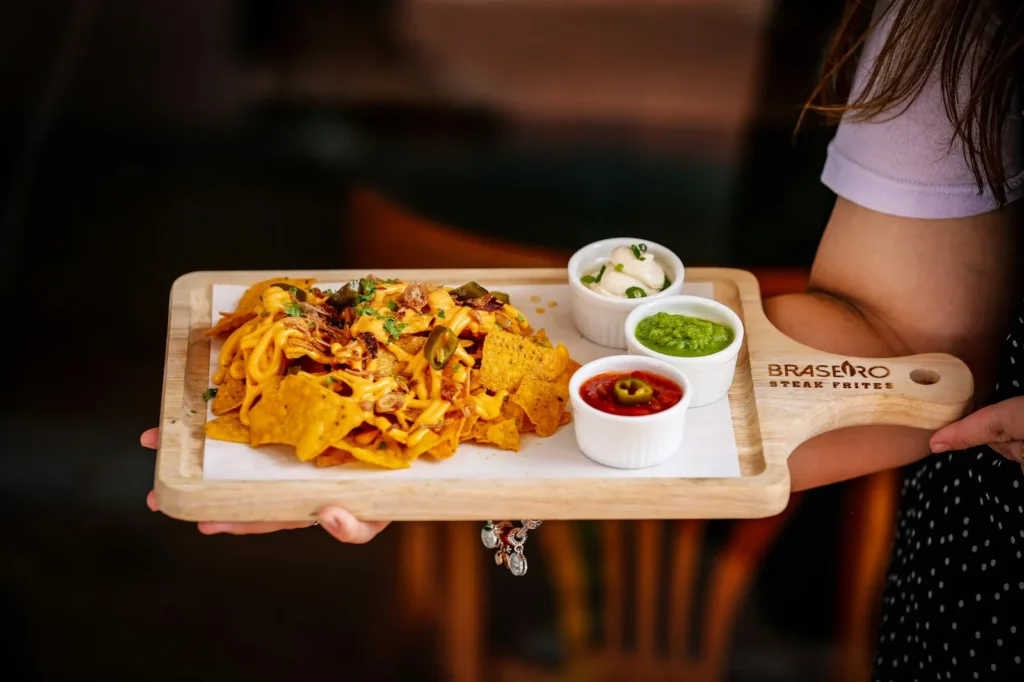
Nachos are tortilla chips under melted cheese. The original version had exactly three ingredients — chips, cheese, pickled jalapeños — and it was invented in 1943 in Piedras Negras, Mexico, by a man named Ignacio Anaya, for a group of American customers.
That is unusually well documented for a dish this famous. We know the year, the town, the restaurant and the man. What most people get wrong is everything that has been added since.
The actual invention
Ignacio Anaya was maître d’ at the Victory Club in Piedras Negras, just across the border from Eagle Pass, Texas. During the war, a group of wives of servicemen stationed at Eagle Pass came in after the kitchen had wound down and the cook had gone.
Anaya improvised from what was to hand: he cut tortillas into triangles, laid on Colby cheese and pickled jalapeños, and put the lot under heat until the cheese melted. Asked what it was called, he offered his own nickname. Nacho is a standard diminutive of Ignacio.
Texas Highways’ account of how nachos became an international hit follows the dish from that improvisation outward. Anaya later opened his own restaurant under the name; he died in 1975, and 21 October is marked as International Day of the Nacho.
Original versus what you get now
| 1943 original | Modern loaded platter | |
|---|---|---|
| Base | Tortilla triangles, fried | Tortilla chips, usually from a bag |
| Cheese | Colby, sliced and melted | Melted cheese, or a poured queso dip |
| Heat | Pickled jalapeños | Jalapeños, plus hot sauce |
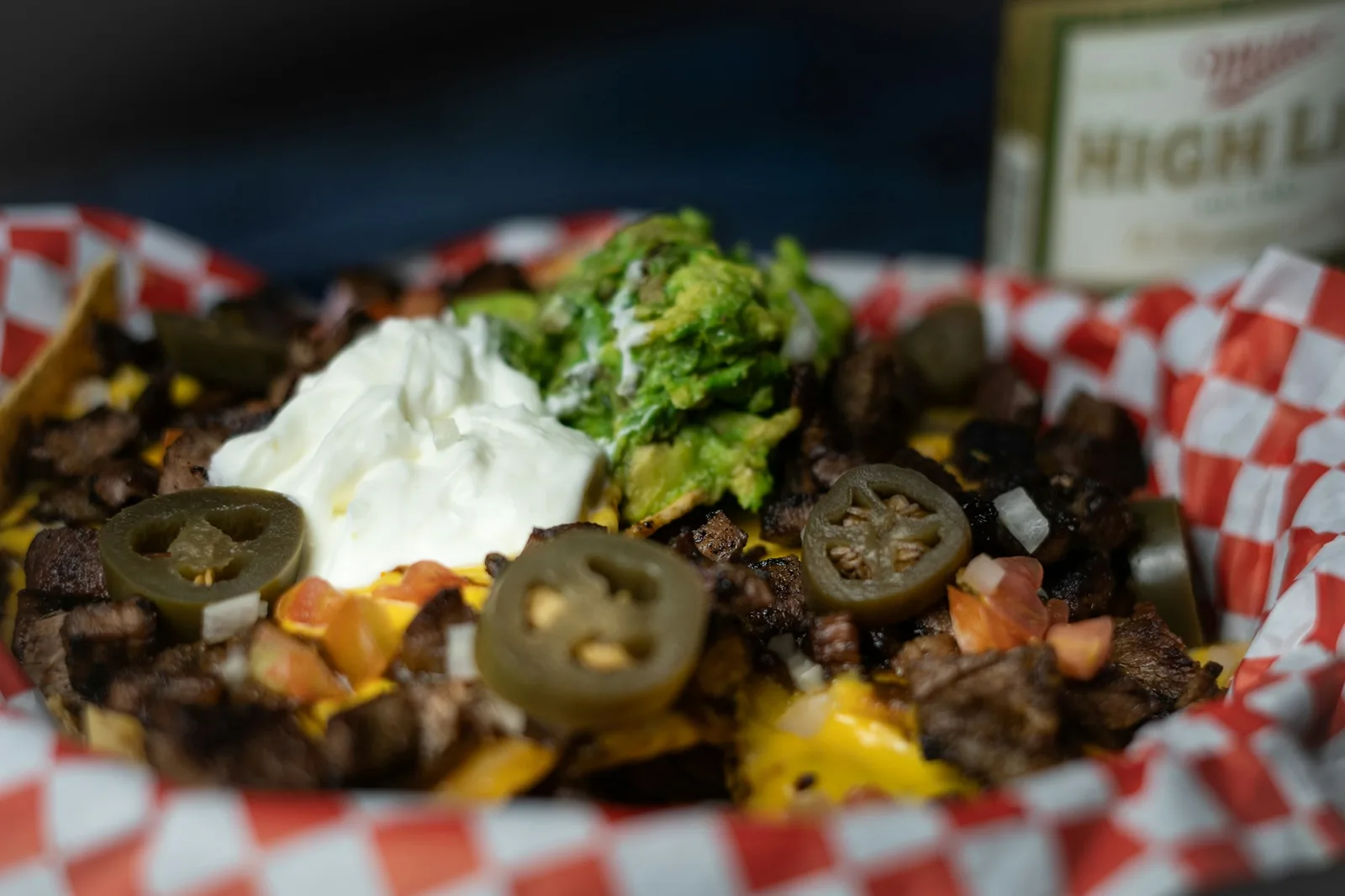
| Also | Nothing | Ground beef, beans, sour cream, guacamole, tomato, olives, spring onion |
| Count | Three ingredients | Eight or more |
The additions are not a betrayal — a loaded platter is a perfectly good thing and a genuinely American one. But it is worth knowing that the original was closer to cheese on toast than to a sharing platter, and that the queso dip poured over many modern versions is a separate dish again. We cover that in queso fundido versus queso dip.
Why the cheese question splits the dish in two
There are really two nacho traditions now, and they are separated by how the cheese is applied. Melted sliced or grated cheese, browned under heat, gives you patchy coverage and crisp edges — the original. Poured queso gives you uniform coverage and no crisp at all.
Neither is wrong, but they suit different settings. Stadium and cinema nachos use poured queso because it holds at temperature for hours without breaking, which real cheese cannot do. A kitchen melting real cheese has to serve immediately. If you are choosing, that tells you which you are about to get.
Mexican, Tex-Mex, or neither?
This is the interesting complication. Nachos were invented in Mexico, by a Mexican cook, in a Mexican restaurant — and for American customers, in a border town, using a Wisconsin cheese. They are a border dish in the most literal sense.
By convention they are counted as Tex-Mex, because that is the tradition they belong to and the culture that adopted and expanded them. Our Tex-Mex versus Mexican comparison sets out why that category is a real cuisine rather than a dilution, and nachos are close to its founding document.
You will not find them on a menu in Mexico City. You will find them throughout Texas.
Making them well
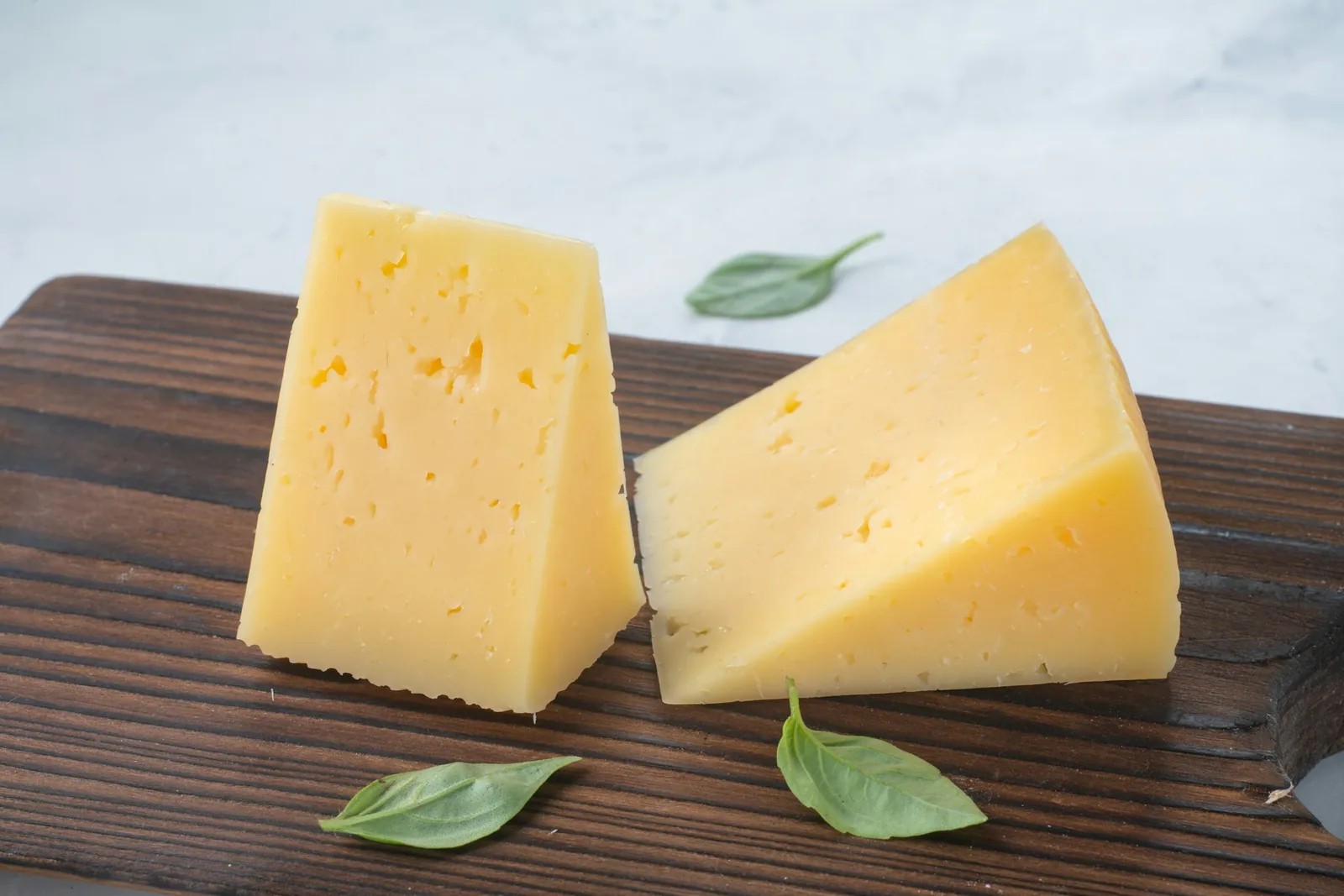
- Use real cheese and melt it, or use a queso dip and pour it. Do not try to do both at once; they behave differently under heat.
- Build in a single layer. Stacked chips give you a wet middle and a dry top — the most common failure.
- Put wet toppings on after the cheese has melted, not before.
- Serve immediately. There is no version of this dish that improves with sitting.
Which cheese melts well and which does not is the same question we work through in our guide to Mexican cheeses — a crumbling cheese will not do this job however good it is.
Ordering them at a restaurant
- Ask whether the cheese is melted or poured. It determines whether you get crisp edges or uniform coverage.
- Order them first, alone. Nachos arriving with the main course will be soft by the time you reach them.
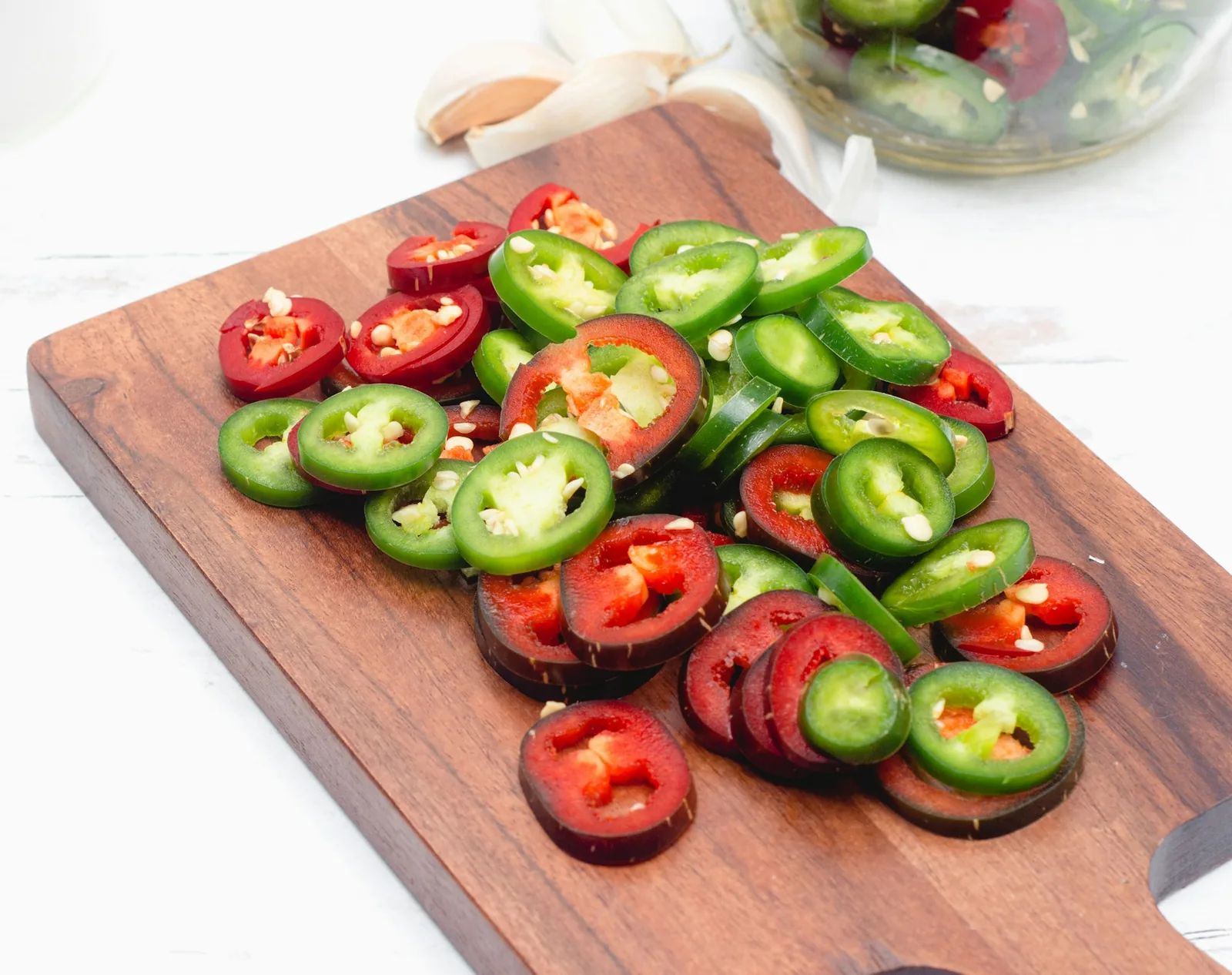
- Ask for jalapeños on the side if you are sharing with anyone cautious — picking them off a melted platter does not work.
- Treat them as a course, not a starter. A loaded platter is a substantial amount of food before anything else arrives.
A note on Doc’s
Nachos were not on Doc’s board. Its melted cheese went into the suegrita and the quesadillas, and its crisp fried item was the chalupa.
Doc’s Taco Shop did not serve this. The shop was a small weekend taqueria in Liberty City, Texas, and it closed permanently on 19 July 2025. This article is here because our own Tex-Mex guide names the dish as evidence and never explained it. You can read the full menu as Doc’s published it or read how the shop came about.

Frequently asked questions
Who invented nachos?
Ignacio Anaya, in 1943, at the Victory Club in Piedras Negras, Mexico. ‘Nacho’ is a common nickname for Ignacio, and he named the dish after himself when asked what it was.
Are nachos Mexican or American?
Both, awkwardly. They were invented in Mexico by a Mexican cook, but for American customers in a border town, and they are conventionally counted as Tex-Mex because that is the tradition that adopted them.
What were the original nachos made of?
Three things: fried tortilla triangles, Colby cheese and pickled jalapeños. No ground beef, no sour cream, no beans and no queso dip.
Why do my nachos go soggy?
Usually because they are stacked. Build in a single layer so every chip gets heat, and add wet toppings after the cheese has melted rather than before.
Are nachos on menus in Mexico?
Rarely outside tourist areas and the border region. They are a Tex-Mex staple rather than a dish of Mexican home or street cooking.
The short version
Chips, cheese, jalapeños, 1943, Piedras Negras, a man called Ignacio. Everything else on a modern platter was added later by somebody else, which is fine — but the original was three ingredients and it was better than it sounds.