
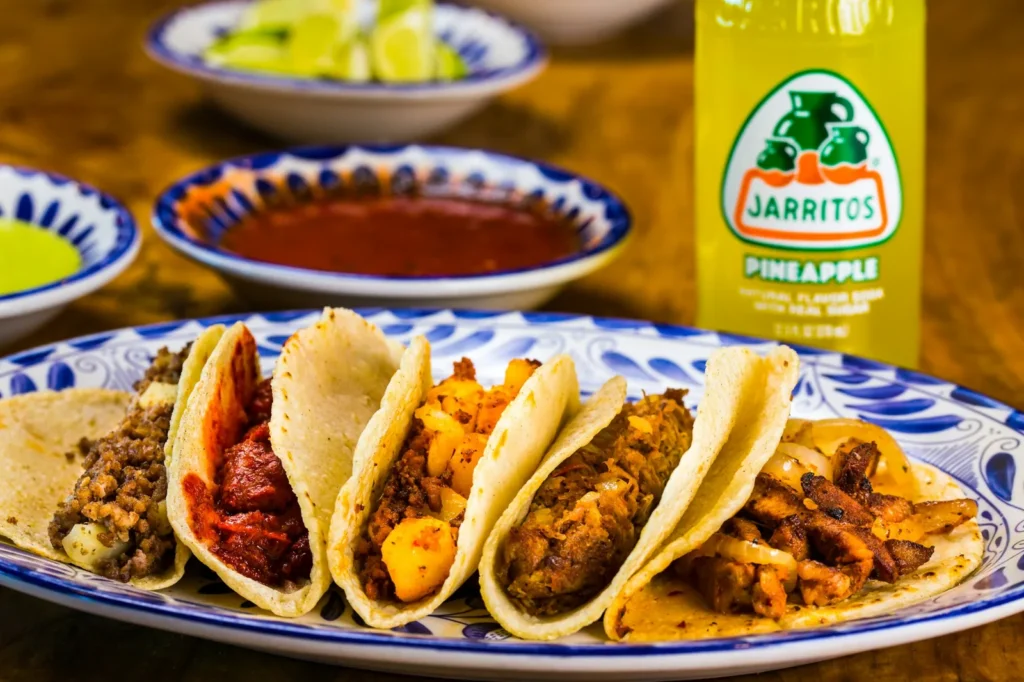
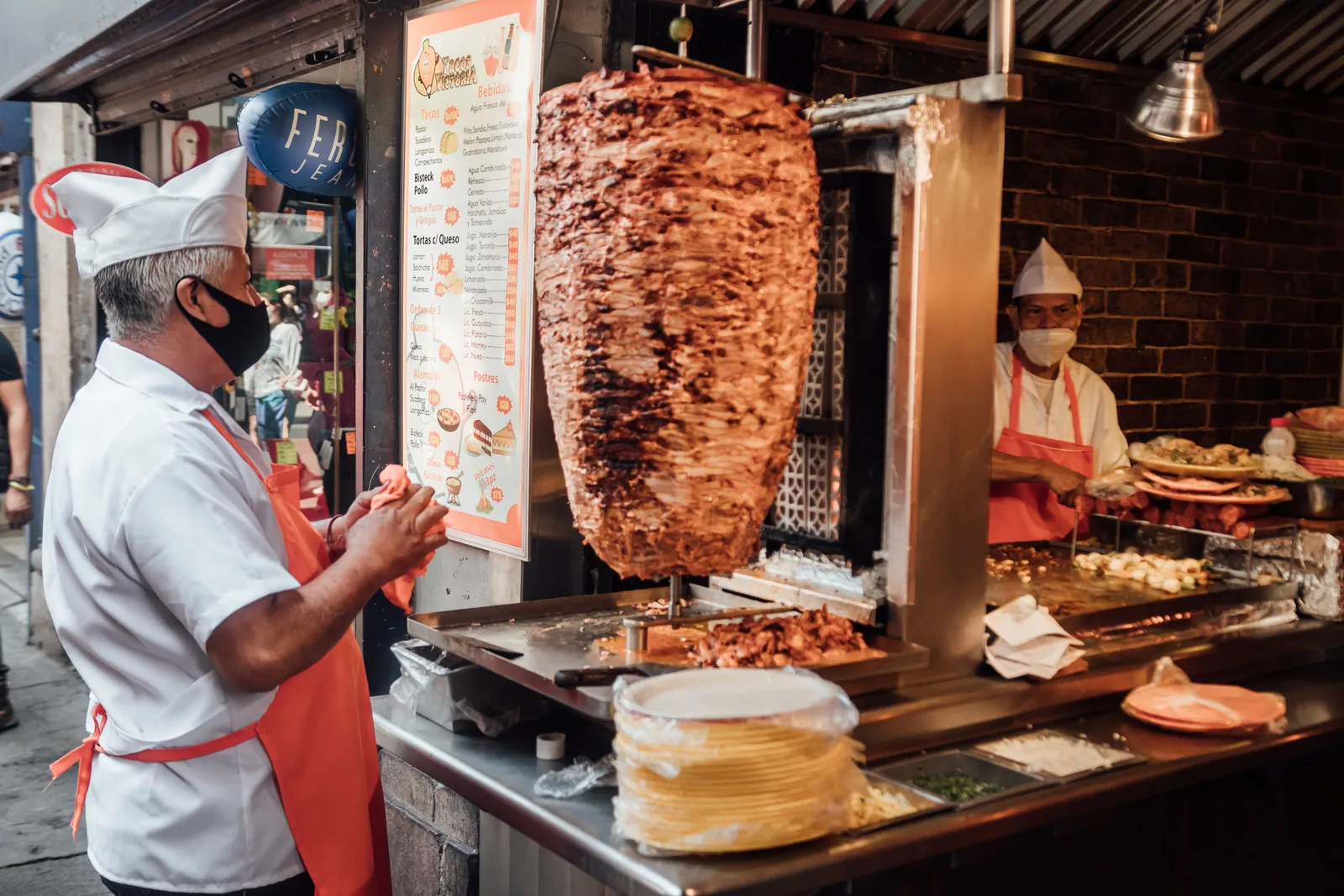
Al pastor is pork that has been marinated in dried chiles and achiote, stacked on a vertical spit called a trompo, and roasted slowly while it turns. Thin slices are shaved off the outside to order. It tastes faintly sweet, gently spiced and slightly smoky, with crisp edges and a deep red colour.
If you are reading it on a menu and deciding whether to order it: it is one of the least intimidating things on most taqueria boards. It is not fiery, the flavour is more aromatic than hot, and it is a reliable first choice for someone new to Mexican street food.
What does al pastor mean?
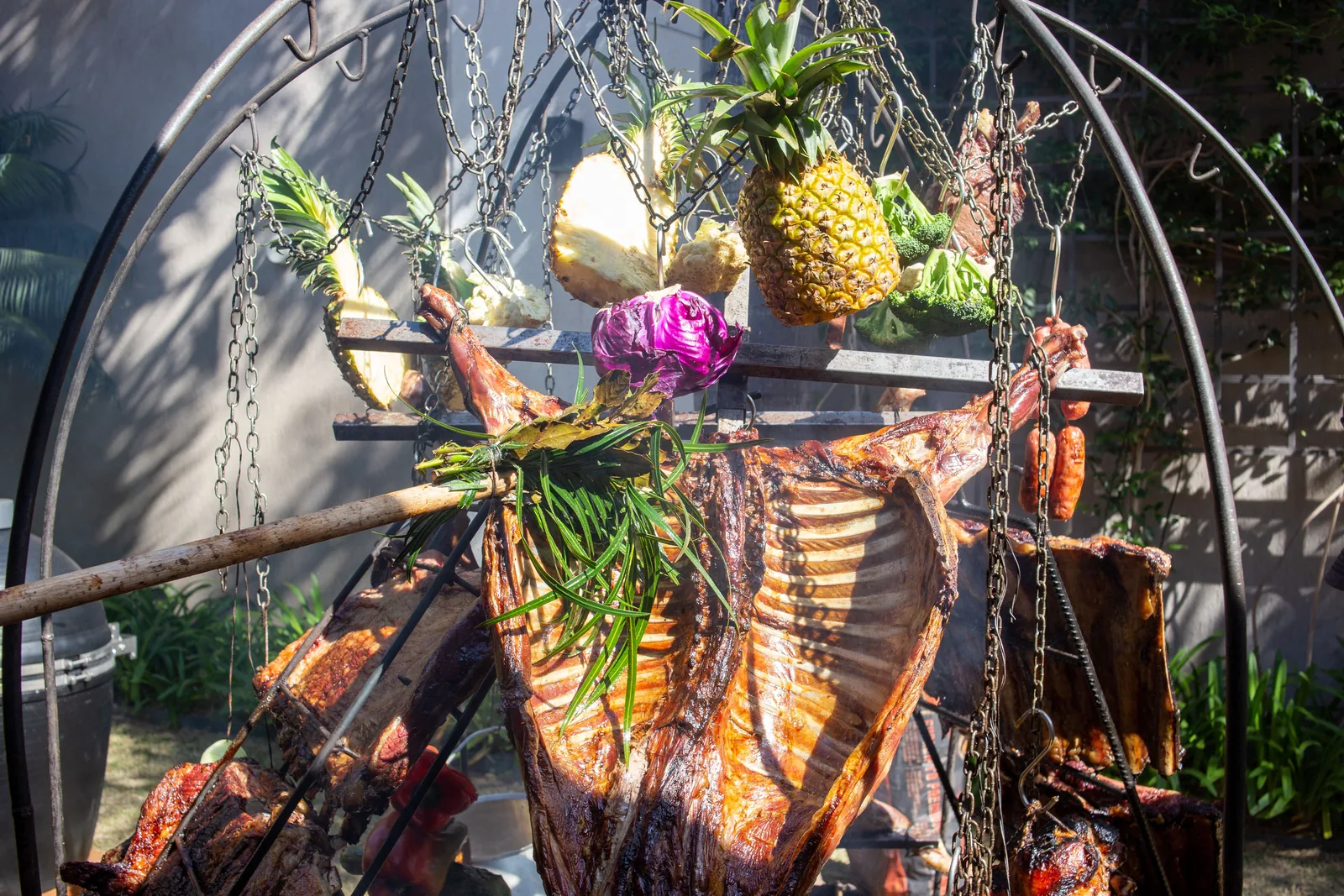
“Al pastor” translates roughly as “shepherd style”. The name is a leftover from the dish’s origins, which involved lamb rather than the pork used today.
Where it came from
Al pastor is a migration dish. Lebanese families settled in Mexico from the late nineteenth century onwards, with a substantial community in and around Puebla, and they brought shawarma with them — spiced lamb stacked on a vertical spit and shaved off as it cooked.
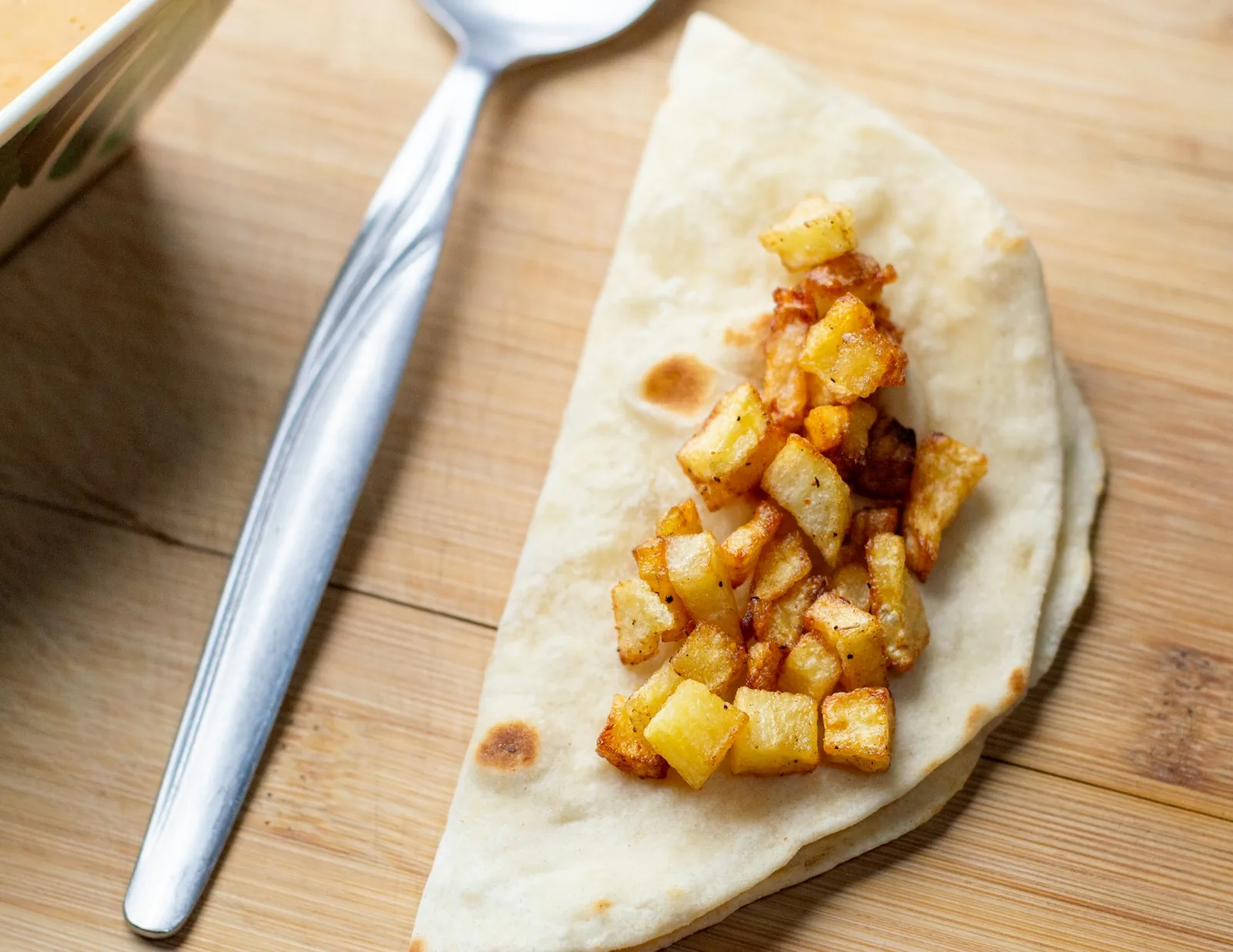
Served on flatbread, that became known in Mexico as tacos árabes. Over the following decades the bread became a corn tortilla, the lamb became pork, and the Levantine spicing was replaced with a Mexican marinade built on dried chiles and achiote. By the middle of the twentieth century the result had its own name and its own identity.
HistoricalMX, a public-history project run by Sam Houston State University, traces the route from Ottoman-era vertical-spit cooking to the modern taco al pastor, including the intermediate stage where it was served on flatbread and known as tacos árabes. It is one of the clearest examples anywhere of a cuisine absorbing an outside technique and making it completely its own.
What goes into the marinade
Recipes vary by region and by cook, but the backbone is consistent:
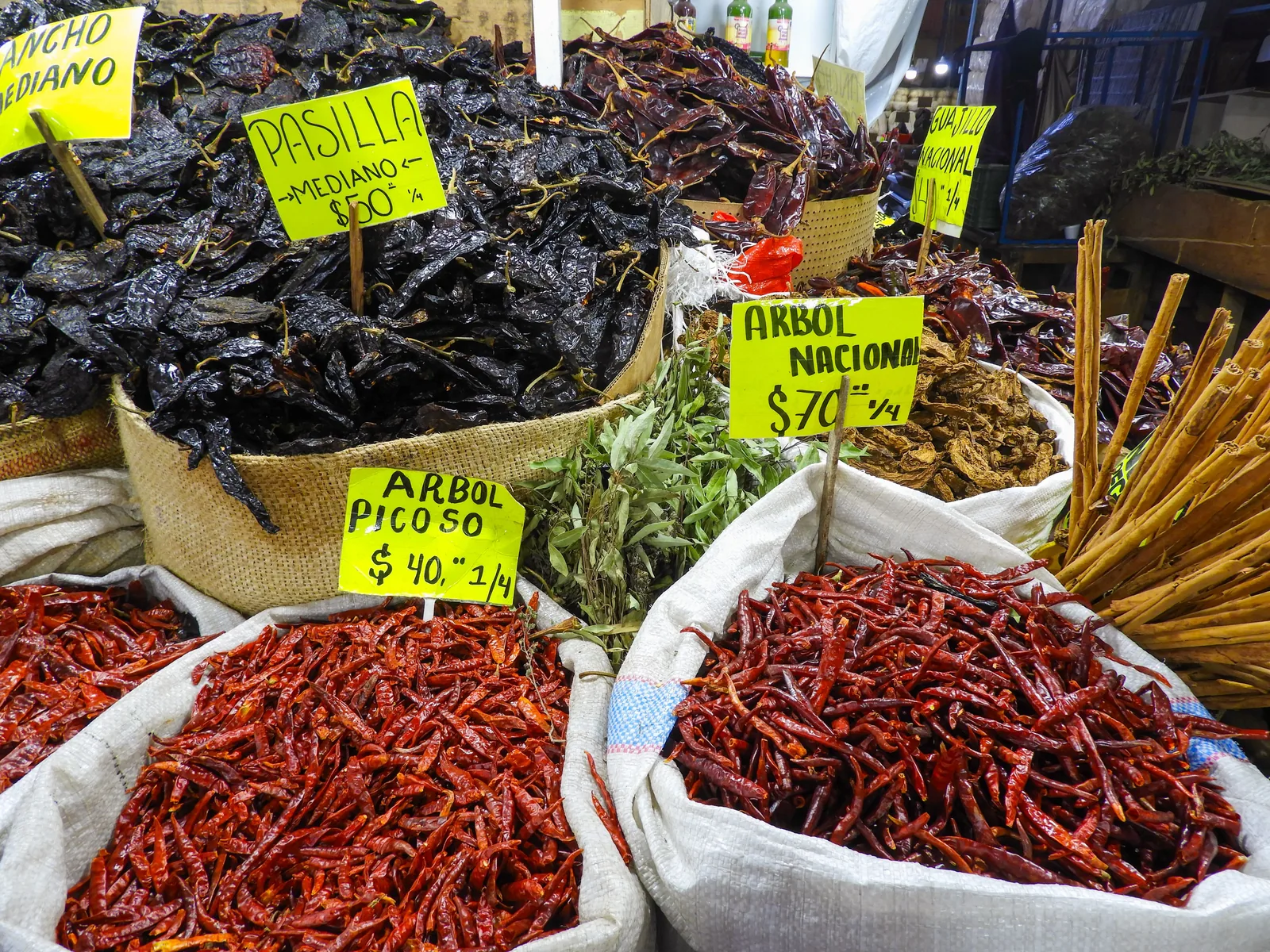
- Dried chiles — usually guajillo and ancho, which give colour and a mild, raisiny warmth rather than sharp heat.
- Achiote (annatto) — the source of the distinctive brick-red colour and a faint earthy, peppery note.
- Acid — vinegar, and often citrus juice, which tenderises the pork.
- Aromatics and spices — garlic, oregano, cumin and cloves in various combinations.
The pork is usually shoulder, sliced thin and layered onto the spit so the fat bastes the meat below it as everything turns.
What about the pineapple?
Many trompos carry a pineapple on top. As the stack turns, juice runs down over the meat, adding sweetness and helping the surface caramelise. When the taquero carves, they will often flick a piece of charred pineapple onto the taco.
It is genuinely traditional in much of central Mexico, but it is not universal, and plenty of respected taquerias skip it. If you are served al pastor without pineapple, nothing has gone wrong.
What it tastes like
| Aspect | What to expect |
|---|---|
| Heat | Mild. The chiles are used for depth and colour, not fire. |
| Sweetness | Slight, from the marinade and any pineapple. |
| Texture | Tender through the middle, crisp at the shaved edges. |
| Colour | Deep orange-red from achiote and dried chile. |
| Best with | Corn tortilla, onion, cilantro, lime; salsa on the side. |
Al pastor compared with other taco meats
| Meat | Animal | Method | Character |
|---|---|---|---|
| Al pastor | Pork | Marinated, vertical spit | Sweet-spiced, red, crisp edges |
| Carnitas | Pork | Slow-cooked in its own fat | Rich, savoury, soft with crisp shreds |
| Bistek | Beef | Thin cuts on a flat griddle | Simple, beefy, lightly seasoned |
| Carne asada | Beef | Grilled over open flame | Charred, smoky, citrus-marinated |
| Pollo | Chicken | Griddled or grilled | Mild, the gentlest option |
If beef is more your direction, we have a separate guide to what bistek is and how it is cooked.
Al pastor away from the trompo
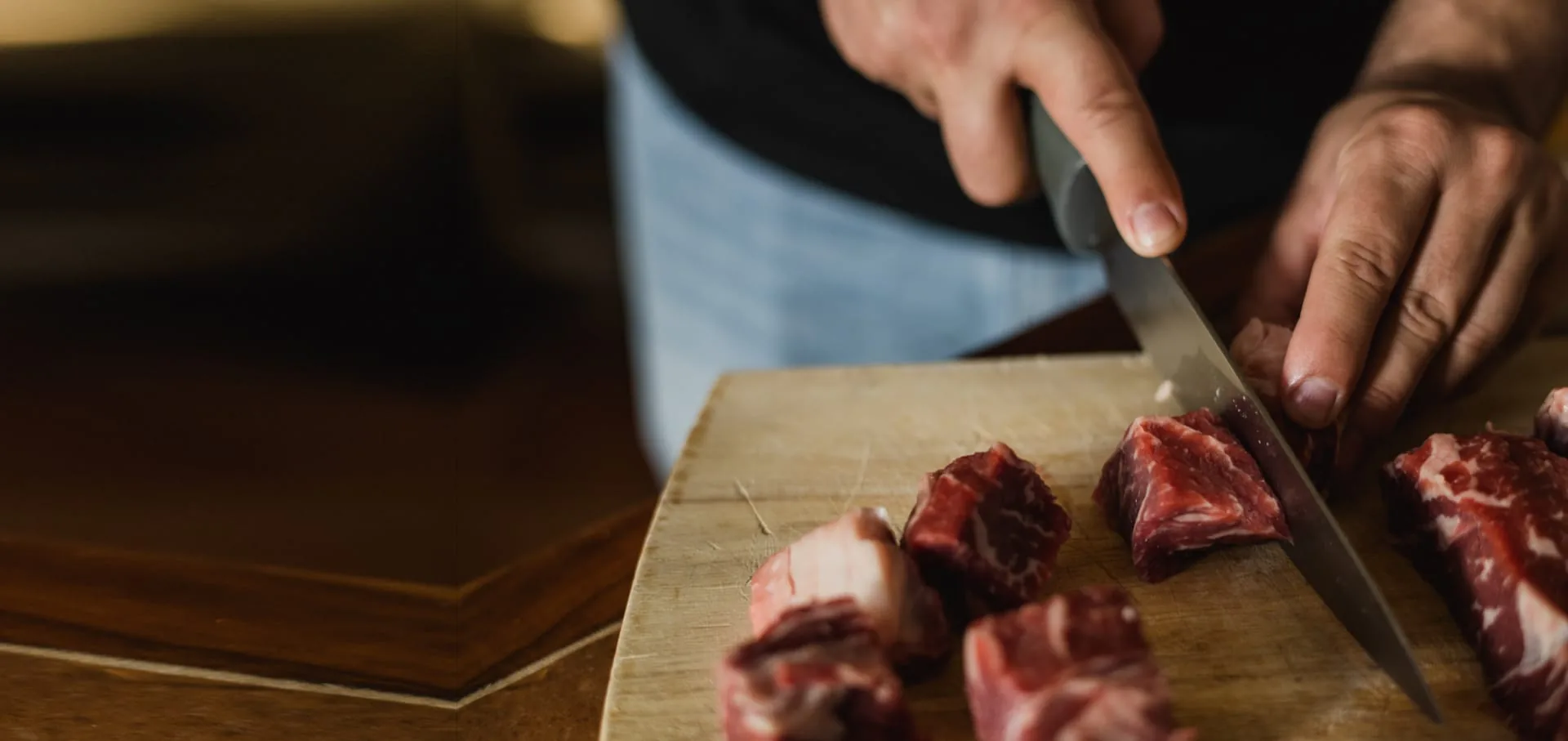
A vertical spit is a serious piece of equipment, and plenty of restaurants that serve al pastor do not have one. The marinade is the part that defines the flavour, so many kitchens marinate the pork the same way and finish it on a flat griddle instead.
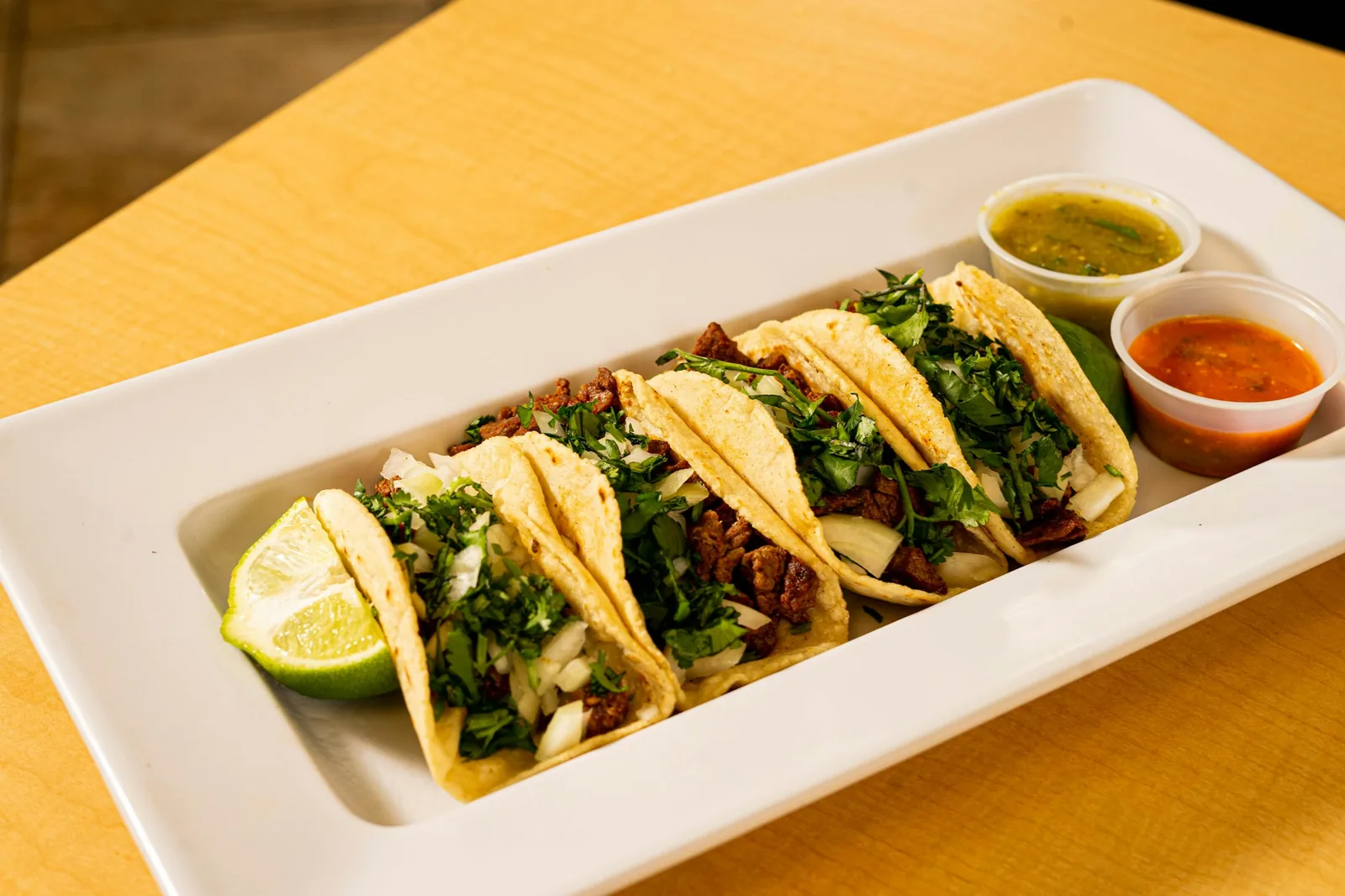
You lose some of the crisp shaved edge, but the character survives. Doc’s Taco Shop, which operated in Liberty City, Texas until 2025, listed al pastor as one of its three street-taco meats alongside pollo and bistek, served the standard way on a corn tortilla with onion, cilantro and cabbage. The same three meats were the filling choice across the rest of the board too — in the torta, the quesadillas and the suegrita.
Doc’s Taco Shop closed permanently on 19 July 2025. The menu detail above is transcribed from the restaurant’s own published board and is recorded here as history. You can read the full published menu or read the story behind the shop.
How to tell whether it is any good
A few things are worth noticing, whether the kitchen uses a spit or a griddle.
- Colour without staining. Good al pastor is a deep orange-red all the way through the surface, not a bright artificial red sitting on top of pale pork.
- Crisp edges. There should be some caramelised, slightly charred edge on at least part of the meat. Uniformly soft al pastor has been steamed rather than roasted.
- Moisture, not liquid. It should be juicy but not sitting in a pool. A watery filling makes the tortilla collapse.
- Aroma before heat. You should smell the chile and achiote before you taste any spice.
How to order it
- Ask for it on corn, which is the default almost everywhere.
- Take the onion and cilantro — the sharpness balances the sweetness of the marinade.
- Use lime generously. Al pastor is one of the fillings that gains most from acid.
- Add salsa gradually. The meat is mild, so a hot salsa will dominate it completely.
Frequently asked questions
Is al pastor pork or beef?
Pork. It began as lamb, following its shawarma ancestry, but pork has been the standard for decades. If a menu offers beef al pastor, that is a local variation rather than the traditional dish.
Is al pastor spicy?
Not usually. Guajillo and ancho chiles are used for colour and depth rather than heat, so the meat itself is mild. Any real heat comes from salsa added afterwards.
What is the difference between al pastor and carnitas?
Both are pork, but the method differs completely. Al pastor is marinated in chiles and achiote and roasted on a vertical spit; carnitas is simmered slowly in its own fat and pulled into shreds.
Why is al pastor red?
Achiote, also called annatto, plus dried red chiles in the marinade. The colour comes from the seasoning, not from the meat or from any added colouring.
Does al pastor always have pineapple?
No. It is common and traditional in much of central Mexico, but many taquerias serve al pastor without it and the dish is no less genuine for that.
In summary
Al pastor is marinated pork with a Lebanese cooking technique and a Mexican spice cabinet, and it is one of the most approachable fillings on any taco menu — mild, aromatic and a little sweet.
If you are still working out what to order, our guide to how street tacos are built covers the format, and the per-person ordering guide covers quantity.