
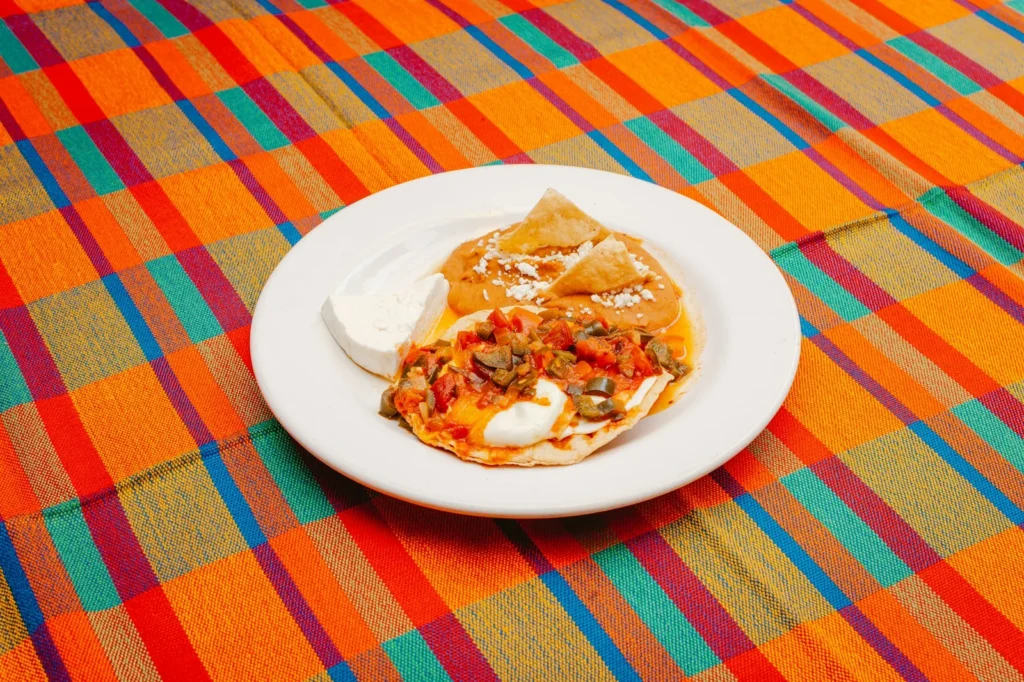
Huevos rancheros are fried eggs served on lightly fried corn tortillas and covered with a warm cooked salsa, usually with refried beans alongside. The name means rancher’s eggs, and it describes the large mid-morning meal eaten on Mexican farms.
It is a specific dish rather than a general term for Mexican breakfast eggs, which is worth knowing because menus carry several similar things that are not it.
The four components
- Tortillas — corn, passed briefly through hot oil so they are pliable and slightly waterproofed. Not crisp.
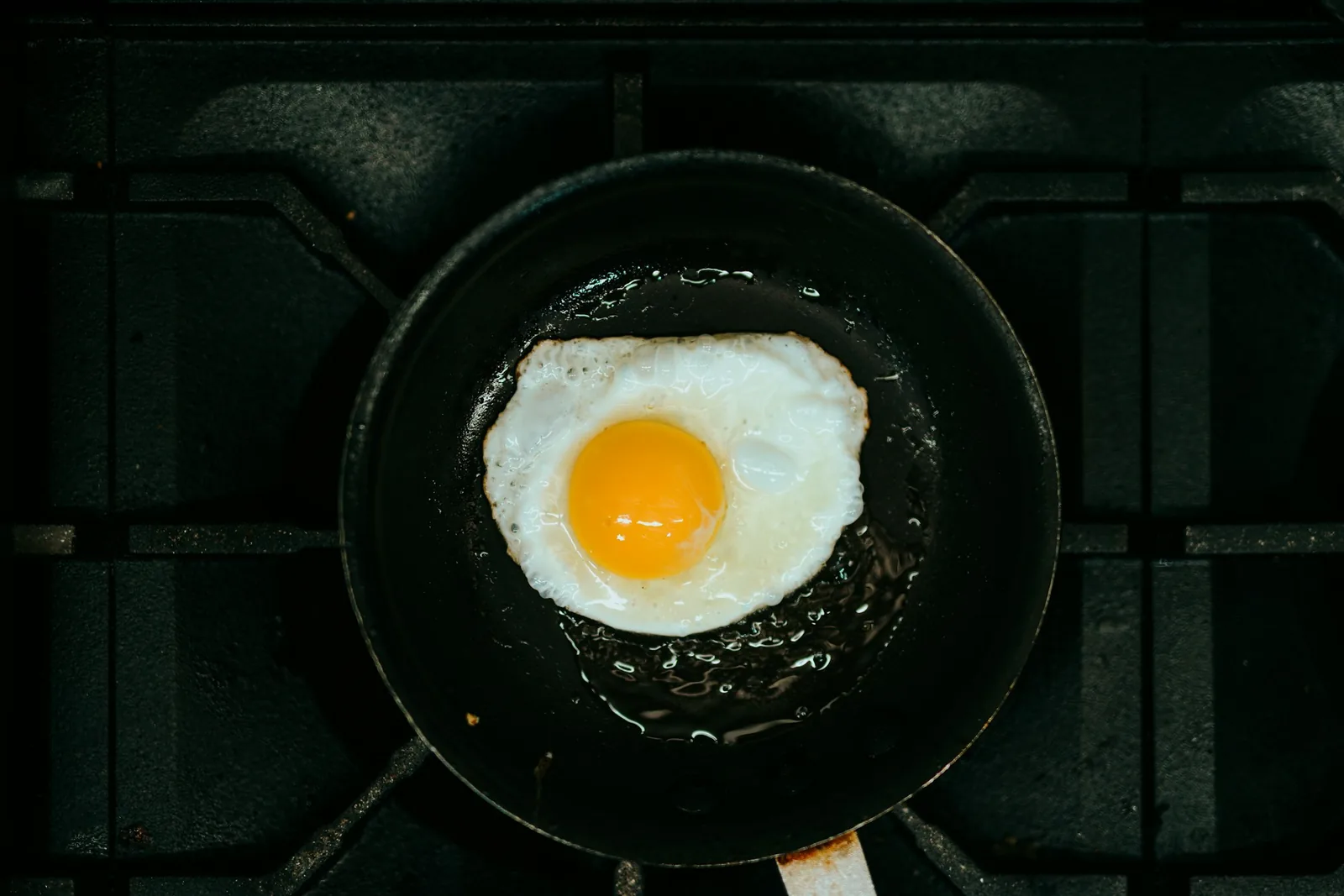
- Eggs — fried, sunny side up, one or two per tortilla, kept whole so the yolk runs when cut.
- Salsa — cooked and warm, poured over. Red usually, tomato and chilli based. This is not a raw pico de gallo.
- Refried beans — alongside, and often spread on the tortilla under the egg as a barrier.
That last trick is the same structural idea that appears throughout this cuisine: a layer of beans between a tortilla and something wet, buying time before it goes soft.
The name, and where it came from
Ranchero refers to the rancheros and vaqueros — the men working cattle and horses on Mexican haciendas. This was the substantial mid-morning meal eaten after several hours of work already done, which explains the portion size and the beans.
It travelled north with ranching culture, which is why it is as established in the American Southwest as it is in Mexico. The American Heart Association carries it among its recipes, which is a fair signal of how thoroughly it has crossed over.
Huevos rancheros or chilaquiles?
Both arrive at breakfast, both are tortillas plus salsa, and they are completely different experiences. This is the comparison worth having before you order.
| Huevos rancheros | Chilaquiles | |
|---|---|---|
| The tortilla | Whole, soft, one per egg | Cut up, fried crisp, then simmered |
| The salsa | Poured over at the end | Cooked into the dish |
| The egg | The centre of the dish | An optional topping |
| Texture | Distinct layers you cut through | One soft, saucy mass |
| Order it if | You want eggs | You want the tortillas |
Our chilaquiles guide covers the other side of that table. There is also huevos divorciados — divorced eggs — where one egg gets red salsa and one gets green, kept apart on the plate. The same joke appears on chilaquiles menus.
What comes with it
A plate of huevos rancheros is rarely just eggs and tortillas, and what arrives alongside is fairly consistent.
- Refried beans — nearly always, and often the most substantial thing on the plate.
- Rice — common in restaurants, less so at home.
- Avocado — sliced, to cool the salsa.
- More tortillas — separate from the ones under the eggs, for mopping.
- Crumbled cheese and cream — a scattering, not a blanket.
Eat it by cutting down through the layers rather than lifting the egg off. The tortilla underneath has been absorbing salsa and yolk and is the best part by the end.
The relatives
| Dish | What it is |
|---|---|
| Huevos rancheros | Fried eggs on tortillas under warm salsa |
| Huevos motuleños | The Yucatán version: adds beans, peas, ham, fried plantain |
| Huevos divorciados | Two eggs, two different salsas, kept apart |
| Huevos a la mexicana | Scrambled with tomato, onion and chilli — the colours of the flag |
| Migas | Scrambled with torn fried tortilla pieces through them |
If you want the eggs to be the point, rancheros or motuleños. If you want the tortilla to be the point, migas or chilaquiles.
A note on Doc’s
Doc’s did not serve breakfast. The shop traded at weekends and in the evenings, and its board carried no egg dishes at all — which is ordinary for a taqueria of that kind. This article is here because our menu guide maps the plated half of a Mexican menu and the breakfast corner of it was missing.
Doc’s Taco Shop did not serve this. The shop was a small weekend taqueria — street tacos, quesadillas and a short board of house items — and it closed permanently on 19 July 2025. This article covers the wider cuisine rather than the shop. You can read the full menu as Doc’s published it or look through the photo gallery.
Frequently asked questions
What does huevos rancheros mean?
Rancher’s eggs. It refers to the rancheros and vaqueros who worked cattle on Mexican haciendas, and to the substantial mid-morning meal they ate.
What is the difference between huevos rancheros and chilaquiles?
Huevos rancheros uses whole soft tortillas with fried eggs on top and salsa poured over. Chilaquiles uses tortillas cut up and fried crisp, then simmered in salsa, with the egg optional.
What are huevos divorciados?
Two fried eggs served with two different salsas — one red, one green — kept separate on the plate. The name is a joke about the two sauces not touching.
Are huevos rancheros spicy?
Usually mildly. The salsa carries the heat and it varies by kitchen, so it is reasonable to ask before ordering.
Are the tortillas fried crisp?
No. They are passed briefly through hot oil to make them pliable and to slow the salsa soaking in. They should still be soft enough to cut.
The short version
Fried eggs on soft corn tortillas under warm cooked salsa, with beans alongside. A ranch breakfast built to carry someone through a working morning. If the tortillas are torn up and simmered instead, you have ordered chilaquiles.