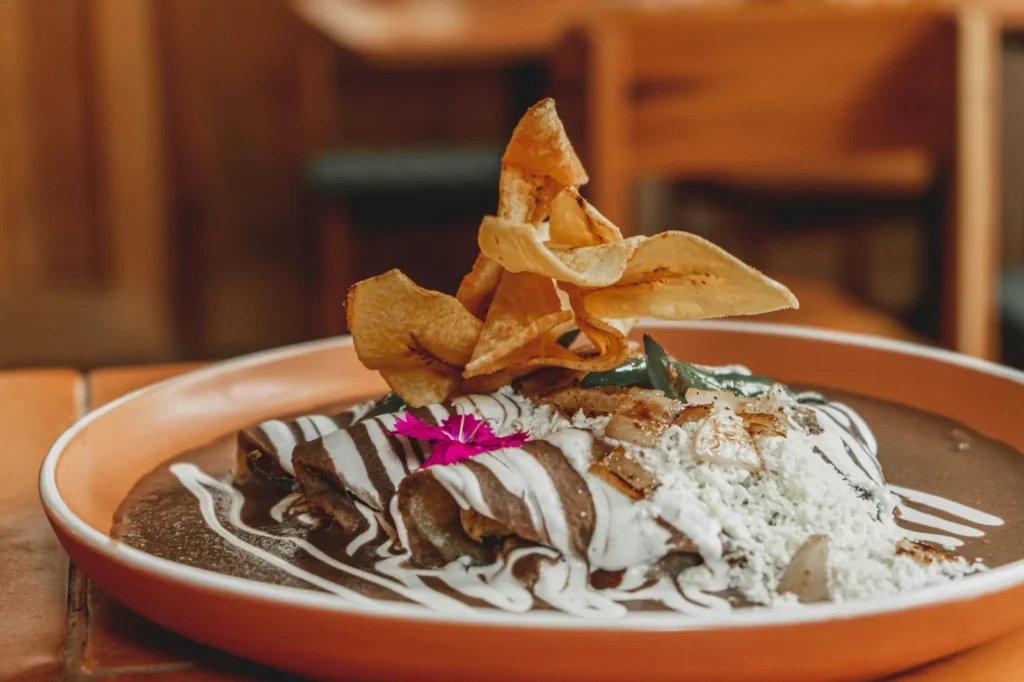
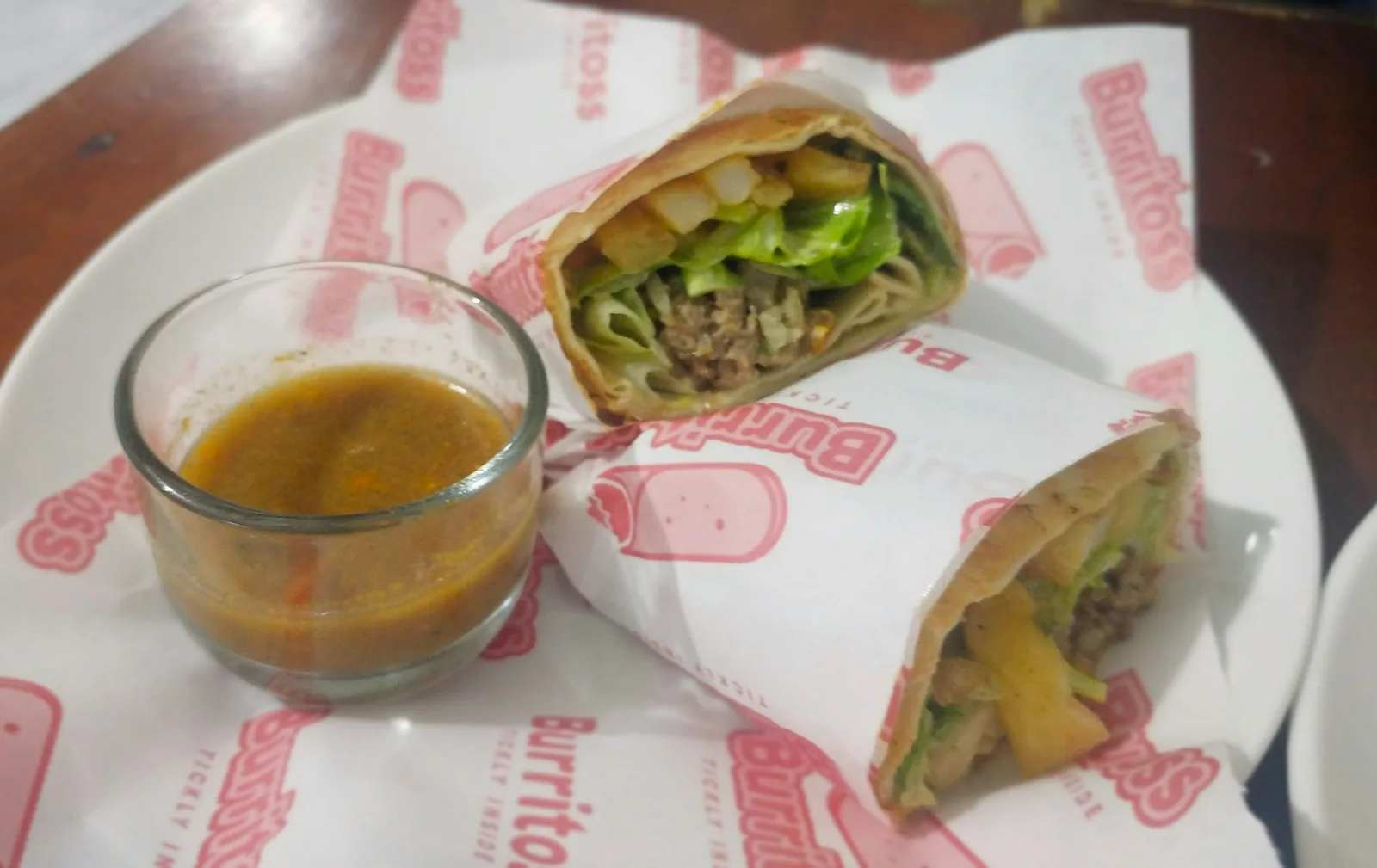
A chimichanga is a burrito that has been deep-fried. Same wrap, same fillings, then submerged in hot oil until the outside blisters and goes crisp, and usually served under cream, cheese and salsa.
It comes from Tucson, Arizona, not from Mexico. At least four restaurants claim to have invented it, and the charming story about a burrito falling into a fryer should be treated as charming rather than as established.
The contested origin
Tasting Table’s account of the complicated origin story lays out the competing claims. El Charro Café in Tucson credits Monica Flin in the late 1940s or early 1950s, with the dropped-in-the-fryer accident. Woody Johnson of Macayo’s in Phoenix claimed 1946, deliberately, as an experiment. Micha’s and Club 21, both in the Tucson area, also claim it.
What historians broadly accept is the region and the window: Tucson, somewhere between the 1920s and the 1950s, under the influence of neighbouring Sonora. Which is to say it is an Arizonan dish with Sonoran parentage, and the specific inventor is unresolved.
The accident story is worth a note of scepticism generally. A great many dishes come with an origin myth in which somebody dropped something, and very few of them are documented. Deep-frying a wrapped parcel is not a difficult idea to have on purpose.
What is usually inside
| Filling | Notes |
|---|---|
| Shredded beef | Machaca or barbacoa style. The most traditional |
| Shredded chicken | Milder and lighter; the common default now |
| Bean and cheese | The vegetarian standard, and considerably less heavy |
| Rice and beans, added in | Common in the US, uncommon in Tucson |
The constraint is the same one that governs flautas: the filling has to be dry enough to survive the fryer. A wet filling steams inside the shell and softens it from within, which is why saucy fillings are put on top afterwards instead.
Chimichanga, burrito, flauta
| Burrito | Chimichanga | Flauta | |
|---|---|---|---|
| Tortilla | Large flour | Large flour | Smaller, corn or flour |
| Sealed | Folded and tucked | Folded and tucked | Rolled |
| Fried | No | Yes, deep-fried | Yes, shallow or deep |
| Size | One is a meal | One is a large meal | Several to a plate |
| Served | In the hand, often in foil | Plated, under toppings | Plated, under toppings |
The distinction from a flauta is size and technique: a flauta is rolled and slim, a chimichanga is folded, sealed and substantial. Both end up crisp; only one of them is a whole meal.
What frying actually does to it
Three things, and they are the reason the dish exists rather than being merely a novelty.
- It seals the parcel. The tortilla blisters and sets into a rigid shell, so a burrito that would sag holds its shape on a plate under sauce.
- It creates contrast. Crisp shell against soft filling, which a steamed or griddled burrito does not have.
- It changes the tortilla. Flour tortilla in hot oil goes from soft and pliable to layered and shattering — closer to pastry than to bread.
It also makes the dish very rich, which is the practical thing to know: a chimichanga plus rice plus beans plus guacamole is a great deal of food, and sharing one is not a defeat.
Ordering one
- Expect it plated and sauced, not wrapped in foil. This is cutlery food.
- Ask what the filling is. Shredded beef and chicken are standard; bean-and-cheese versions are common and lighter.
- Eat it soon. A crisp shell under cream has a short life.
- Consider sharing, or skipping the sides. It is one of the largest single items on a Tex-Mex menu.
If you want the same flavours without the volume, fajitas let you build modestly, and street tacos are the small-format answer.
A note on Doc’s
Doc’s board had a burrito — a ten-inch flour tortilla with a choice of meat, avocado, lettuce, sour cream and cheese, or with beans — but not a fried one. A deep fryer running large parcels is a different kind of kitchen from a griddle-led taco counter.
Doc’s Taco Shop did not serve this. The shop was a small weekend taqueria in Liberty City, Texas, and it closed permanently on 19 July 2025. This article is here because our own Tex-Mex guide names the dish as evidence and never explained it. You can read the full menu as Doc’s published it or look through the photo gallery.
Frequently asked questions
What is the difference between a burrito and a chimichanga?
A chimichanga is a burrito that has been deep-fried. The wrap and the fillings are the same; frying makes the shell crisp and turns it into a plated dish rather than a hand-held one.
Is a chimichanga Mexican?
No. It comes from Tucson, Arizona, with Sonoran influence, most likely between the 1920s and 1950s. It is a Mexican-American dish.
Who invented the chimichanga?
Unresolved. El Charro Café in Tucson credits Monica Flin, Macayo’s in Phoenix credits Woody Johnson in 1946, and two other Tucson-area restaurants also claim it.
Does chimichanga mean anything?
The word is generally taken as a Mexican Spanish expression of the ‘thingamajig’ kind rather than a literal description. There is no settled etymology, which fits a dish with no settled inventor.
Is a chimichanga very large?
Yes. It is a full-size burrito plus a fried shell plus toppings, and it is one of the heaviest single items on a typical Tex-Mex menu. Sharing one is reasonable.
The short version
A deep-fried burrito from Tucson, claimed by four restaurants and documented by none of them conclusively. Frying seals it, crisps it and makes it a plated dish. It is very good and very large.