
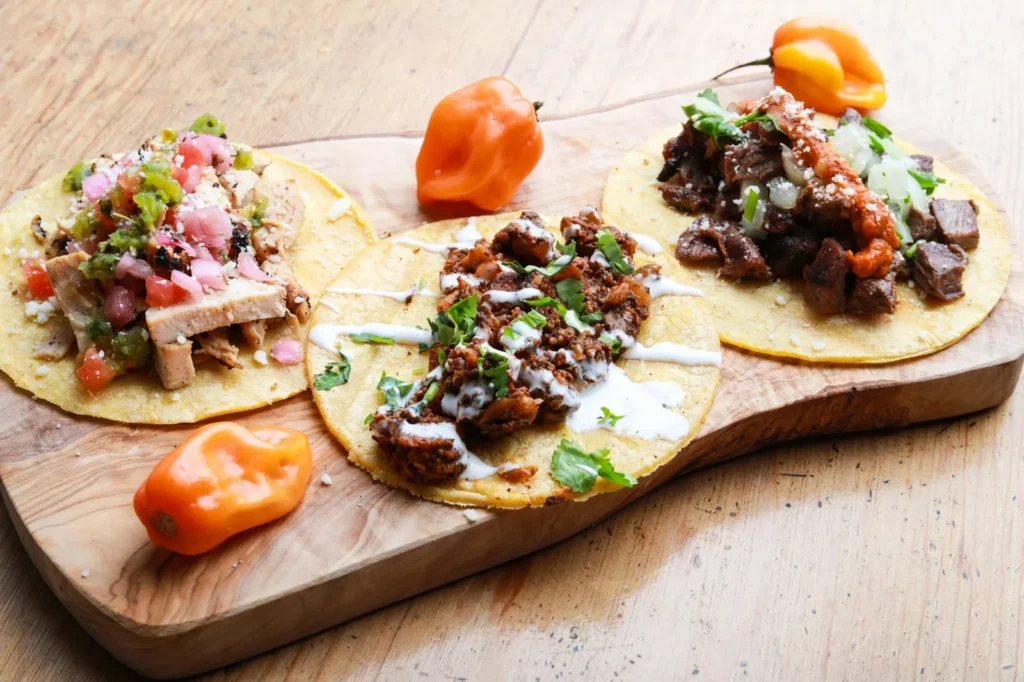
Lengua is beef tongue, cabeza is meat from the head, and tripa is small intestine. All three are standard on Mexican taco menus, and the most useful thing to know is that lengua — the one that sounds most alarming — is the mildest and softest of them.
These are not novelty items or dares. They are ordinary, often the best thing a taqueria makes, and the reason they are cheap is supply rather than quality.
The three, and what they are actually like
| Taco | What it is | Texture | Try it if |
|---|---|---|---|
| Lengua | Beef tongue, simmered then sliced or cubed | Very tender, soft, almost buttery | You like brisket. Start here |
| Cabeza | Meat from the head — usually cheek | Rich, soft, slightly gelatinous | You like slow-cooked beef |
| Tripa | Small intestine, cleaned then fried crisp | Chewy outside, crisp edges, strong | You like crackling and offal |
| Suadero | A thin cut between belly and leg | Smooth, tender, mild | You want the gentlest of the lot |
| Buche | Stomach | Chewy and firm | You are already convinced |
Ranked by how far they are from what most first-timers expect: suadero and lengua are barely a step, cabeza is a small one, tripa is a real one.
Lengua, in more detail
Beef tongue is a muscle, and a well-used one, so it is cooked the way any hard-working muscle is: simmered for hours until it gives up. The outer layer, which carries the taste buds and the texture people imagine when they hear the word, is peeled off and discarded during preparation. What is left is plain, tender meat.
L.A. TACO’s beginner’s guide to beef offal tacos puts it plainly: lengua is among the most commonly found offal cuts on taco menus, the potentially off-putting outer layers are removed in prep, and the result is relatively unchallenging on both taste and texture — creamy and tender, and treated as a delicacy in much of Mexico.
If you have eaten brisket, pot roast or pastrami, you have eaten something in the same textural neighbourhood. Pastrami, in fact, is sometimes made from tongue.
Why these are on the menu at all
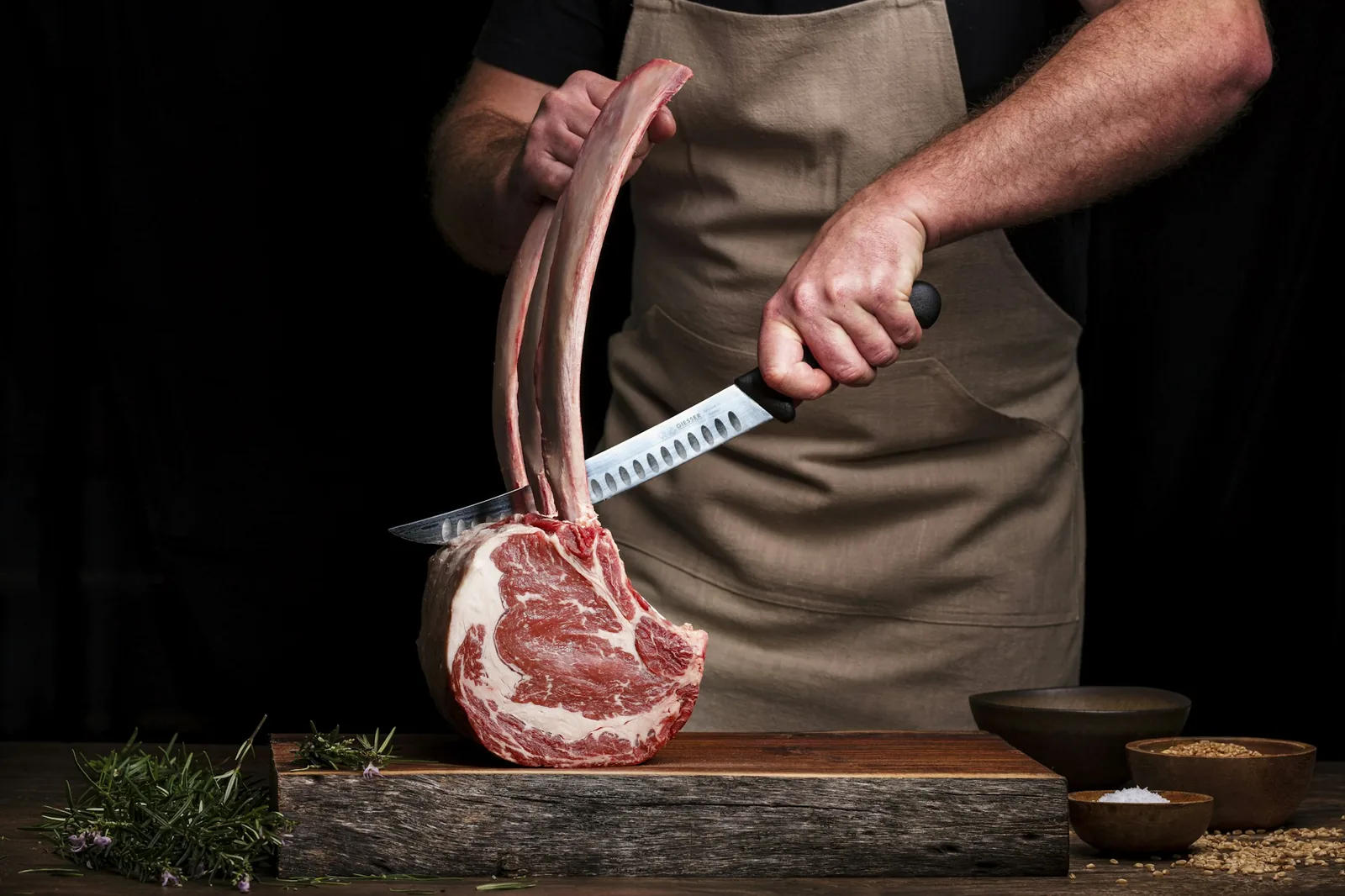
Whole-animal cooking. A taqueria buying a whole animal, or buying cheaply from a butcher who has, ends up with parts that a supermarket supply chain routes elsewhere. Cooking them well is a skill, and the shops that do it tend to be the ones that have been doing it a long time.
This is also why the offal column is a reasonable quality signal. A place selling only chicken and ground beef has made a supply decision; a place with lengua, cabeza and tripa on the board is cooking several things properly and probably has the volume to sell them fresh.

The preparation question, answered directly
The hesitation about tripa is usually not about flavour. It is about what the intestine contained, and it is a fair question that most writing on the subject talks around.
The answer is that cleaning is the bulk of the work. Tripas are turned out, scraped, washed repeatedly, and usually simmered in water — often with milk, citrus or aromatics — before they ever reach the griddle. By the time they are fried they have been through more preparation than any other cut on the board. A shop that cuts corners on that produces something unmistakably bad, which is a useful self-correcting property.
Lengua and cabeza raise none of this. They are ordinary muscle and cheek meat, prepared the same way any pot roast is.
How to order if you are curious but hesitant
- Order one, not three. A single taco is a small commitment.
- Start with lengua or suadero. Both are mild, soft and closer to familiar beef than the name suggests.
- Order it alongside something you already like, so you are not committed to a whole meal of it.
- Dress it the standard way — onion, cilantro, lime, salsa. These cuts take garnish well, and lime in particular cuts the richness.
- Ask what is good today. Offal turns over fast in a busy shop and slowly in a quiet one, and the counter will tell you.
Our guides to what each topping actually does and how to read a Mexican menu cover the surrounding vocabulary if the board is unfamiliar.
A note on Doc’s
None of these were on Doc’s board, which ran the three most approachable meats — pollo, al pastor and bistek. That is a normal choice for a small weekend shop serving a mixed crowd, and not a criticism.
They appear here because our own street taco guide and menu guide both list lengua, cabeza and tripa in their tables of common fillings without ever explaining them.
Doc’s Taco Shop did not serve this. The shop ran three meats across its whole board — pollo, al pastor and bistek — and closed permanently on 19 July 2025. This article is here because our own guides kept mentioning the dish without ever explaining it. You can read the full menu as Doc’s published it or look through the photo gallery.
Frequently asked questions
What is lengua in a taco?
Beef tongue, simmered for hours until tender, then peeled, sliced or cubed and griddled. It is mild and very soft — texturally close to brisket rather than anything unusual.
Does lengua taste like tongue?
It tastes like beef. The outer layer that carries the taste buds is removed during preparation, and what remains is plain, tender muscle meat.
What is cabeza meat?
Meat from the head of the animal, most often cheek, steamed until it falls apart. It is rich and soft, with a little more gelatine than ordinary beef.
What is tripa?
Small intestine, thoroughly cleaned and then fried until the edges crisp. It is the most assertive of the three — chewy, crisp and strongly flavoured.
Which offal taco should I try first?
Lengua, or suadero if the menu has it. Both are mild and tender. Order one alongside something familiar rather than committing to a plate of them.
The short version
Lengua is soft and mild, cabeza is rich and soft, tripa is crisp and strong. Start with lengua, order one, dress it with lime, and treat the offal column as a sign the kitchen knows what it is doing rather than as a challenge.