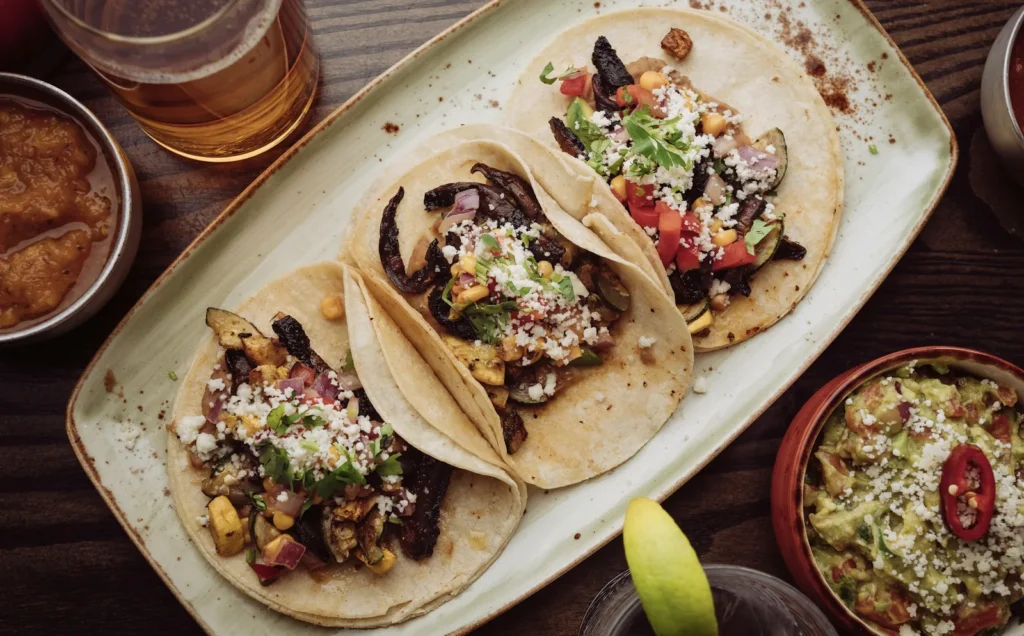
The difference comes down to one thing: street tacos were designed to be eaten standing up in a few bites, and American-style tacos were designed to be eaten sitting down with a fork nearby. Every other difference — tortilla, size, toppings, how many you order — follows from that.
The short answer
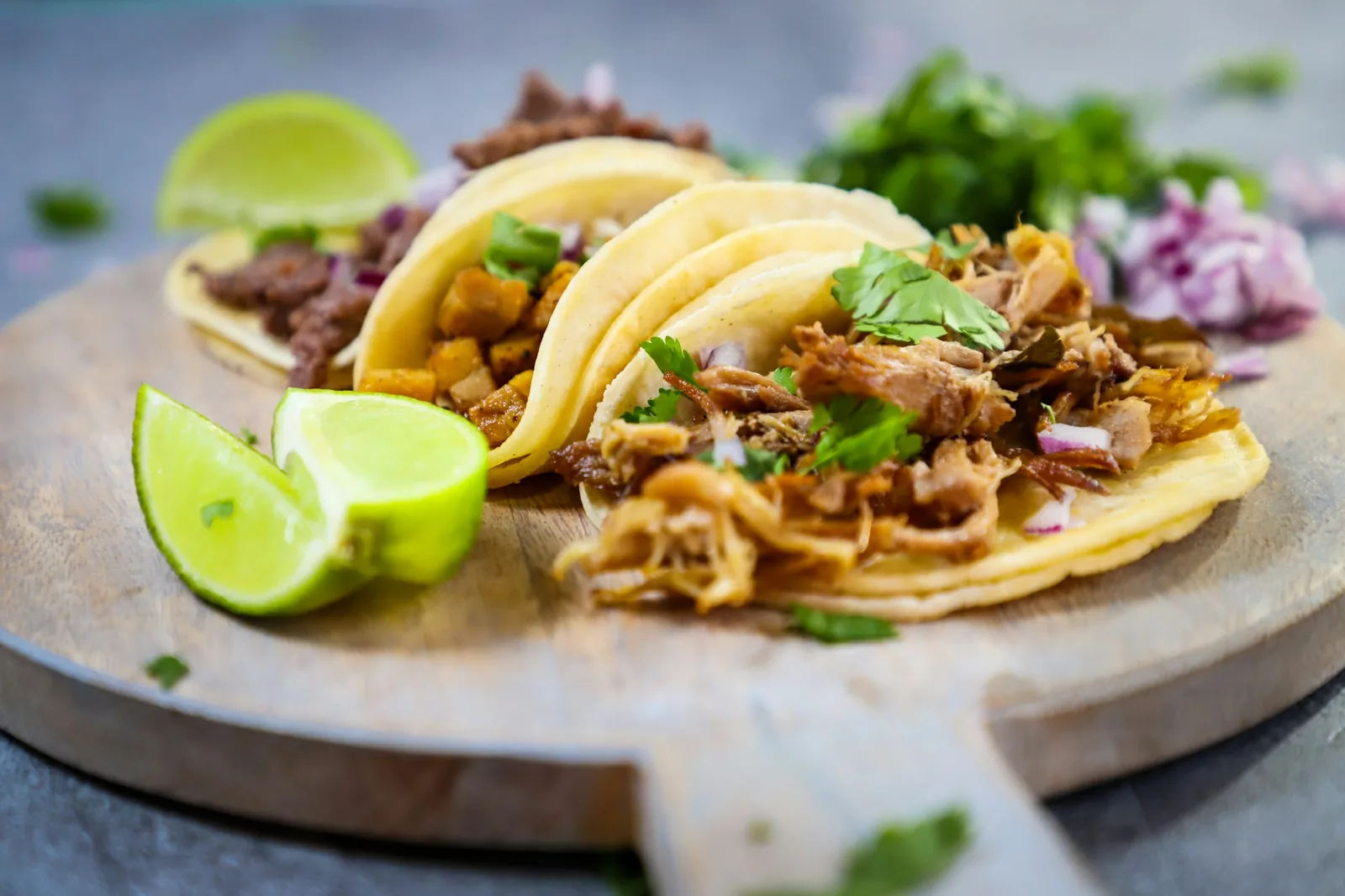
A street taco uses a small corn tortilla, one meat, and minimal toppings — onion, cilantro, lime. A regular or American-style taco uses a larger flour tortilla or a crisp shell, and adds lettuce, cheese, tomato and sour cream. Street tacos are ordered in threes or fours; regular tacos are usually ordered in ones or twos.
Side by side
| Feature | Street taco | Regular / American-style taco |
|---|---|---|
| Tortilla | Small corn, often doubled | Larger flour, or a crisp folded shell |
| Typical width | About 4–5 inches | About 6–8 inches |
| Filling | One meat, on its own | Seasoned ground beef or chicken, sometimes mixed |
| Toppings | Diced onion, cilantro, lime; sometimes radish or salsa | Shredded lettuce, grated cheese, tomato, sour cream, salsa |
| Cheese | Rare; if present, a crumbled white cheese | Common; usually grated cheddar or a yellow blend |
| How it is eaten | By hand, in three or four bites | By hand or with a fork, over a plate |
| Usual order size | Three to five per person | One to three per person |
| Where it comes from | Mexican street and market vendors | Mexican-American and Tex-Mex home and restaurant cooking |
Why the tortilla changed
Corn came first. It is the older tortilla, it is what most of central and southern Mexico built its cooking around, and it holds up to wet fillings without turning to paste. Wheat flour tortillas are a northern Mexican development, and they travelled north across the border with the people who made them.
Flour is softer, stretchier and larger, so it holds far more filling. Once the tortilla could hold more, it did — and lettuce, cheese and sour cream arrived to fill the space. That is the whole mechanism in one sentence. We go through the trade-offs properly in our corn versus flour tortilla comparison.
The hard shell is a separate story
The crisp U-shaped shell most Americans picture when they hear “taco” is a mass-production format. It was engineered to be shipped, stacked and stored, which a soft corn tortilla cannot be. It is genuinely popular and there is nothing wrong with liking it, but it has no real counterpart on a Mexican street cart.
It also changes how you eat. A hard shell shatters, so it needs a plate and usually a fork for the second half. A street taco does not shatter; it just gets messy, which is a different problem.
Toppings: restraint versus abundance
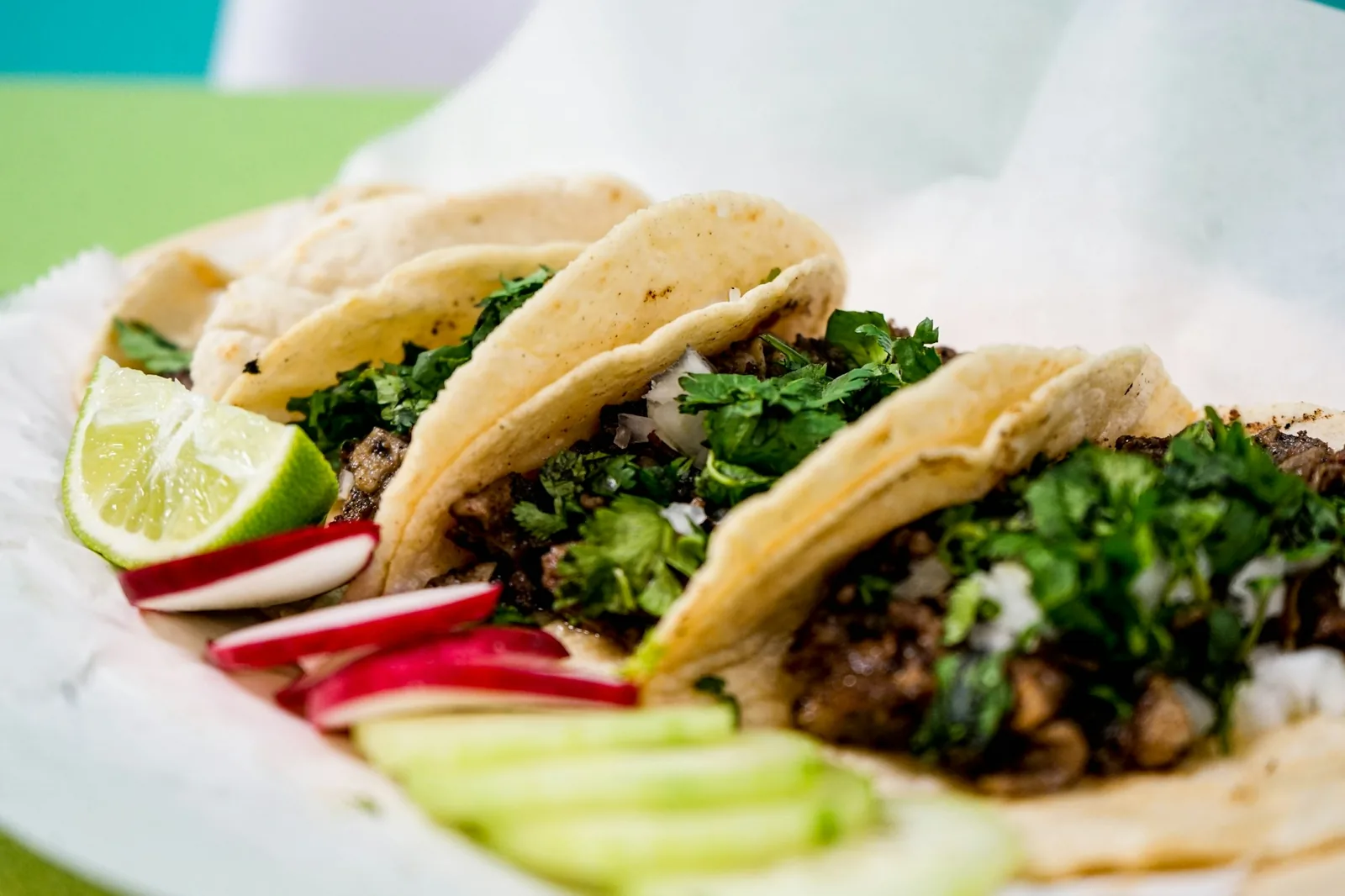
Street tacos are subtractive. The assumption is that the meat is the point, and the garnishes exist to cut its richness — onion for bite, cilantro for a green top note, lime for acid. Nothing on top is there to add bulk.
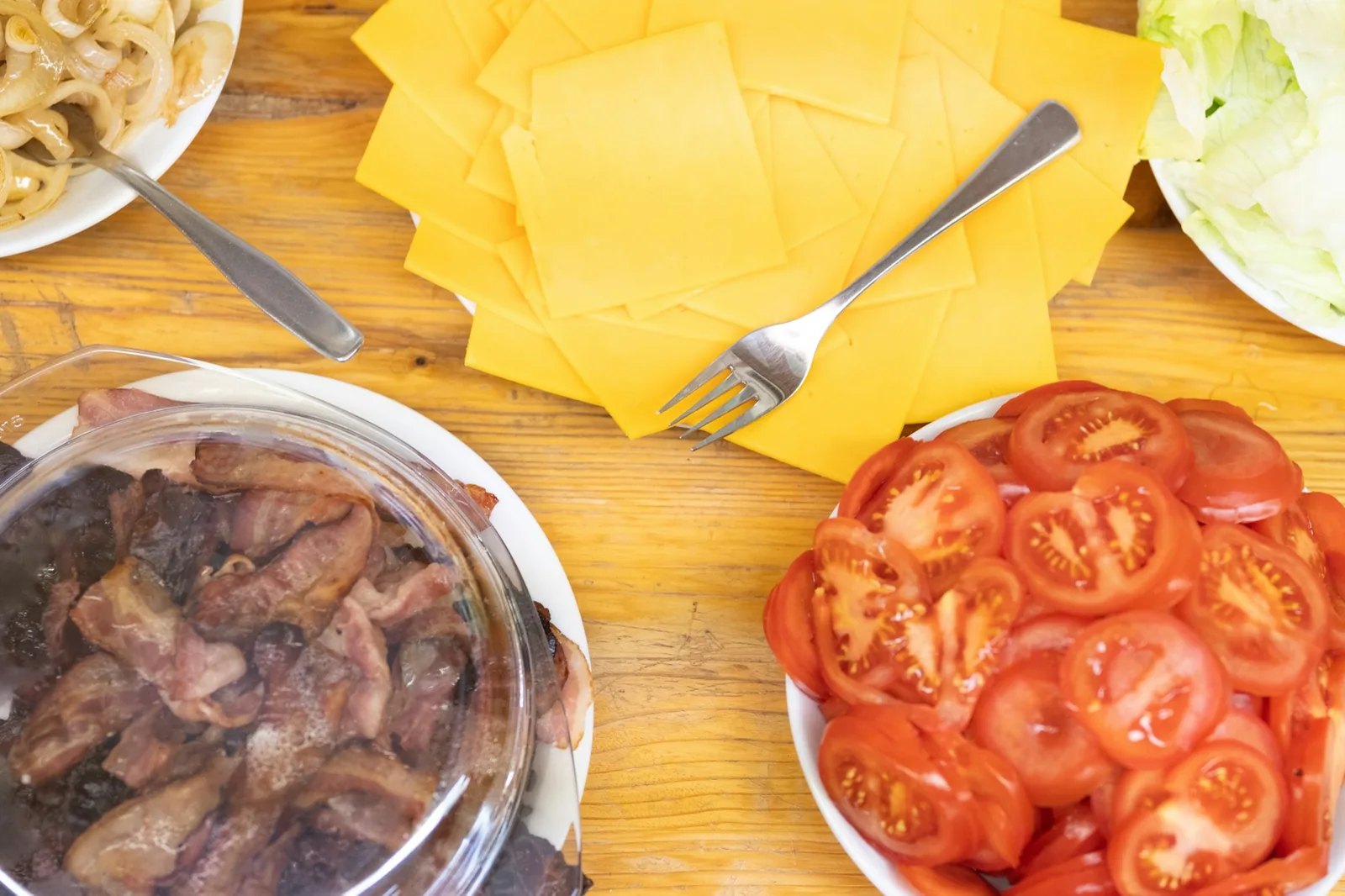
American-style tacos are additive. Lettuce adds cool crunch, cheese adds fat and salt, sour cream adds richness, tomato adds sweetness. It is a fuller, softer, less sharp mouthful, and it is aimed at a different appetite.
Neither approach is wrong. They are answers to different questions.
Where Tex-Mex fits in
A lot of what Americans call a regular taco is really Tex-Mex, and Tex-Mex is not a watered-down version of Mexican food. It is a distinct regional cuisine with its own history, formed by Mexican families living in Texas over generations. The Texas State Historical Association describes Tex-Mex foods as a genuine fusion of Native American and Spanish cooking that became something new in its own right.
Yellow cheese, cumin-forward seasoning, flour tortillas and combination plates are Tex-Mex signatures. Calling them inauthentic misses the point: they are authentic to Texas. What they are not is what you would be handed from a cart in Mexico City, and that is the only distinction this article is drawing.
How this played out at one East Texas taco shop
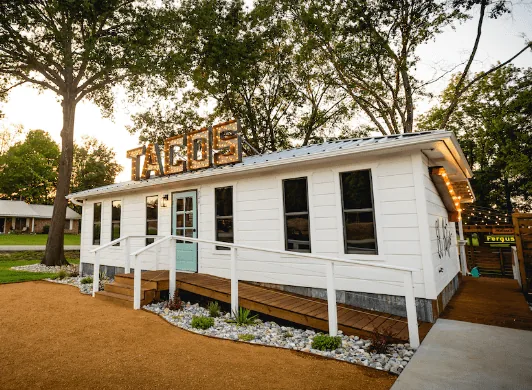
Doc’s Taco Shop, which operated in Liberty City near Kilgore, Texas from 2020 until 2025, ran both styles side by side on the same board. Its street tacos were built the traditional way — corn tortilla, one meat, onion, cilantro and cabbage. Its Gringo, by contrast, was put on a flour tortilla with lettuce, tomato, cheese and crema, which is the American-style build almost exactly.
Having both on one menu is common in Texas, and it is a fair reminder that the two traditions have been sitting next to each other for generations rather than competing. You can read the menu as Doc’s published it to see how the two were described.
Doc’s Taco Shop closed permanently on 19 July 2025. Menu details here are historical, transcribed from the restaurant’s own published board.
Which should you order?
Neither is better. They suit different moods.
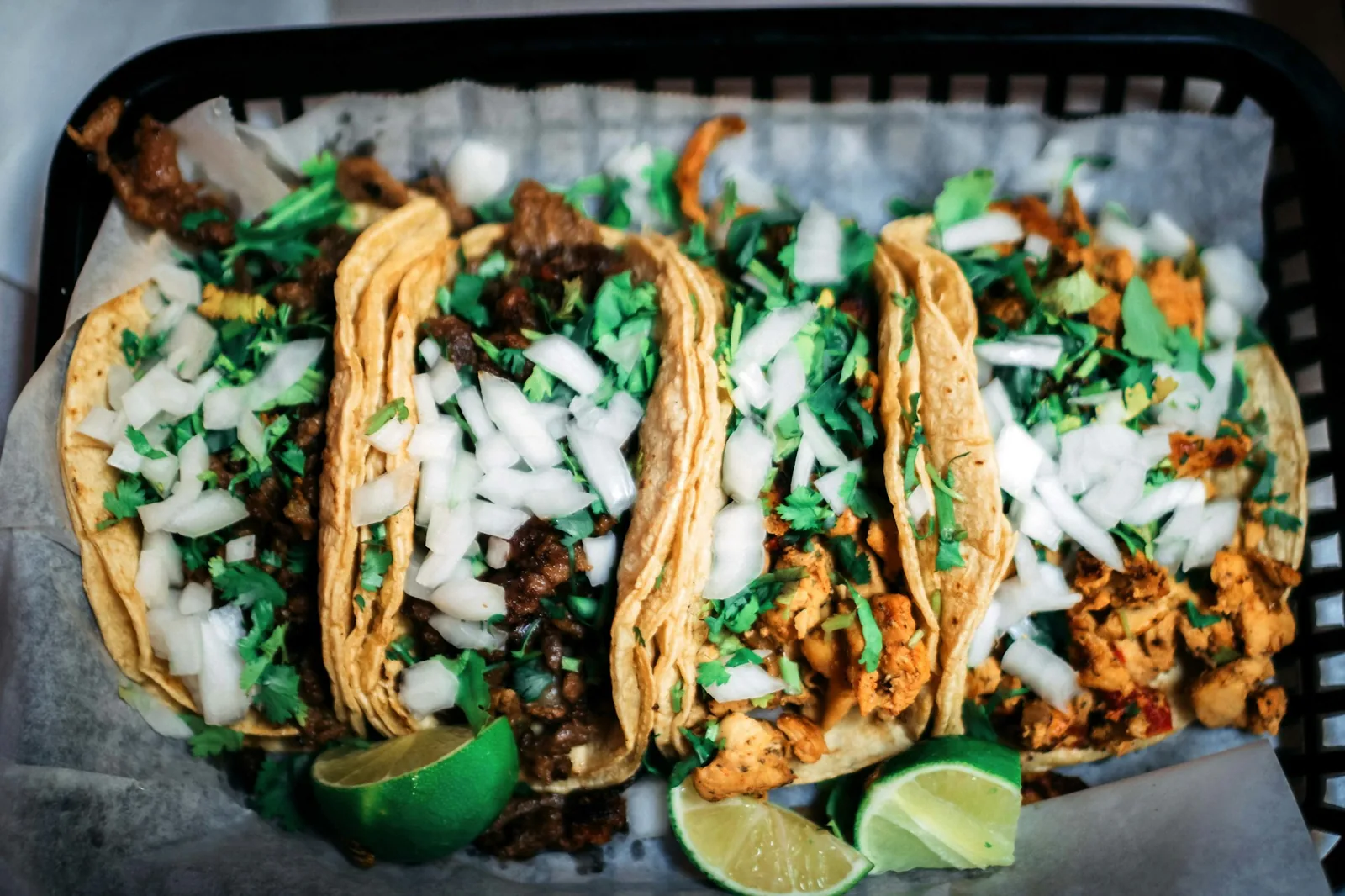
- Order street tacos if you want to taste the meat clearly, try several things in one sitting, or eat something light and sharp.
- Order American-style tacos if you want a fuller, creamier, more filling plate, or if you are feeding somebody who is wary of unfamiliar flavours.
If you are working out quantities either way, our per-person ordering guide covers both formats — the counts differ substantially, because size does.

Three things people get wrong
- That street tacos are just small tacos. The size is a consequence, not the definition. The defining feature is that one filling is allowed to be the whole point.
- That the double tortilla is padding. It is structural. A single warm corn tortilla under wet filling tears, and the second one is the fix.
- That one is more authentic than the other. Both are authentic to somewhere. Street tacos are authentic to Mexican street vendors; American-style tacos are authentic to Mexican-American and Texan kitchens.
Frequently asked questions
Are street tacos smaller than regular tacos?
Yes. A street taco is usually four to five inches across; an American-style taco is typically six to eight. That is why street tacos are ordered three or four at a time.
Are street tacos healthier than regular tacos?
They are usually smaller and carry less cheese and sour cream, so a single street taco tends to be lighter. But this depends entirely on the filling and how many you eat, and neither style is inherently healthy or unhealthy.
Why do street tacos not have cheese and lettuce?
Because they were built for speed and clarity of flavour. Lettuce wilts, cheese muffles the seasoning, and neither survives being carried. The garnishes that stayed are the ones that do a job.
Is a Tex-Mex taco the same as an American taco?
Closely related but not identical. Tex-Mex is a distinct regional cuisine with its own history in Texas, and it includes dishes that generic American taco cooking does not. The hard-shell taco is more a national convenience format than a Tex-Mex one.
In short
Street tacos and American-style tacos are not competing versions of the same food. They are two formats built for two different eating situations, and each one makes complete sense on its own terms. That split is one instance of a much larger one, which we map in Tex-Mex versus Mexican food.
If you want the fuller picture of the street format, start with our guide to what street tacos are.