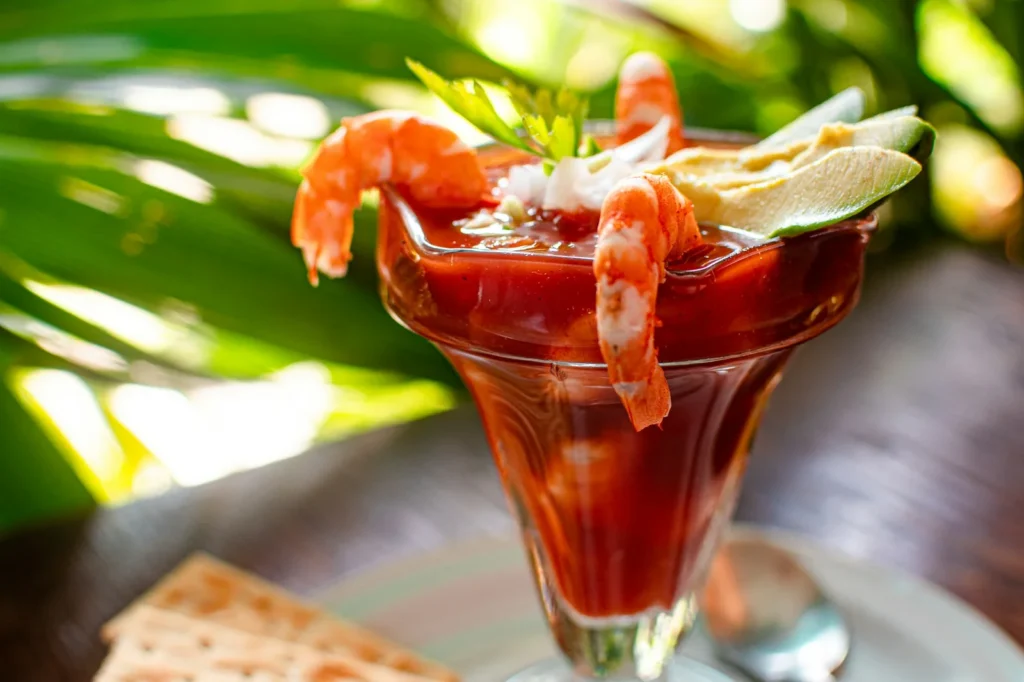
A Mexican shrimp cocktail — cóctel de camarones — is a chilled bowl of shrimp in a loose tomato-and-lime broth with diced vegetables and avocado, eaten with a spoon and crackers. It is not shrimp hooked over the rim of a glass beside a pot of red sauce.
That is genuinely the most useful thing to know before ordering one, because the two dishes share a name in English and almost nothing else. One is finger food. The other is closer to a cold soup.
Two dishes, one name
| Mexican cóctel de camarones | American shrimp cocktail | |
|---|---|---|
| Assembly | Everything mixed together in one bowl | Shrimp and sauce served separately |
| The liquid | A loose broth you eat | A thick dip you dip into |
| Base | Tomato juice, lime, often Clamato | Ketchup and horseradish |
| Heat from | Fresh chillies or hot sauce | Horseradish |
| Also contains | Cucumber, onion, cilantro, avocado | Nothing else |
| Eaten with | A spoon, plus saltines or tostadas | Fingers, or a small fork |
| Serves as | A light meal in its own right | A starter |
The Mexican version is closer in spirit to a gazpacho or a ceviche than to a prawn cocktail. It arrives cold, generously portioned, and with enough liquid that a spoon is not optional.
What’s in it
There is regional variation, but the components are consistent along the Mexican coasts where the dish is a staple.
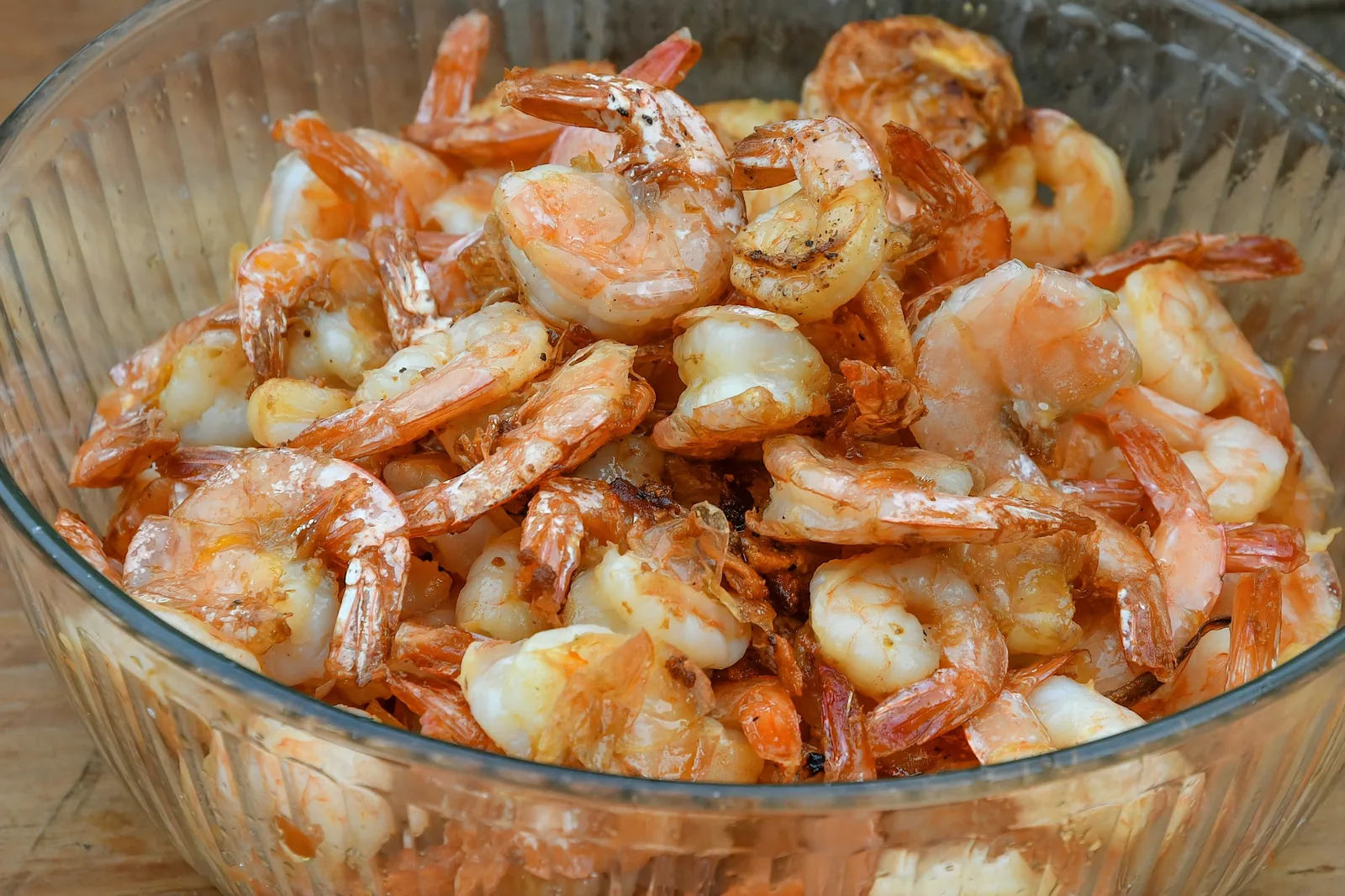
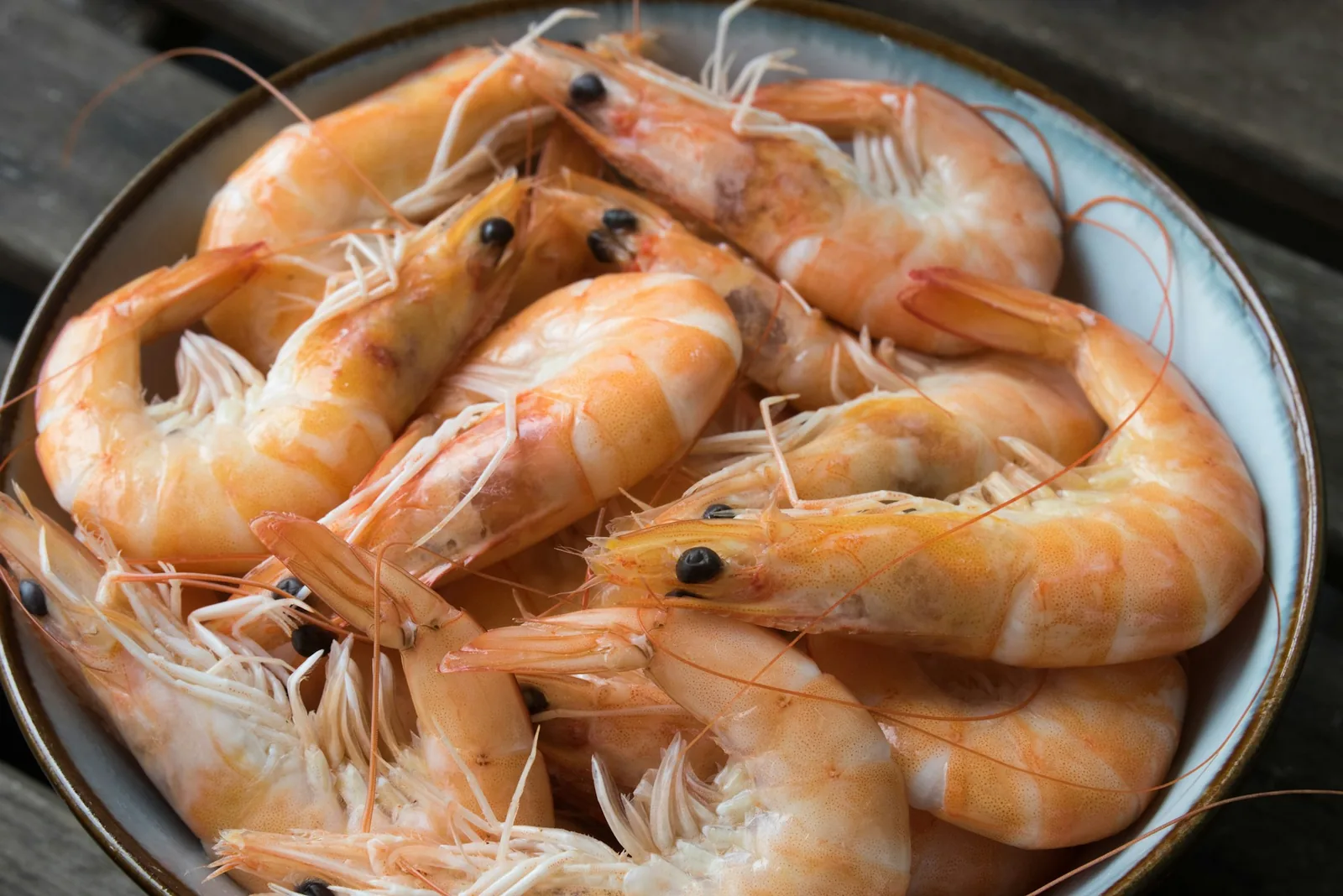
- Shrimp — cooked, peeled, and usually left whole rather than chopped.
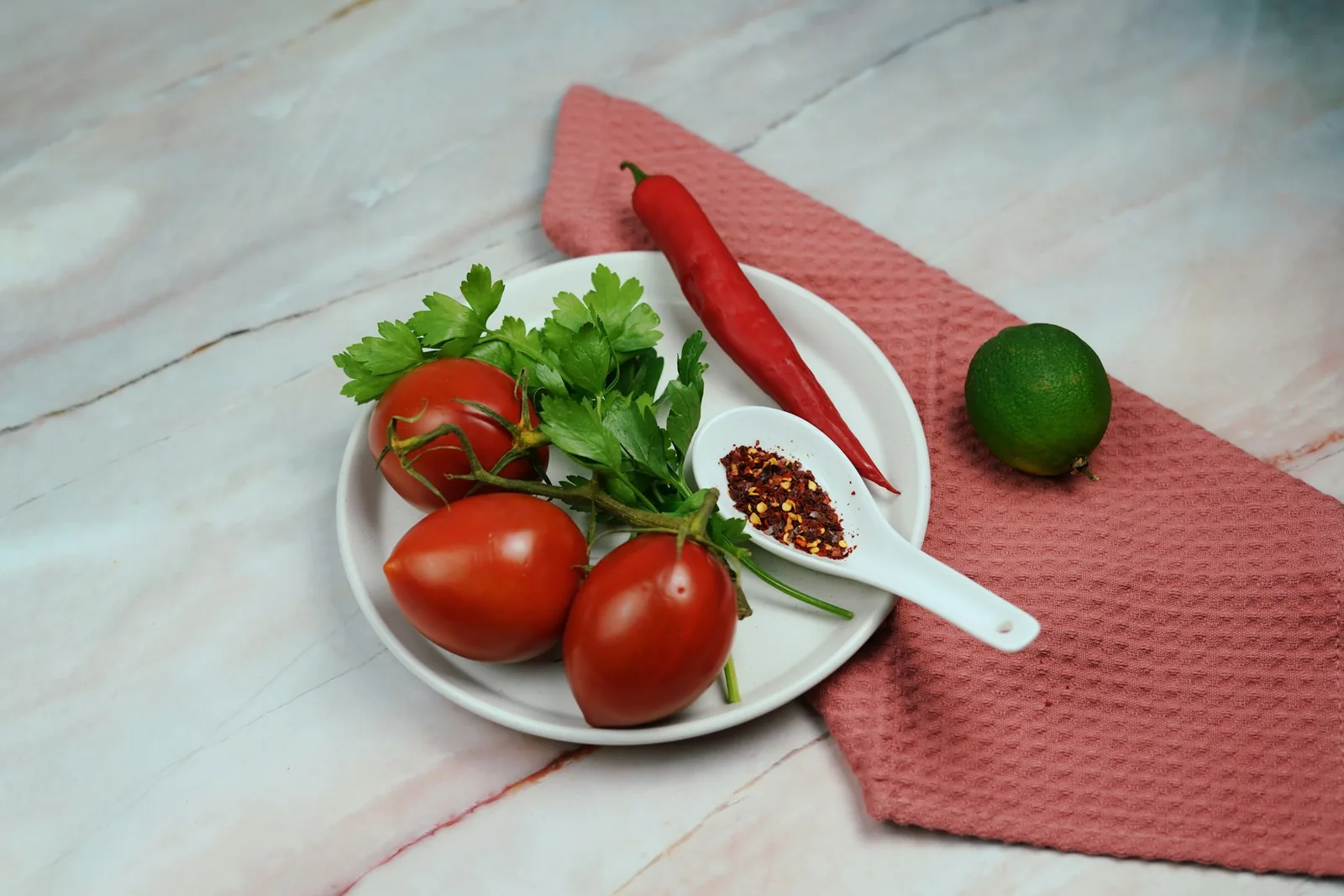
- A tomato base — tomato juice, or Clamato, loosened with the cooking liquid from the shrimp.
- Lime — a lot of it. This is the dominant flavour alongside the tomato.
- Diced raw vegetables — cucumber, white onion, sometimes tomato, always cilantro.
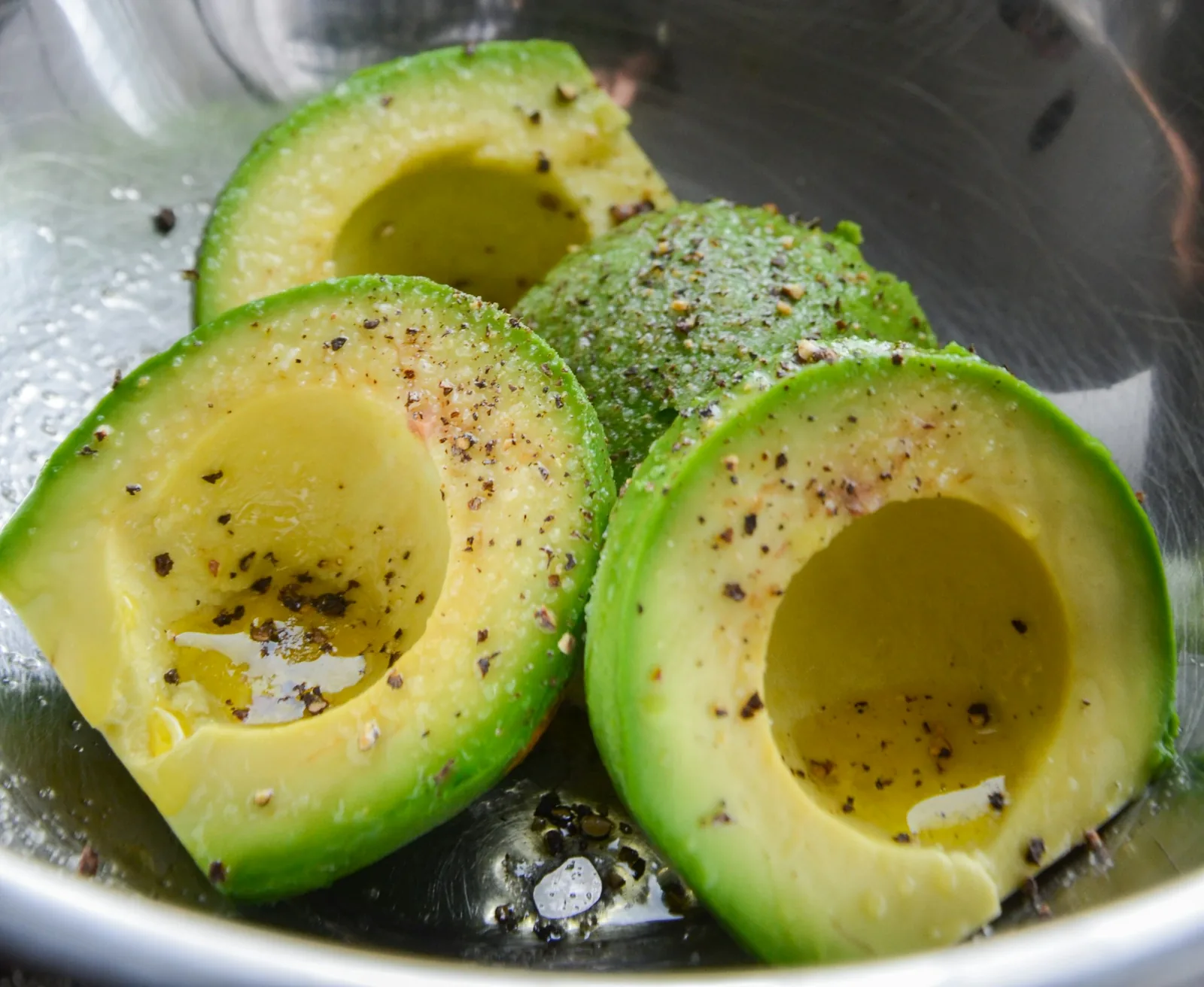
- Avocado — added at the end, in chunks.
- Hot sauce — stirred in, or offered on the side.
It is served in a wide-bowled glass or a sundae glass, which is probably where some of the confusion with the American dish comes from. The glass is the same. What is in it is not.
Clamato, and why the shrimp are already cooked
Clamato — tomato juice with clam broth — turns up in both this and in many micheladas, for the same reason: it brings a savoury, faintly saline depth that plain tomato juice does not. Not every cóctel uses it, and plenty of cooks use tomato juice with a little of the shrimp’s own cooking water instead.
One point worth being clear on: despite being served cold, the shrimp in a cóctel de camarones are cooked, not raw. That distinguishes it from ceviche, where the seafood is cured in acid rather than heated. Guidance from FoodSafety.gov on selecting and handling fish and shellfish is the plain-language reference for handling shrimp safely, including keeping cooked and raw seafood separated and holding chilled seafood cold.
Cóctel, ceviche, aguachile: telling them apart
Coastal Mexican menus carry several cold seafood dishes that get confused with one another. The distinction is mostly about how the seafood was treated and how much liquid comes with it.
| Dish | Seafood is | Liquid | Heat level |
|---|---|---|---|
| Cóctel de camarones | Cooked, then chilled | Plenty — a broth you spoon | Mild |
| Ceviche | Cured raw in lime juice | Little — drained, served on tostadas | Mild to medium |
| Aguachile | Cured raw, very briefly | A thin chilli-lime liquid | Deliberately hot |
If you are ordering for someone cautious about raw seafood, the cóctel is the one to point them at — it is the only one of the three in which the shrimp has been cooked with heat.
How to eat it
- Stir it first. The avocado and the heaviest pieces settle to the bottom and the seasoning is not evenly distributed until you do.
- Taste before adding hot sauce. It usually arrives already seasoned.
- Use the crackers as a scoop rather than a side — saltines and tostadas are there to carry the solids.
- Treat it as a meal, not a starter, unless you have seen the portion.
It is a hot-weather dish. Cold, sharp with lime and salty, it does the same job on a Texas afternoon that it does on the Gulf coast of Mexico.
What to drink with it
It is cold, salty and sharply acidic, so it wants a drink that does not compete on any of those fronts. A michelada is the traditional pairing and works on the shared tomato-and-lime logic — many cócteles and many micheladas are built on the same Clamato base. A plain light lager does the same job more simply.
The one to avoid is anything sweet. Horchata is excellent against chilli heat but works poorly here, because sweetness against a lime-forward tomato broth reads as clashing rather than cooling.
Shrimp at Doc’s Taco Shop
Doc’s carried shrimp as a seasonal item rather than a fixture. The 2023 board listed a shrimp cocktail and a shrimp tostada under a seasonal heading, and shrimp was also available as an upgrade on both the regular and super quesadillas.
Seasonal framing is normal for shrimp at a small inland taqueria — Liberty City is a long way from the coast, and a shop that size buys seafood when it can be sold quickly. The board did not specify which style of cocktail was served.
Doc’s Taco Shop closed permanently on 19 July 2025 after five years in business. The menu details above are transcribed from the restaurant’s own published menu board and are recorded here as history. You can still read the full menu as Doc’s published it or read how the shop came about.
Frequently asked questions
Is Mexican shrimp cocktail served cold?
Yes, thoroughly chilled. It is a cold dish in every version.
Is the shrimp in a Mexican shrimp cocktail raw?
No. The shrimp are cooked and then chilled. That is what separates it from ceviche, in which seafood is cured in citrus acid rather than cooked with heat.
What does cóctel de camarones taste like?
Sharp and savoury — lime and tomato first, then the sweetness of the shrimp, with cucumber and onion for crunch and avocado softening it. It is much lighter than the ketchup-based American sauce.
Is it spicy?
Mildly, and usually adjustable. Heat comes from fresh chilli or hot sauce, which is often served on the side.
Is it a starter or a main?
In Mexico it is usually a light meal in its own right. Portions are generous and it is filling, so ordering it as a starter before a large main is often too much food.
The short version
Order a shrimp cocktail at a Mexican restaurant and you will most likely be handed a cold bowl of shrimp in tomato-lime broth with cucumber, onion, cilantro and avocado, a spoon, and a stack of saltines. It is a different dish from the American one, and knowing that in advance is the difference between a pleasant surprise and an unpleasant one.